• Polish ‘Awangarda’ CDs
Thursday, 3 October 2013 1 Comment
For years, I’ve been bewailing the lack of CD representation of post-war Polish composers other than ‘the big three’. And there are still notable gaps, especially in the coverage of the music of Kazimierz Serocki: Musica concertante, Symphonic Frescoes (played at this year’s ‘Warsaw Autumn’), Forte e Piano, Poezje, Dramatic Story, Swinging Music, Pianophonie. But over the past couple of years the Polskie Nagranie company, in conjunction variously with the publishers PWM, Ricordi and the Polish Music Information Centre, has begun to issue and reissue archive recordings (from 1959 onwards) of some of the early figures of the Polish avant-garde.
Three CDs have appeared so far in the ‘Awantgarda’ series: Krzysztof Penderecki conducted by Andrzej Markowski (2011) – and it’s the Markowski connection that makes this CD interesting (Penderecki does not want for coverage!), Serocki (2012) and Włodzimierz Kotoński (2013). A similar project, but outside the ‘Awantgarda’ sequence, was that of the music of Tadeusz Baird, in a double CD package (2011). For anyone wanting to hear their music, these CDs are a great place to start, not least because there are some recordings never released on CD before and others never heard beyond the confines of the ‘Warsaw Autumn’ Chronicle recordings whose circulation was extremely limited. There are one or two never released on any format before. Any performance dates in the second half of September are from the ‘Warsaw Autumn’ festival. ** = first performance, * = Polish premiere.
Tadeusz Baird. Selected Works (PNCD 1399, two CDs)
This double CD was first issued in 2003 (PNCD 525A/B).
 • 4 Love Sonnets (second version, 1969): Andrzej Hiolski/Kraków PRO/Jan Krenz (July 1978)
• Colas Breugnon (1951): WOSPR/Krenz (May 1955)
• Trouvère Songs (1963): Krystyna Szostek-Radkowa/National PO, Warsaw/Witold Rowicki (24 June 1968)
• 5 Songs (1968): Szostek-Radkowa/Wrocław PO/Andrzej Markowski (June 1974)
• Psychodrama (1972): WOSPR/Wojciech Michniewski (1 February 1979)
…….
• Erotyki (1961): Stefania Woytowicz/National PO/Rowicki (21 April 1963)
• Symphony 3 (1969): National PO/Krenz (10-11 June 1969)
• Elegeia (1973): WOSPR/Michniewski (1 February 1979)
• Concerto Lugubre (1975): Stefan Kamasa/Kraków PRO/Jacek Kaspszyk (10 April 1977)
• Voices from Afar (1981): Jerzy Artysz/National PO/Rowicki (**, 22 January 1982)
Krzysztof Penderecki conducted by Andrzej Markowski (PNCD 1373)
Markowski was an extraordinary champion of new Polish music, and especially of Penderecki’s ground-breaking early scores. This selection spans 1958-61, and only Emanations, the First String Quartet and Fonogrammi are missing from these years.
 • Psalms of David (1958): National PO (8 January 1966)
• Strophes (1959): Silesian Philharmonic CO (**, 17 September 1959)
• Anaklasis (1959-60): National PO (8 January 1966)
• Dimensions of Time and Silence (1960): National PO and Choir (24 June 1972)
• Threnody (1961): Kraków PO (22 September 1961)
• Fluorescences (1962): National PO (8 January 1966)
• Polymorphia (1961): Kraków PO (*, 26 September 1963)
Kazimierz Serocki (PNCD 1441)
It is terrific to have two early pieces on this CD, formative for both Serocki and Polish music around 1960, as well as the three ‘Warsaw Autumn’ performances.
 • Episodes (1958-59): WOSPR/Krenz (24 March 1965)
• Segmenti (1960-61): WOSPR/Krenz (24 March 1965)
• Continuum (1965-66): Warsaw Percussion Group (28 February 1980)
• Fantasmagoria (1970-71): Roger Woodward/Hubert Rutkowski (23 September 1976)
• Fantasia elegiaca (1971-72): Karl-Erik Welin, Hesse RSO/Markowski (*, 28 September 1973)
• Arrangements for four recorders (1975-76): (20 September 1978)
Włodzimierz Kotoński (PNCD 1521/polmic 099)
Kotónski, now 88, has languished in the shadows of his contemporaries. His early tape pieces especially were key to the development of the Polish avant-garde. Less than a handful of his works had been commercially released on any format prior to this CD. (There’s no Kotoński web-page yet on the Polskie Nagrania site.)
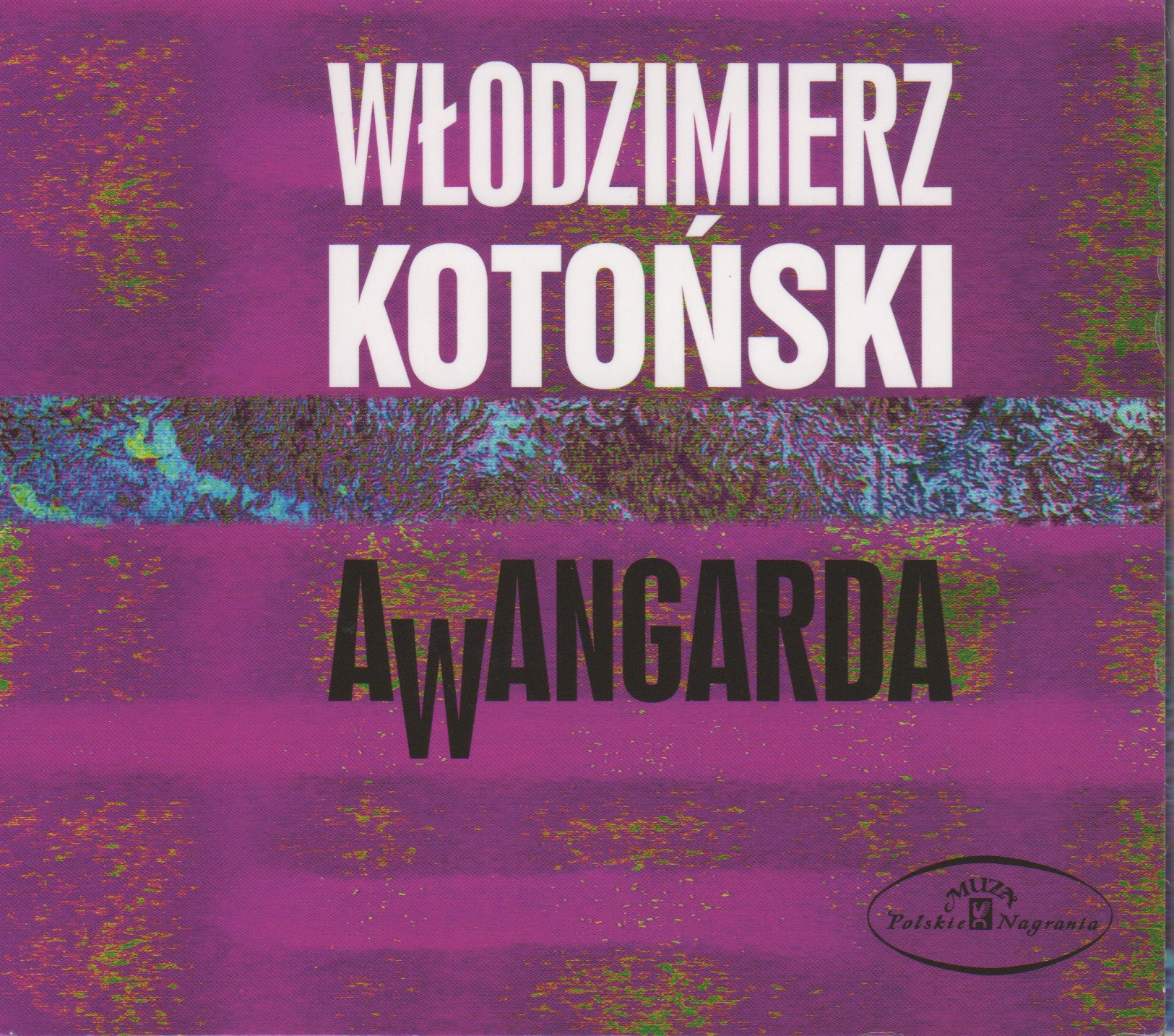 • Study on One Cymbal Stroke (1959): (Polish Radio Experimental Studio, 1960)
• Microstructures (1963): (PRES, 1963)
• Aela (1970): (PRES, 1977)
• Les ailes (1975): (Bourges, 1977)
• Aeolian Harp (1974): Rozwitha Trexler and four instrumentalists (*, 21 September 1975)
• Musique en relief (1959): National PO/Stanisław Wisłocki (*, 25 September 1960)
• Musica per fiati e timpani (1964): National PO/Rowicki (1966)
• Music for 16 Cymbals and Strings (1966): WOSPR/Jerzy Maksymiuk (1977)
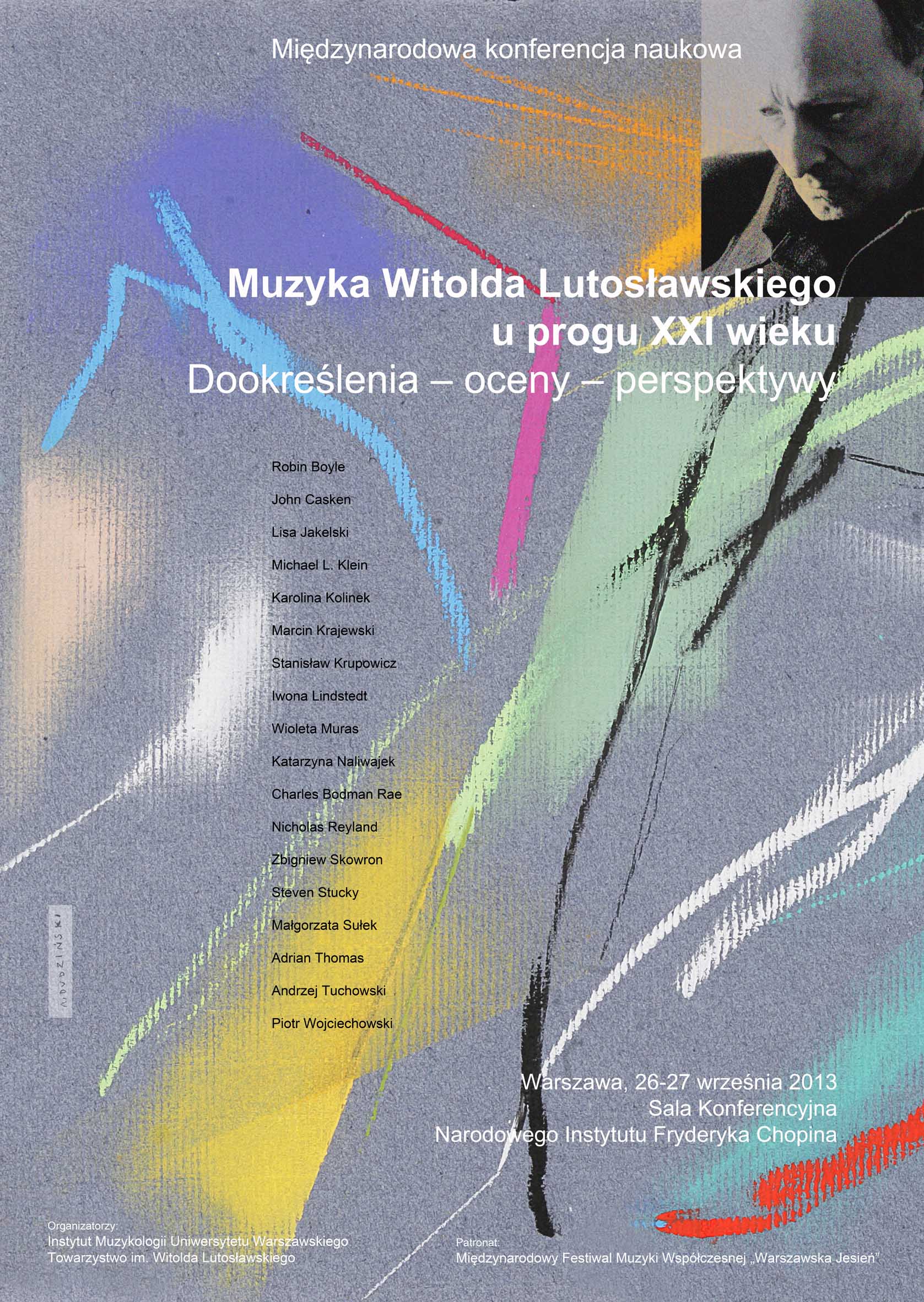
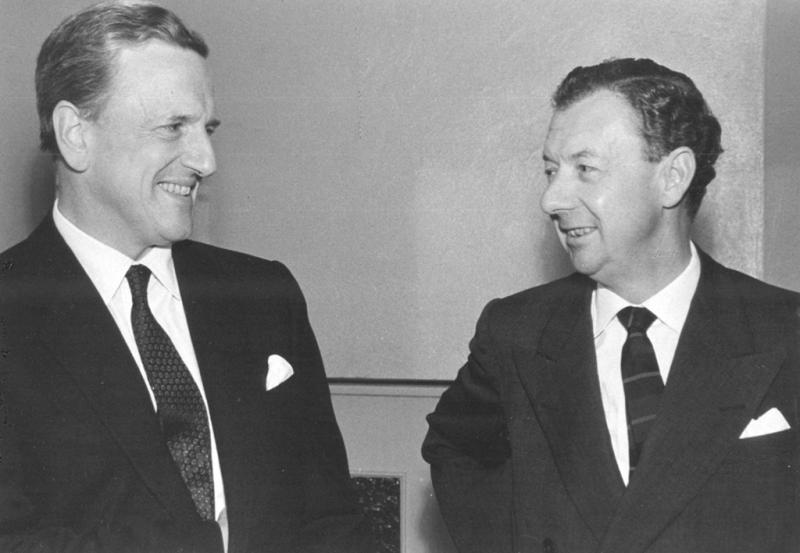
 If you haven’t noticed them already, check out Michael McManus’s blogs celebrating the Lutosławski centenary. He blends personal reminiscence with insights into the works and their performances. He has some intriguing observations, not least on Perényi’s recent Berlin performance of the Cello Concerto under Simon Rattle (4.03.13) and on Stanisław Skrowaczewski’s interpretation of the Concerto for Orchestra in a rehearsal with the Hallé Orchestra (20.03.13). The blogs are available in the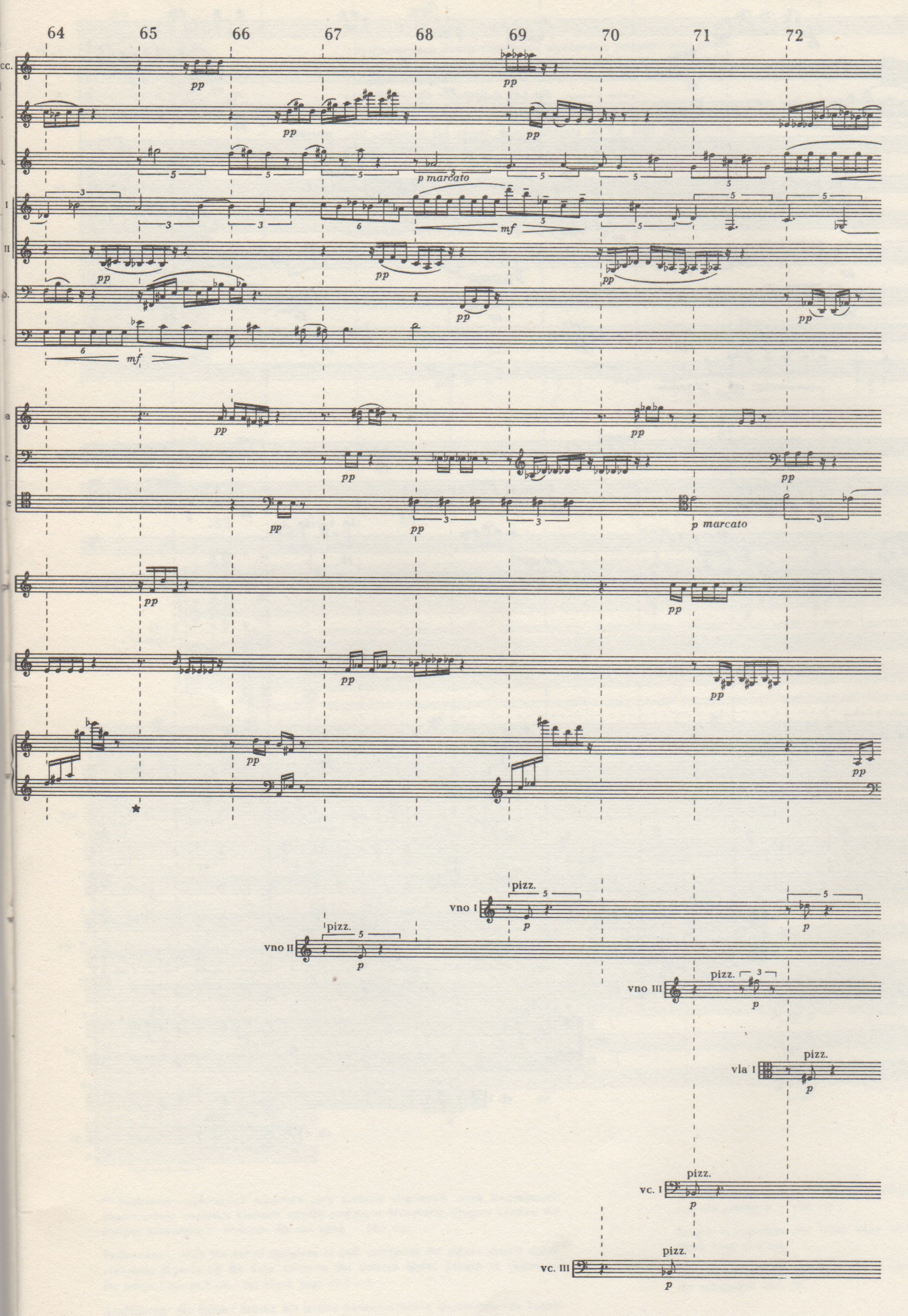

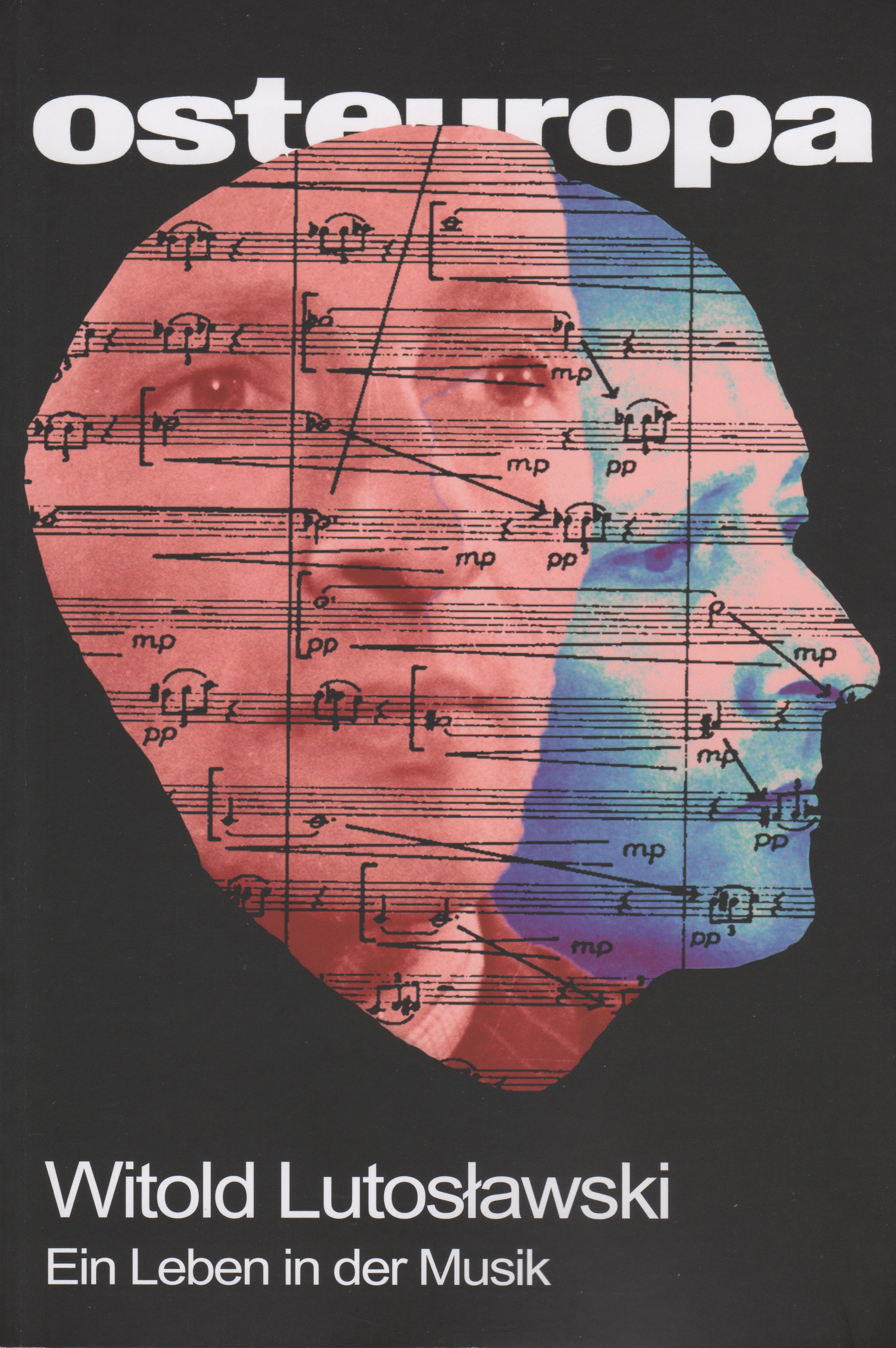
 Yet Epitaph was the work which spurred Lutosławski’s late flowering of small chamber compositions, which included other duets with piano: Grave for cello (1981), Partita for violin (1984) and Subito for violin (1992), whose material was intended for an unfinished violin concerto for Anne-Sophie Mutter. Lutosławski wrote Epitaph when he was 66, at the request of the British oboist Janet Craxton to commemorate her late husband, Alan Richardson. With the pianist Ian Brown, Craxton premiered Epitaph at the Wigmore Hall in London on 3 January 1980.

 Five videos of Polish music have newly been made available online. They date from 1968-75 and are all of performances at the Philharmonic Hall in Warsaw during the annual ‘Warsaw Autumn’ festival. There are two pieces by Lutosławski and one each by Baird, Penderecki and Serocki. Not only can we now witness Peter Pears, Wanda Wiłkomirska and Karl-Erik Welin in action but we can also experience Lutosławski conducting his own music as well as appreciate that inspirational and tireless champion of new music, Andrzej Markowski (1924-86). Many Polish composers owed him a huge debt of gratitude, including Baird, Penderecki and Serocki.
 On Polish Music