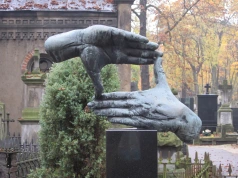
• Happy 99th, Luto (2 days late!)

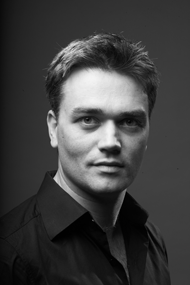
I’ve just this minute come across a brief salute to Lutosławski by a Polish composer 73 years his junior.  Mateusz Ryczek (b.1986) uploaded this two days ago, on what would have been Lutosławski’s 99th birthday – or, looked at another way, the start of his 100th year!  Ryczek takes the opening gesture of the Third Symphony and refashions it into the opening of the Polish birthday song, Sto Lat (One Hundred Years).

In case you’re wondering, Polish musicians often abbreviate Lutosławski to ‘Lutos’.  Non-Poles seem to say ‘Luto’.

• Polish Music ‘Muzyka Nowa’, WQXR ★★★☆☆

If you tune into New York’s WQXR Q2 this week, you’ll find yourself in the midst of a week-long celebration of Chinese music, ‘The Year of the Dragon’.  Bringing new music to its audiences is WQXR Q2’s mission.  It’s been ‘on air’ since October 2009 and is a listener-supported online streaming service devoted to music by living composers. The nature of its audience’s musical preferences may be gleaned from its 2011 ‘New-Music Countdown’, where listeners voted for their favourite music written since 1900.  22 of the top 50 pieces were by living composers, most of them American: Adams (5 works), Adès, Andriessen, Carter, Corigliano, Dennehy, Duckworth, Glass, Golijov (2), Gordon, Lang, Lindberg, Pärt (2), Reich (2) and Riley.

The only Polish composer in the top 50, unsurprisingly, was Górecki, whose Third Symphony came in fifth.

On 20 December last year, Q2 announced a new week-long venture: Muzyka Nowa. A Celebration of Contemporary Polish Music’ (16-22 January 2012).  Well, I was all ears at this news and last week I spent more waking hours listening via iTunes than I had first intended.  This was partly because the streaming audio experience was new to me and I was curious to see how it worked in practice.  I was particularly fascinated to find out how Q2 would tackle such a big theme editorially, given the dearth of Polish names in their end-of-year poll.  The results, as you’ll see, were mixed.

It is perhaps worth comparing a few statistics with the New York Juilliard School’s 27th Focus! festival – Polish Modern: New Directions in Polish Music since 1945′ – which took place exactly a year ago (22-28 January 2011). Juilliard’s Polish Modern festival presented 39 works by 36 composers (one piece per composer, with the exception of Lutosławski, who had the final concert to himself).  It had six concerts, with some 8 hours of music.  Q2’s Muzyka Nowa, by my count, had 107 (post-1945) works by 38 (Polish-born and Polish-trained) composers.  These were spread over six and a half days, including two 24-hour all-Polish marathons (actually, they were just over 21 hours). Where Polish Modern was concentrated, Muzyka Nowa tended towards the diffuse.

Streaming

At least half of each weekday’s playlist at Q2 is unhosted.  That means no announcers and no ‘on air’ indication of what is being played (you have to look ‘on screen’).  There are two main hosted programmes, each repeated twelve hours later: an hour-long slot for music involving keyboard – ‘Hammered!’ – with a short introduction to the day’s repertoire at the top; and a four-hour programme with more conventional introductions and back announcements to each piece.  This means that the online playlists are crucial for anyone wanting to find out what is ‘on air’.  These were fairly easy to access (they give composer and performer details, plus the source).  There were several times in this Polish week, however, when the playlists gave only the title, not the composer. So we had Subito (Lutosławski), Stabat Mater (Szymanowski), En blanc et noir (Augustyn, not Debussy) and String Quartet no.6 (Bacewicz? Meyer? no – Lasoń).  The major drawback is that there is generally no advance notice of programme details.  This makes structured listening impossible.  For some listeners, that may be perfect, the ideal ‘innocent ear’ environment.  But for anyone who likes to plan some or all of their listening, it can be immensely frustrating.  It doesn’t do, either, to expect a programme to begin or end at the allotted hour.

The appearance of Szymanowski was anachronistic, given the basic idea behind Muzyka Nowa.  In fact, his contribution was quite slight, with Métopes (1915), the Mazurkas op.50 (1925) and Stabat Mater (1926) being the only major pieces.  But at least they were written within the past 100 years.  Karłowicz’s 1902 Violin Concerto (3 complete airings plus two of the three movements on another occasion) was a puzzling inclusion, while the appearance of Chopin’s Polonaise in F sharp minor (1841) on this ‘Living Music. Living Composers’ station was altogether bizarre.  And even the presenter was surprised by the inclusion, during Wednesday’s all-Polish marathon, of the Tenth Piano Sonata by a Russian composer: “Scriabin, of all people”, he muttered.

A further sign of editorial fluidity was the way in which programme titles changed as the week progressed.  ‘Jakub Ciupiński Hosts’ became ‘The Holy [‘Holy’?] Trinity of Contemporary Polish Music’ and ‘Poland’s Next Wave’, while the four-hour hosted programme ‘Polish Composers: 20th Century Masters to the Next Generation’ became the exaggerated ‘Titans of Polish Music: Past, Present and Future’.  Outside the two marathon days, this particular slot, like the unhosted segments, generally devoted 50%-60% of its play time to Polish repertoire.

Presentation

To be brutally honest, little was added to listener enjoyment or knowledge by the hosted programmes, with the exception of the two slots specially hosted by Jakub Ciupiński.  Ciupiński is a young Polish composer now living in New York and he brought an insight to his chosen repertoire that was a model of enthusiasm and concision.  He should do more broadcasting.  The shame was that Q2 seemed not to have used his ability as a native speaker to do something about other presenters’ pronunciation of Polish names.

Almost twenty years since Górecki became a household name, it was extraordinary to hear ‘Goorekki’ rather than ‘Gooretski’.  Nowa inexplicably became ‘Nuova’, Piotr became ‘Peetor’.  The consonant ‘z’ frequently became invisible/inaudible.  Bruzdowicz was first said correctly (hooray!), then immediately ‘corrected’ to ‘Brudowicz’.  For Andrzej we heard ‘Andrezh’.  And yet, seconds later, the ‘J’ of Jacek miraculously was not a ‘Zh’ but the correct ‘Y’. Such manglings were all too common.  Unhosted segments suddenly seemed more attractive.

The quality of the commentaries also left something to be desired.  The real low-point was the introduction to Penderecki’s Polish Requiem during the first marathon on Wednesday.  Having described it as “big, beautiful, crazy, awesome” – a less appropriate, more vacuous series of adjectives is hard to imagine – the presenter concluded with “he sort of wrote it piecemeal … he sort of expanded it … at the basic level it’s just a setting of the requiem … Antoni Wit is the conductor of the whole shebang”.

Repertoire

The range of post-1945 music included in Muzyka Nowa was fairly impressive (a full repertoire list is given at the end of this post).  It highlighted, as Q2 put it, the ‘Titans’ or the ‘Holy Trinity’ – Lutosławski, Penderecki and Górecki – and included composers born in every decade from the 1900s to the 1980s, with the youngest composer, as far as I can tell, being the 24-year-old Jacek Sotomski.  There was a good variety of solo, chamber, orchestral, vocal and vocal-instrumental music, though no examples of opera, music theatre or jazz.  It also skirted a little around the experimental trends of the past 50 years (no Schaeffer, just one piece by Krauze).

There did not appear to be much in the way of editorial planning in terms of sub-groupings or sub-themes, and this left the sense of an opportunity missed.  After all, there is surely no automatic equation: ‘unhosted=unthemed’. Would it not have been possible to retitle and structure some of the random unhosted segments, just for this Polish week? Closest to such an idea was the programming of the six CD-available string quartets by Lasoń, but nowhere was this flagged up as a feature.  There were no complete symphonies by any of the ‘Holy Trinity’, no works written for the seminal chamber ensemble ‘Music Workshop’, no focus on any selected genre, generation or sub-period, such as sacred music, ‘Generation ’51’ or music post-1989.  But anyone who has programmed a festival will know that there is always too much choice, so hats off to Q2 at the very least  for bringing its listeners a decent if apparently random selection from the Polish table.

A word on sources.  Q2 is primarily a CD operation although it’s not afraid to use private recordings, some of them live, when it suits the programming and is of acceptable quality.  That’s all to the good.  I imagine that it is run on something of a shoestring, so is dependent on what is to hand, such as a copious supply of Naxos CDs.  It had also evidently been given a number of CDs made by the superb Silesian Quartet from Katowice.  On this occasion, importantly, it had access to live performances:

• Since the ‘Warsaw Autumn’ festival began in 1956, it has sought to promote the (mainly Polish) music that it has programmed by means of recordings, its ‘Sound Chronicles’.  These were issued initially on LPs, later on tape cassettes, and now on CDs.  Unfortunately, the Sound Chronicles have never been available commercially.  University libraries and major radio stations are the most likely places to hold these extensive and valuable recordings.  Q2 made most use of a selection of highlights from the first 50 years of the festival, compiled in 2007 by the Polish music critic Andrzej Chłopecki.  It’s a 10-CD box set, with single pieces by 70 composers, eight of which were included in Muzyka Nowa.  Recordings were also taken from the Sound Chronicles for the 2008 and 2009 festivals.
• Q2 trumpeted its broadcasting of excerpts from two other festivals.  The first of these was the 2011 UNSOUND festival in Kraków.  In the event, only one Polish piece was aired – (Michał) Jacaszek’s launch of music from his new album Glimmer – although it was very much worth it, as reviews for the album have already proved.  The second festival was last year’s Juilliard Focus! on Polish modern music, mentioned at the top of this post.  Sad to report, but only four of the 39 pieces from Polish Modern made it onto the Muzyka Nowa playlist.
• Top of the live performance contributions was Q2’s own recording of a concert last November, given to mark the first anniversary of Górecki’s death.  More on this towards the end of this post.

The outline of 107 works by 38 composers spread over almost 160 hours needs some elaboration.  At the heart of the WQXR Q2 operation is the principle of repeat programming.  This not only applies to the hosted segments, as outlined above, but to the rest of the schedule too.  So it’s not surprising to find that 2/3rds of the 107 pieces were repeated.  That’s fair enough.  But when the repetitions themselves were repeated, alarm bells started to sound and interest began to wane.  When the number of repeat airings increased further, the only conclusion that could be drawn was that insufficient editorial control had been exercised (did we really need five performances of Górecki’s Four Preludes or Lutosławski’s Piano Sonata, both early and unrepresentative works?).  34 pieces had three or more airings, with 13 of them heard four or more times:

• Joanna BruzdowiczWorld (4)
• Jakub CiupińskiMorning Tale (7: Lin, 3; Chow, 4)
• Henryk Górecki: Piano Concerto (2) = Harpsichord Concerto (4), Four Preludes (5)
• Wojciech Kilar: Chorale Prelude (5: Juilliard/Sachs, 4; NOSPR/Wit, 1)
• Eugeniusz KnapikCorale, interludio e aria (4)
• Andrzej Krzanowski: String Quartet no.3 (4)
• Witold Lutosławski: Piano Sonata (5)
• Andrzej Panufnik: Violin Concerto (4)
• Elżbieta Sikora: Canzona (4: Moscow CME/Thorel, 1; New Juilliard E/Sachs, 3)
• Stanisław SkrowaczewskiMusic at Night (4)
• Paweł Szymański: Two Studies (7: Grzybowski, 4; Esztényi, 3), Une suite de pièces de clavecin par Mr Szymański (7)

All in all, there were 131 repeat airings (not including partial repeats), compared with the basic repertoire of 107 compositions.  That made 238 broadcast items overall, at least by my reckoning (that’s equivalent to 34 a day, or one and a half pieces an hour).  There was no discernible rationale for which pieces were or were not repeated.  I for one welcome the additional exposure for Knapik, Krzanowski and Sikora (she fared particularly well).  If Q2 wanted to raise the profile of Bruzdowicz, however, they could have done better than to broadcast her song cycle World in a recording which harboured the most grotesque singing that I have ever heard.

Undoubtedly the most unbalanced programming was accorded to Szymański, whom I have admired for over 30 years and remain an ardent champion.  But even he would acknowledge that to air two of his keyboard compositions seven times apiece – and one of them with just one recording – was out of proportion.  It’s not even as if they are his most distinctive or distinguished works.

Just think what could have been done had the extent of the repetitions been cut back.  If those two keyboard works by Szymański, for example, had had just two airings each, instead of seven, that would have freed up 3 hrs 45′.  We might then have heard a wider range of Szymański works, like his Partita III, Partita IV, Lux Aeterna or Miserere.  All of these pieces, totalling just under an hour of music, are on the same CD from which Q2 drew the three airings of Szymański’s Two Studies which were played by its dedicatee, Szábolcs Esztényi.  How easy it would have been to include these four other works, and to what benefit of the repertoire.  Furthermore, their inclusion would still have left 2 hrs 45′ for other new repertoire.  The principle of this idea is self-evident.  This was a programming opportunity missed, and Muzyka Nowa was the poorer for it.

Absent Friends

It was even poorer for some serious omissions from its roster of composers.  Whether or not the relatively modest number of 38 composers was a deliberate decision is impossible to say, but seven other names among many were notable for their absence.  Firstly, though perhaps not most importantly, was Henryk Górecki’s son Mikołaj, who is also a composer and teaches in Texas.  Q2 had spoken to him and posted An Interview with Mikołaj Górecki online. They even got him to provide a playlist, commenting also that he “is plenty accomplished in his own right”.  But not a note of his music was heard.  Also absent was one of Poland’s most imaginative and internationally recognised composers, Marta Ptaszyńska, who has lived and taught in the United States for many years.  Where was she? Where also were Tadeusz Wielecki and Stanisław Krupowicz, contemporaries of Knapik, Lasoń and Szymański and equally important figures in Polish music since the late 1970s?  And where was Hanna Kulenty, surely one of the most talented and exploratory composers born in the 1960s?

The most astonishing hole in the repertoire was left by the total exclusion of Tadeusz Baird and Kazimierz Serocki. Baird and Serocki were the driving force behind the ‘Warsaw Autumn’ festival, on whose Sound Chronicles Q2 relied for the majority of its ‘live’ output.  Even if such historical significance is put to one side, is there anyone with any knowledge of Polish music who would deny that Baird and Serocki were composers of international significance, composers of striking individuality whose music stands up as well today as it did when they were alive?  All Q2 had to do, with minimum effort, was to take Chłopecki’s choice from the 1956-2005 ‘Warsaw Autumn’ boxed set – as it did for pieces by Augustyn, Bargielski, Grudzień, Knapik, Krauze, Meyer, Stachowski and Szymański – and broadcast Baird’s Play and Serocki’s Impromptu fantasque.  While Serocki is not well served by the CD catalogue, several CDs of Baird’s music are available and would have immensely enriched the mix of the week’s repertoire.

Górecki live

‘In memoriam Henryk Mikołaj Górecki’ was the flagship event for Muzyka Nowa.  It was a recording of a concert given at the New York bar/café (Le) Poisson Rouge, which has a full artistic programme of events embracing a wide musical spectrum.  On 8 November 2011, Q2 recorded two pieces: the Second String Quartet ‘Quasi una fantasia’, performed by the JACK Quartet, and Little Requiem, performed by Signal Ensemble.  The concert was preceded by an interview with Bob Hurwitz, the founder of Nonesuch Records and the man responsible for that recording of Górecki’s Third Symphony.  The transmission was scheduled for 19.00 local time (midnight UK time) last Thursday, 19 January.

Things could not have gone more disastrously wrong.  For unexplained reasons, the broadcast began 50 minutes early, the last 3′ of Quasi una fantasia were overlapped by the first 3′ of Little Requiem, and the pre-concert talk was broadcast at the end.  Fortunately, the rebroadcast during the second marathon, on Saturday, was all in order (although the ambient noise of the venue and the uneven miking did not help on either occasion).  Was this episode a consequence of misfortune or incompetence?  It certainly made me realise what a blessing it is in the UK to have responsible broadcasters.

Postscript

Despite my criticisms, I don’t want to leave the impression that this was by any means a failure, just that with a little more thought and programming tweaks it could have been excellent.  It was a bold venture and one which reaped many rewards, not least the unexpected juxtapositions of composers and pieces.  Q2’s principal aim – to bring a vibrant musical repertoire to the attention of a potentially new audience – was in good measure realised.

For this listener, there were some real highlights, among them:

• being reacquainted with music by Polish composers now in their 40s and early 50s, such as Jacek Grudzień’s Ad Naan (2002) with its dynamic use of electronic manipulation, and Agata Zubel’s Cascando (2007), in which she was the engaging vocal soloist.
• being introduced to the music of younger composers, still in their 20s or early 30s, such as Jacaszek’s electro-acoustic Glimmer (2011, already mentioned), Mateusz Ryczek’s NGC 4414 for two pianos and percussion (2008) and Krzysztof Wołek’s Elements for ensemble and live electronics (2009).
• and, best of all, hearing the extraordinary jazz trumpeter Tomasz Stańko improvising over Tomasz Sikorski’s tape piece Solitude of Sounds (1975) at the 2009 ‘Warsaw Autumn’.

…….

Q2 ‘Muzyka Nowa’ Repertoire, 16-22 January 2012

alphabetical by composer, with works in the order in which they first appeared
the (x) after a work indicates the number of times that the same recording was used

• Rafał AugustynEn blanc et noir
• Grażyna Bacewicz: Piano Sonata no.2 (2), Violin Concerto no.1, Partita for violin and piano (3), Piano Quintet no.2 (3), Overture, Concerto for String Orchestra (2), Capriccio, Violin Concerto no.3 (2), Piano Quintet no.1 (3), Sonata no.2 for Solo Violin
• Zbigniew BagińskiDanza generale
• Zbigniew BargielskiSlapstick (3)
• Wojciech BlecharzTorpor
• Wojciech BłażejczykSeica
• Marcin Bortnowski…looking into the heart of the light, the silence
• Joanna Bruzdowicz16 Pictures at an Exhibition of Salvador Dali (2), World (4)
• Jakub CiupińskiMorning Tale (7: Lin, 3; Chow, 4), Continuum/II (3), Street Prayer
• Henryk Górecki: Piano Concerto (2) = Harpsichord Concerto (4), Miserere, Four Preludes (5), Symphony no.2/II, String Quartet no.2 (2), Little Requiem (2), Piano Sonata (2), Szeroka woda, Symphony no.3, Symphony no.2, O Domina NostraGood Night
• Jacek GrudzieńAd Naan (3)
• (Michał) JacaszekGlimmer 
• Wojciech KilarOrawa (2), Kościelec 1909, Chorale Prelude (5: Juilliard/Sachs, 4; NOSPR/Wit, 1)
• Eugeniusz KnapikCorale, interludio e aria (4), String Quartet
• Krzysztof KnittelA Memoir of the Warsaw UprisingLipps (3), Harpsichord Concerto
• Jerzy KornowiczFrayed Figures
• Zygmunt KrauzeAus aller Welt stammende (2)
• Andrzej Krzanowski: String Quartet no.3 (4), Relief V
• Aleksander Lasoń: String Quartet no.6 (2), String Quartet no.2 (2), String Quartet no.3, String Quartet no.5 (3), String Quartet no.1 (2), String Quartet no.7
• Witold Lutosławski: Piano Concerto (2), String Quartet (2), Livre (2) Chantefleurs et Chantefables (3: Anderson, 2; Pasiecznik, 1), Piano Sonata (5), Symphony no.2 (2), Concerto for Orchestra (3), Subito, Variations on a Theme of Paganini (2), Sacher Variation (2), Overture for Strings (3), Symphony no.4, Symphony no.3
• Krzysztof MeyerFireballs (3)
• Paweł Mykietyn3 for 13 (2), Sonata for Cello (2)
• Aleksander NowakFiddler’s Green and White Savannahs Never More (2), Songs of Caress (3), Sonata ‘June-December’ (2)
• Andrzej Panufnik: Violin Concerto (4), Sinfonia Sacra (2), String Sextet (3), Sinfonia di sfere (3), String Quartet no.2 (2)
• Krzysztof PendereckiAnaklasis (2), Seven Gates of Jerusalem/I (2), Te Deum (2), Hymne an den heiligen Daniel (2), Polish Requiem (2),  Polish Requiem/Lacrimosa, Polish Requiem/Chaconne (2), St Luke Passion, Horn Concerto, Violin Concerto no.1, De natura sonoris no.2
• Grażyna Pstrokońska-NawratilEl Condor … ‘thinking of Vivaldi’ (Spring) (2)
• Mateusz RyczekNGC 4414 (3)
• Elżbieta Sikora: Suite (2), Le Chant de Salomon (3),  Concertino for ‘Blue’ Harp and Orchestra ‘South Shore’ (3), Three Lieder ‘Eine Rose als Stutze’, Canzona (4: Moscow CME/Thorel, 1; New Juilliard E/Sachs, 3)
• Tomasz SikorskiStrings in the Earth (2), Solitude of Sounds (2)
• Stanisław SkrowaczewskiMusic at Night (4)
• Jacek SotomskiEnneaszyna
• Marek Stachowski: Divertimento
• Witold Szalonek: Chaconne (2), Inside? – Outside?
• Paweł Szymański: Two Studies (7: Grzybowski, 4; Esztényi, 3), Une suite de pièces de clavecin par Mr Szymański (7), Singletrack (3), Gloria (3)
• Ewa TrębaczErrai
• Krzysztof WołekElements (2)
• Agata ZubelCascando (2)
• Wojciech Ziemowit Zych: Symphony no.1 (3), Bass Clarinet Concerto

• Polish Music Festival on WQXR Q2

A friend in Warsaw alerted me yesterday to the week-long festival of contemporary Polish music ‘Muzyka Nowa’ that starts today on the Q2 Music internet stream of WQXR in New York.  This promises to be a fascinating opportunity for listeners to catch up with or hear for the first time some of the wide range of new music emanating from Poland. ‘Emanating’ is not a very good word in this context because much of the music never leaves its native country, so WQXR and Q2 Music are doing something immensely valuable with this programming.

As far as I can work it out from http://www.wqxr.org/#/q2/, here’s the timetable, translated to British time:

Monday 16 – Saturday 22 January 2012
Audio highlights within general programming from
• ‘Warsaw Autumn’ festivals
• Kraków’s mould-breaking UNSOUND festivals
• Juilliard FOCUS! 2011 festival ‘Polish Modern: New Directions in Polish Music since 1945’.

Monday 16 January
16.00-17.00  Hammered! (1)
17.00-21.00  Polish Composers: 20th-Century Masters to the Next Generation (1)

Tuesday 17 January
00.00-01.00  Jakub Ciupinski Hosts (1)
04.00-05.00  Hammered! (1) R
05.00-09.00  Polish Composers: … (1) R
16.00-17.00  Hammered! (2)
17.00-21.00  Polish Composers: 20th-Century Masters to the Next Generation (2)

Wednesday 18 January
00.00-01.00  Jakub Ciupinski Hosts (2)
04.00-05.00  Hammered! (2) R
05.00-23.59  24-hour Contemporary Polish Music Marathon (1)
05.00-09.00  Polish Composers: … (2) R
16.00-17.00  Hammered! (3)
17.00-21.00  Polish Composers: 20th-Century Masters to the Next Generation (3)

Thursday 19 January
00.00-05.00  24-hour Contemporary Polish Music Marathon (1) cont.
04.00-05.00  Hammered! (3) R
05.00-09.00   Polish Composers: … (3) R
15.00-16.00   Jakub Ciupinski Hosts (1) R
16.00-17.00  Hammered! (4)
17.00-21.00  Polish Composers: 20th-Century Masters to the Next Generation (4)

Friday 20 January
00.00-?  In Memoriam Henryk Mikołaj Górecki, recorded 8 November at Le Poisson Rouge, Greenwich Village
04.00-05.00  Hammered! (4) R
05.00-09.00   Polish Composers: … (4) R
15.00-16.00   Jakub Ciupinski Hosts (2) R
16.00-17.00  Hammered! (5)
17.00-21.00  Polish Composers: 20th-Century Masters to the Next Generation (5)

Saturday 21 January
04.00-05.00  Hammered! (5) R
05.00-23.59  24-hour Contemporary Polish Music Marathon (2)
05.00-09.00  Polish Composers: … (5) R
18.00-?  In Memoriam Henryk Mikołaj Górecki R

Sunday 22 January
00.00-05.00  24-hour Contemporary Polish Music Marathon (2) cont.

• New CD Note (Lutosławski vol.3/Chandos)

The New Year brings a new CD in Chandos’s Muzyka polska series.  It’s the third in Edward Gardner’s survey with the BBC Symphony Orchestra of the music of Witold Lutosławski.  The performances have been stunning for their clarity and fresh insights into the orchestral music of the Polish composer, whose centenary will be celebrated in 2013.  Word is already out that the next CD will include Symphony no.2 and the Cello Concerto, with Paul Watkins as soloist.  I can’t wait!

This third CD comprises Symphonic Variations (1938), Variations on a Theme of Paganini (1941/78), Piano Concerto (1988) and Symphony no.4 (1992).  The soloist in the two concertante works is Louis Lortie.

Here’s the link to my booklet note for Lutosławski: Orchestral Works II, or you can scroll the CD NOTES tab above.

Happy New Year!

• Carols in the Raw

As a counterpoint to the increasingly saccharine carols that flood Christmas here in the UK, here are two unvarnished examples from the Polish highlands.  Each brings an edgy reality to Christmas traditions.

The first is from Pieniny, on the Dunajec river north of Zakopane.  It’s one of Poland’s favourite carols, ‘Oj, maluski, maluski’ (Oh little one, little one), sung here by a young child, with male-voice refrain.  There’s a charming little video loop accompanying this ungilded rendition.


The second is a rough-edited sequence of vocal and instrumental music sung and played by the ‘Giewonty’ ensemble.  (Giewont is the peak overshadowing Zakopane.  Its huge metal cross was nearly my undoing when in 1997 I scrambled to the summit in a ferocious storm and was a mere two metres from the cross when it was struck by lightning …)

This lively sequence was taken from an evening’s carousel in the Willa Orla (Eagle Villa) in Zakopane on 26 December 2007.  It’s vigorous, youthful and passionate.  OK, it’s been packaged a bit, but once inside you get a good feel for the atmosphere of góral celebrations of Christmas.  Wesołych Świąt!


• The Polish Poet’s Red Bus – in English!

It seems a good moment – the 30th anniversary of the imposition of martial law in Poland – to post an English translation of Jacek Kaczmarski’s 1981 song Czerwony Autobus.  I wrote on this six days ago, but did not then have a translation.  Thanks to extremely helpful friends in Warsaw, I have been able to fashion a more-or-less literal translation, although the bite and cryptic nature of some lines remain hard to render in a foreign language.

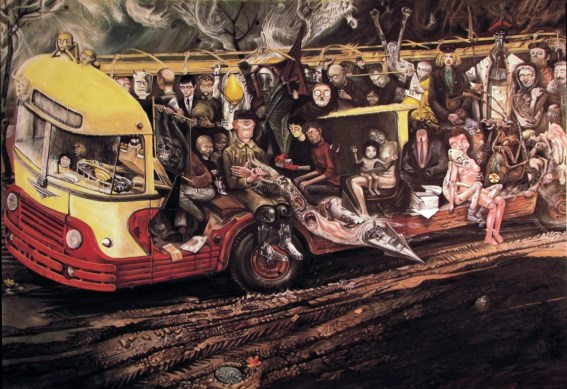
Interestingly, Kaczmarski reinvents some of the characters from his source of inspiration, Bronisław Wojciech Linke’s painting Autobus (1961).  His performance (reposted below) is vehement, but the translation also reveals the anger in the text (the Polish lyrics and English translation are as side-by-side as I can make them in the WordPress system!).  This recording was made before 13 December 1981, so formed part of the cultural-political landscape of the Solidarity period.  Kaczmarski found himself abroad on that date and did not return until 1990.  To give hope and support to his compatriots at home, he worked and broadcast for Radio Free Europe.

Pędzimy przez Polską dzicz
Wertepy chaszcze błota
Patrz w tył tam nie ma nic
Żałoba i sromota
Patrz w przód tam raz po raz
Cel mgłą niebieską kusi
Tam chce być każdy z nas
Kto nie chce chcieć – ten musi!
W Czerwonym Autobusie
W Czerwonym Autobusie mija czas!

We tear through Poland’s wilderness
Bumpy roads, scrub, mud
Look behind, nothing there
But sorrow and shame
Look ahead, again and again
The destination entices with blue mist
Each of us wants to be there
Those who don’t want to, must!
In the Red Bus
In the Red Bus
In the Red Bus time goes by!

Tu stoi młody Żyd
Nos wskazuje Żyd czy nie Żyd
I jakby mu było wstyd
Że mimo wszystko przeżył
A baba z koszem jaj
Już szepce do człowieka
– Wie o tym cały kraj
Że Żydzi to bezpieka!
Myślimy, że poczeka!
Myślimy, że poczeka, na nas Raj!

Here stands a young Jew
The nose shows if Jew or non-Jew
And as if he is ashamed
He had survived despite everything
A peasant woman with a basket of eggs
Is already whispering to someone
“The whole country knows about it
Jews are the secret police!”
We think that it will wait!
We think that it will wait, for us – Paradise!

Inteligentna twarz
Co słucha zamiast mówić
Tors otulony w płaszcz
Szyty na miarę spluwy
A kierowniczy układ
Czerwony wiodąc wóz
Bezgłowa dzierży kukła –
Generalissimus!
Ich dziełem jest marszruta!
Ich dziełem jest marszruta!
Ich dziełem jest marszruta! – Luz i mus!

An intelligent face
That listens rather than talks
A torso wrapped in a coat
Tailor-made to fit a gun
And a steering system
Guiding the red wagon
A headless dummy steers
Generalissimus [Stalin]!
The route is up to them!
The route is up to them!  – Take it easy, it’s a must!

Za robotnikiem ksiądz
Za księdzem kosynierzy
I ktoś się modli klnąc
Ktoś bluźni ale wierzy
Proletariacki herszt
Kapować coś zaczyna
Więc prosty robi gest
I rękę w łokciu zgina!
Nie ruszy go lawina!
Nie ruszy go lawina! Mocny jest!

Behind a worker, a priest
Behind the priest, peasant recruits with scythes
And someone prays, cursing,
A blasphemer who believes
A proletarian boss
Gets what’s happening
So makes a simple gesture
“Up yours” with hand in elbow!
An avalanche won’t move him!
An avalanche won’t move him!  He is strong!

A z tyłu stary dziad
W objęcia wziął prawiczkę
Złośliwy czyha czart
W nadziei na duszyczkę
Upiorów małych rząd
Zwieszonich u poręczy
Krew w żyły sączy trąd
Zatruje! I udręczy!
Za oknem Polska w tęczy!
Za oknem Polska w tęczy! Jedźmy stąd!

And at the back an old creep
Clasps a virgin in his arms
A malicious devil lurks
In the hope of a soul
A row of little ghosts
Dangling from the handrail
Blood dribbles leprosy into veins
Poison them! And torture them!
Through the window, Poland in a rainbow!
Through the window, Poland in a rainbow!  Let’s get out of here!

• The Poet and His Red Bus (1981)

It’s true what they say.  You wait for ages, then three buses come along all at once.  After Szpilman and Winkler‘s happy vehicle, then Linke‘s tortured wreck, here’s another, angry red bus from Jacek Kaczmarski (1957-2004). Pianist, Painter, now Poet.  Kaczmarski was also a singer-songwriter who was one of the voices of the free trade union Solidarity (Solidarność) in the early 80s.

In 1981, Kaczmarski penned a song as a direct response to Linke’s painting.  Czerwony autobus, however, was not the only time that Kaczmarski turned to the visual arts for inspiration.  Over 60 of his 800 poems and lyrics were direct responses to paintings by artists as varied as Pieter Brueghel, Caravaggio, Goya, Hals, Holbein, Manet and Vermeer, with Polish artists such as Maksymilian Gierymski, Jacek Malczewski, Jan Matejko and Witkacy providing equally strong stimuli.  Kaczmarski’s output must have been one of the single most sustained creative collaborations between the visual arts, poetry and music.  Some samples of this interaction can be found on the Polish-language Wikipedia page: http://pl.wikipedia.org/wiki/Jacek_Kaczmarski.

His musical style belonged to both Polish cabaret and the protest movement, with non-Polish icons including Georges Brassens and Bob Dylan.  He was a mean classical guitarist and his vocal delivery was dynamic, expressive and urgent.  This can be heard on his recording of The Red Bus, where he is accompanied on the piano. It comes from Muzeum, the third album he made with Przemysław Gintrowski (also voice/guitar) and Zbigniew Łapiński (voice/piano).  Kaczmarski commented that:

“The programme of Muzeum came into being in 1981 and was based on selected works of historical Polish art. Its intention was to locate the experiences of the ‘Solidarity’ period within an historical perspective so that the listener would understand that he is a witness to a process and not to a one-off event.”

Kaczmarski’s published lyrics, printed below (there are some differences with the recording), make reference to  characters in Linke’s painting, characters who were just as real to Kaczmarski in 1981 as they had been to Linke 20 years earlier.  They were both a long way from the false dawns evoked by songs such as the original Czerwony autobus of 1952.

The Polish Poet’s Red Bus – in English!, posted six days after this one, gives a corrected Polish transcript and a translation into English.


Pędzimy przez Polską dzicz
Wertepy chaszcze błota
Patrz w tył tam nie ma nic
Żałoba i sromota
Patrz w przód tam raz po raz
Cel mgłą niebieską kusi
Tam chce być każdy z nas
Kto nie chce chcieć – ten musi!
W Czerwonym Autobusie
W Czerwonym Autobusie mija czas!

Tu stoi młody Żyd
Nos zdradza Żyd czy nie Żyd
I jakby mu było wstyd
Że mimo wszystko przeżył
A baba z koszem jaj
Już szepce do człowieka
– Wie o tym cały kraj
Że Żydzi to bezpieka!
Więc na co jeszcze czekasz!
Więc na co jeszcze czekasz! W mordę daj!

Inteligentna twarz
Co słucha zamiast mówić
Tors otulony w płaszcz
Szyty na miarę spluwy
A kierowniczy układ
Czerwony wiodąc wóz
Bezgłowa dzierży kukła –
Generalissimus!
Dziełem tych dwóch marszruta!
Dziełem tych dwóch marszruta! – Luz i mus!

Za robotnikiem ksiądz
Za księdzem kosynierzy
I ktoś się modli klnąc
Ktoś bluźni ale wierzy
Proletariacki herszt
Kapować coś zaczyna
Więc prosty robi gest
I rękę w łokciu zgina!
Nie ruszy go lawina!
Nie ruszy go lawina! Mocny jest!

A z tyłu stary dziad
W objęcia wziął prawiczkę
Złośliwy czyha czart
W nadziei na duszyczkę
Upiorów małych rząd
Zwieszony u poręczy
W żyły nam sączy trąd
Zatruje! I udręczy!
Za oknem Polska w tęczy!
Za oknem Polska w tęczy! Jedźmy stąd!

• Edward Gardner on Lutosławski’s Symphony 4

I’ve just caught up with last Friday’s ‘Afternoon on 3’, which included a broadcast of (what I take to be) Edward Gardner’s forthcoming CD recording – with the BBC SO on Chandos – of Lutosławski’s Symphony 4 (1988-92). Unfortunately, the BBC’s ‘play it again’ technology has no sustaining power out here in the sticks (thanks, BT!), so it’s a halting, interrupted soundscape for me for the present.

Gardner’s series of Lutosławski recordings has been wonderful so far: fresh, vital, insightful.  This performance fulfilled my high expectations: a searing opening section, followed by a great sense of motility, and a measured yet edgy lyrical build-up to the final climax.  I’ve not heard as desolate a fall-away as here.  The BBC SO’s playing is top-notch and Chandos has achieved an exemplary textural clarity.  This third CD – which also includes the early Symphonic Variations, Lutosławski’s own orchestration of the Variations on a Theme of Paganini, and the Piano Concerto – is due out in the New Year.

In his discussion with Katie Derham beforehand, Gardner gave a succinct and helpful description of ‘aleatory’ as it applies to Lutosławski’s music, and what it means for the conductor, although it’s worth noting that most of Symphony 4 and of other late Lutosławski is conducted traditionally.  Gardner also had a fascinating if unexplored take on the structure of Symphony 4.  Lutosławski conceived of it as having two movements, played without a break. I hear it more as a fantasia masking a radical reconfiguration of the composer’s characteristic structural landmarks and procedures.  Gardner hears it differently again: “You can hear four pretty distinct movements actually.  You can hear a wonderfully chaos-to-form opening, a dance movement, a slow movement and a finale, I think.”  It will be interesting to see how Gardner’s approach on the CD bears out this new perception.

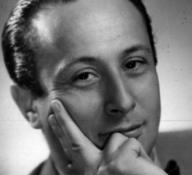
• The Pianist (b. 5.12.1911) and his Red Bus

Thanks to an alert last night from a friend in Warsaw, I was reminded that today marks the centenary of the birth of Władysław Szpilman (1911-2000). Szpilman was well-known in Poland from the 1930s as a fine concert pianist and as a composer of concert music and popular songs, especially after World War II.  He recounted his extraordinary survival of the war in his memoir Śmierć Miasta (Death of a City).  The memoir was republished in English as The Pianist shortly before his death and turned into an award-winning, internationally popular film of the same title by Roman Polański (2002), with Adrien Brody playing the lead role.

I once sat behind the quiet, elderly Szpilman at a concert in Warsaw.  I regret not speaking to him.  Later, I wanted to reproduce the opening page of one of his songs – Jak młode Stare Miasto (Like The Young Old Town, 1951) – in my book Polish Music since Szymanowski (Cambridge, 2005).  But permission was refused by his family as they thought that some of his songs were not representative of his talents (and also perhaps because 1951 was the height of the socialist-realist push in the arts). Yet this hugely popular song had already been released on CD (‘Golden Hits of Socialism’ [!], Intersonus ISO84).  Such is the unpredictability of copyright permission.

In 2000, Polish Radio issued a 5-CD set of Szpilman’s performances and compositions (PRCD 241-245):

• CD 1: 19 songs (1952-91).
• CD 2: Szpilman as pianist – including in his own Concertino (1940), Rachmaninov’s Rhapsody on a Theme of Paganini (1954), Schumann’s Fantasy in C Major (1960) and two pieces by Chopin, including the Nocturne in C# minor (1980) with which he both closed Polish Radio broadcasts in 1939 and reopened them in 1945.
• CD 3: Szpilman as a member of the Warsaw Quintet – piano quintets by Brahms and Schumann (1963-65).
• CD 4: Szpilman with Bronisław Gimpel (who also led the Warsaw Quintet) – violin sonatas by Brahms (no.3), Grieg (no.3) and Franck (1958-65).
• CD 5: songs for children including three extended ‘musical fairytales’ (1962-75).

One of Szpilman’s most popular songs was Czerwony Autobus (The Red Bus, 1952).  The recording on CD 1 above is particularly fine, not least because of its sense of good humour, considerably aided by Szpilman’s own swinging piano.  Search it out if you can.  That recording was made by the best close-harmony male-voice quartet of the time, Chór Czejanda (Czejanda Choir).  They also made another, longer recording with dance orchestra.  In the YouTube video below (Legendy PRL: Legends of the Polish People’s Republic), this audio recording is accompanied by shots of Warsaw buses in various ‘picturesque’ locations of the post-war socialist capital [14 October 2014: the original video – www.youtube.com/watch?v=x_xZGriR2DE – has since been withdrawn ‘for multiple third-party notifications of copyright infringement’.  But there are several other videos with the same recording, so here’s one of them instead.  The video element this time is not of buses, sadly, but still shots in black and white of scenes in Warsaw in the 1950s].  I’ve put my translation of the first three verses below.  Enjoy!

When at dawn I run like a wind through the streets,
The city like a good friend welcomes me,
And – honestly – I wish you all such happiness
As every day gives me in Warsaw.

On board, please!  No-one will be late for work,
We will go quickly, even though we’re surrounded by a forest –
A forest of scaffolding, which really does mean
That here time does not stand still.

The red bus rushes along my city’s streets,
Passes the new, bright houses and the gardens’ cool shade.
Sometimes a girl will cast us a glance like a fiery flower.
Not only ‘Nowy Swiat’* is new – here each day is new.

* ‘New World’, a beautiful old street in Warsaw, reconstructed after the war.

[For more information, go to http://www.szpilman.net/]

• Lutosławski’s Cello Concerto on YouTube

Talking with a friend the other day about his experience of a concert performance of Lutosławski’s Cello Concerto in London’s Cadogan Hall (Jacob Kullberg, RPO, conducted by Christopher Austin, 25 October 2011), I realised that it’s been a long time since I saw this concerto live.  Chester Music’s website indicates that the only forthcoming performance is in Tokyo next month.  So I looked again through the currently available YouTube videos (excluding the purely audio postings).

The continuing appeal of Lutosławski’s Cello Concerto (1970) is remarkable.  I believe that no other cello concerto since Shostakovich’s two (1959, 1966) has had as many commercial audio recordings (17 and counting).  And it is noticeable that Lutosławski’s ground-breaking concerto attracts young performers in particular.  The only senior performer on YouTube is Yo-Yo Ma, who regrettably has never committed his interpretation to disc, even though he has performed the work on a number of occasions.

Yo-Yo Ma
This is just a short excerpt, taken from a performance that Yo-Yo Ma gave (with score, on which he seems to be surprisingly dependent in the closing stages) with the Los Angeles PO, conducted by Esa-Pekka Salonen.  It consists of the immediate build-up to the work’s climax, which then leads on to the Coda.  It has all the hallmarks of Ma’s artistry, so it is the more regrettable that there is no current access to the preceding 20′ or so.

http://www.youtube.com/watch?v=_g_ECLBvUS0 (Finale from just after fig.130 + Coda; 2’14”)

Inbal Segev
The Israeli-American cellist Inbal Segev (Inbalsegev) uploaded two excerpts on 17 June 2008.  They come from her performance during the second Paulo Cello Competition in Helsinki in 1996, when she was accompanied by the Helsinki Radio SO under Petri Sakari.  The first excerpt is from near the start of the central slow Cantilena, up to its middle point, while the second makes rather heavy weather of what should be the soloist’s helter-skelter ‘escape’ (as Lutosławski put it) from orchestral attacks in the Finale.

http://www.youtube.com/watch?v=U97ko6MEypU (Cantilena, figs 64d-75; 2’53”)
http://www.youtube.com/watch?v=edxiFjbfgFc (Finale, figs 104-127; 1’41”)

David Eggert

This is a name new to me.  David Eggert is a Canadian in his mid-20s who is studying in Europe.  His YouTube video, with the Slovenian PO, conducted by Uroš Lajovic, was posted by powertimsah on 23 September 2010.  Its four-part upload is not fully in line with the four movements of Lutosławski’s concerto: Introduction, Four Episodes, Cantilena, Finale + Coda.

http://www.youtube.com/watch?v=MXS5mHUxPf4  (Introduction; 3’02” , missing c.2′)
http://www.youtube.com/watch?v=hscqZFloArI  (Four Episodes, rather crudely cut before the soloist’s first pizzicato low E at fig.63; 6’14”)
http://www.youtube.com/watch?v=GO_61BvsVrs (Cantilena and Finale to fig.90; 7’11”)
http://www.youtube.com/watch?v=JEVpzrxckk0 (Finale from fig.90 + Coda; 4’50” + 40″ applause)

There are two major drawbacks, neither of them Eggert’s fault.  Firstly, the recording starts halfway through the Introduction, on the high Bbs on system 11 of the first page of the score.  Carelessness or misfortune, either way it ruins the performance as a whole. Secondly, the sound quality is often poor because it is plagued by high-pitched ‘twittering’. This is a great pity, because Eggert (playing from score) is a committed soloist, commanding both delicate and strong articulation.   What is there of the introduction indicates that he understands the import of both his solo role and the brass interruptions (he responds subtly to the latter, both behaviourally and musically), while the Finale is one of the most urgent and dramatically shaped that I have heard.

Nicolas Altstaedt

German-born Nicolas Altstaedt is a BBC New Generation Artist and has developed an impressive career in recent years. This complete recording, first uploaded by haekueroenstoe on 6 February 2010, is with the Finnish Radio SO under Dmitri (Dima) Slobodeniouk.  It appears to come from Altstaedt’s participation at the fourth Paulo Cello Competition in Helsinki in 2007.  The upload separates the recording into three instalments that unfortunately cut against the grain of Lutosławski’s structure.  Worse still, in the second instalment there is a time-lapse of over 1″ as the image falls behind the sound, and this time-lapse lengthens to over 7″ in the third instalment.  If you close your eyes, however, there’s much to appreciate here.

UPDATE (12 June 2013)
On 9 March 2013, the technical problems were sorted out when the uploader posted this performance in a single video: http://www.youtube.com/watch?v=pIxvBjP7ld8.  Great news, as this performance is riveting!  Only the first of the three instalments from the original upload is still available.

http://www.youtube.com/watch?v=uvp8GF76VXQ (Introduction and Episodes 1-2; 9’46” including 1’03” arrival on stage)
http://www.youtube.com/watch?v=-w_3yE5Owbk (Episodes 3-4, Cantilena and Finale to fig.88; 8’42”)
http://www.youtube.com/watch?v=acEVBscbtH8 (Finale from fig.88 + Coda; 5’20”)

Altstaedt (playing without score) produces a fiery and exciting performance which is matched by Slobodeniouk’s tight orchestral direction.  At c. 22’25” it is also one of the shortest.  Only two performances, both conducted by the composer (with Roman Jabłoński and Louise Hopkins) are shorter, and then only marginally.  In the Introduction, Altstaedt plays with studied intensity rather than absent-minded indifference, recalling Rostropovich’s determined approach (though Altstaedt maintains a greater timbral and rhythmic consistency).  He also evinces a high degree of self-confident independence in the Episodes where others may aim for intimate rapport with the orchestra.  Altstaedt’s approach emphasises the dynamism of Lutosławski’s score, even in the Cantilena, where he is especially eloquent.  He dominates even the Finale, making the confrontation between soloist and orchestra more like a battle of equals whose outcome cannot be taken for granted.  If that makes the cello’s vanquishment a little surprising, its subsequent resurrection is triumphant.

Oren Shevlin

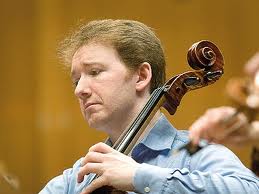
Although Oren Shevlin is another name new to me, he is British by birth.  He does not appear to have his own website. He uploaded these two videos – whose division acknowledges Lutosławski’s structure – on 20 September 2011 (under the name orencello).  They come from performances that he gave (without score) on 3 and 4 February this year with the WDR SO in Cologne, conducted by Jukka-Pekka Saraste.

http://www.youtube.com/watch?v=6kliW2KCYq8 (Introduction, Four Episodes; 12’15”, including 48″ arrival on stage)
http://www.youtube.com/watch?v=GdjzGN4dYxw (from after fig.64: Cantilena, Finale + Coda; 11’13” +1’31” applause)

It is a very fine performance, executed with a modesty and deceptive frailty that fits the character imagined by the composer.  Lutosławski was wary of performers who over-invested the Introduction with emotion and thus ran the danger of blunting the drama that follows.  Shevlin’s reaction to the marking indifferente over the repeated D naturals is to look vaguely outwards and his demeanour really does suggest the mind-lessness and whimsicality that Lutosławski was aiming for in the opening 4′ solo.  Shevlin genuinely works with the orchestra in the Episodes that follow, seeking the common ground, with subtlety and apparent extemporaneity, that is periodically thwarted by interruptive brass.

If Shevlin’s tone is not as robust as those of some other performers of this work, his empathy with the strings in the Cantilena, as the section moves towards the ringing unison, is persuasive.  Here is the cellist as Everyman, emotionally open and vulnerable.  This pays dividends in the Finale, where the orchestra attempts to quash his voice.  At fig.88, Shevlin plays the cello’s response to the orchestra’s battery in a way which emphasises the survival instinct of the downtrodden and their sense of irony, even humour, at such moments.  And this was precisely what Lutosławski wanted here.  I’ve never heard the phrase at fig.88 uttered with such wry poignancy.  The ‘escape’ that follows is raw.  Shevlin plays as if he is fleeing and pleading for his life.  When he emerges with weeping cello sobs and then climbs to the heights of those strong, almost desperate A naturals at the very end, one can believe that he has survived the ordeal, but only just and, as Lutosławski said, ‘in another world’.

Shevlin has also uploaded the Introduction separately (on 22 July 2010 – he calls it the Cadenza).  Here he is younger and beardless, and I’ve identified the occasion as an excerpt from his performance during the second Paulo Cello Competition (1996).  The conductor is Petri Sakari with the Helsinki Radio SO (as for Segev’s excerpts, above).

http://www.youtube.com/watch?v=pojl2C3KTCI (Introduction, up to fig.9; 4’52”)

Coda
What is striking about the performers of the videos detailed above is the strong level of participation by Finnish musicians: the Finnish Radio SO features on three videos (Segev, Altstaedt, and the Shevlin excerpt from 1996) and three Finnish conductors take the helm on four: Salonen (Yo-Yo Ma), Sakari (Segev and Shevlin excerpts) and Saraste (Shevlin complete).  The (usually) triennial Paulo Cello Competition in Finland’s capital has evidently played a key role for several of these players.  There is also a strong Eastern European showing: the Slovenian PO and Lajovic (Eggert) and the Russian conductor Slobodeniouk (Altstaedt).  The nationalities of the soloists, however, are more broad (American, Israeli, Canadian, German and British).

Yo-Yo Ma, Inbal Segev and Oren Shevlin (1996) give only excerpts, so these are unable to provide substantial insights. It is interesting, however, to be able to compare the two Shevlin Introductions, performed 15 years apart.  It is enormously frustrating that David Eggert’s perceptive account is marred by the missing first 2′ and its poor sound quality, but I am keen to hear his interpretation under better circumstances.  Equally, I eagerly await a proper chance to hear Altstaedt in concert as it is impossible to watch most of this clumsily divided upload because of the time-lapses in the second and third instalments.  The first instalment gives a good idea of Altstaedt’s firm grasp of Lutosławski’s score, and it is of course possible to listen to the rest with eyes closed.  It is a performance to savour for its muscularity and momentum.

So that leaves only Shevlin’s complete performance (2011) with the WDR SO under Saraste.  As indicated above, I think that this is a truly insightful interpretation and one that repays listening and deserves wide recognition.  It also bears repeated viewings for the TV direction, with its imaginative camera angles (including a hidden floor-camera in front of the soloist) and variety of split-screen shots which highlight key orchestral participants and textures.