 I’ve just been to Warsaw to celebrate Lutosławski’s centenary. I’ve returned with commemorative books, CDs, a pencil, a medal and a brush, with the promise of an IoS app to follow. More importantly, I’ve experienced an enlightening and inspiring five days with friends old and new, all gathered together by the music and memories of one man. It was a bit surreal: we were there, but he wasn’t, except in his music. I felt his absence keenly, even though it’s almost 19 years since he died.
Day 1 (Thursday, 24 January)
It had all been a bit hairy getting from Cornwall to Warsaw. Yesterday, I made it to Poole for a performance by Johannes Moser, the Bournemouth SO and Kirill Karabits of Lutosławski’s Cello Concerto. Moser is playing it a dozen times or so this year and his was a vibrant and alert reading. We also had a great discussion in a pre-concert event with Tom Hutchinson of the RPS (who had commissioned the work and was on the eve of its own 200th-anniversary celebrations) and I’m looking forward to poring over the score with Moser in the near future. But neither threats of snow and ice nor broken-down trains got in the way of my safe arrival in Poland today to snow and minus temperatures that back home would be regarded as a national catastrophe.
 The pre-centenary concert was given mainly by the young generation of Polish and visiting artists in the Royal Palace, as the opening concert of this year’s Łańcuch X (Chain 10) festival built around Lutosławski’s music. There were fine readings of Musique funèbre, Grave (with Marcin Zdunik) and Paroles tissées (with the Dutch tenor Marcel Beekman) by the AUKSO CO under Marek Moś. A special treat were the readings from Paul Valéry, Henri Michaux and Cyprian Kamil Norwid by one of Poland’s most famous actresses, Maja Komorowska. She was in the very first Polish film that I ever saw, Zanussi’s Zycie rodzinne (Family Life).
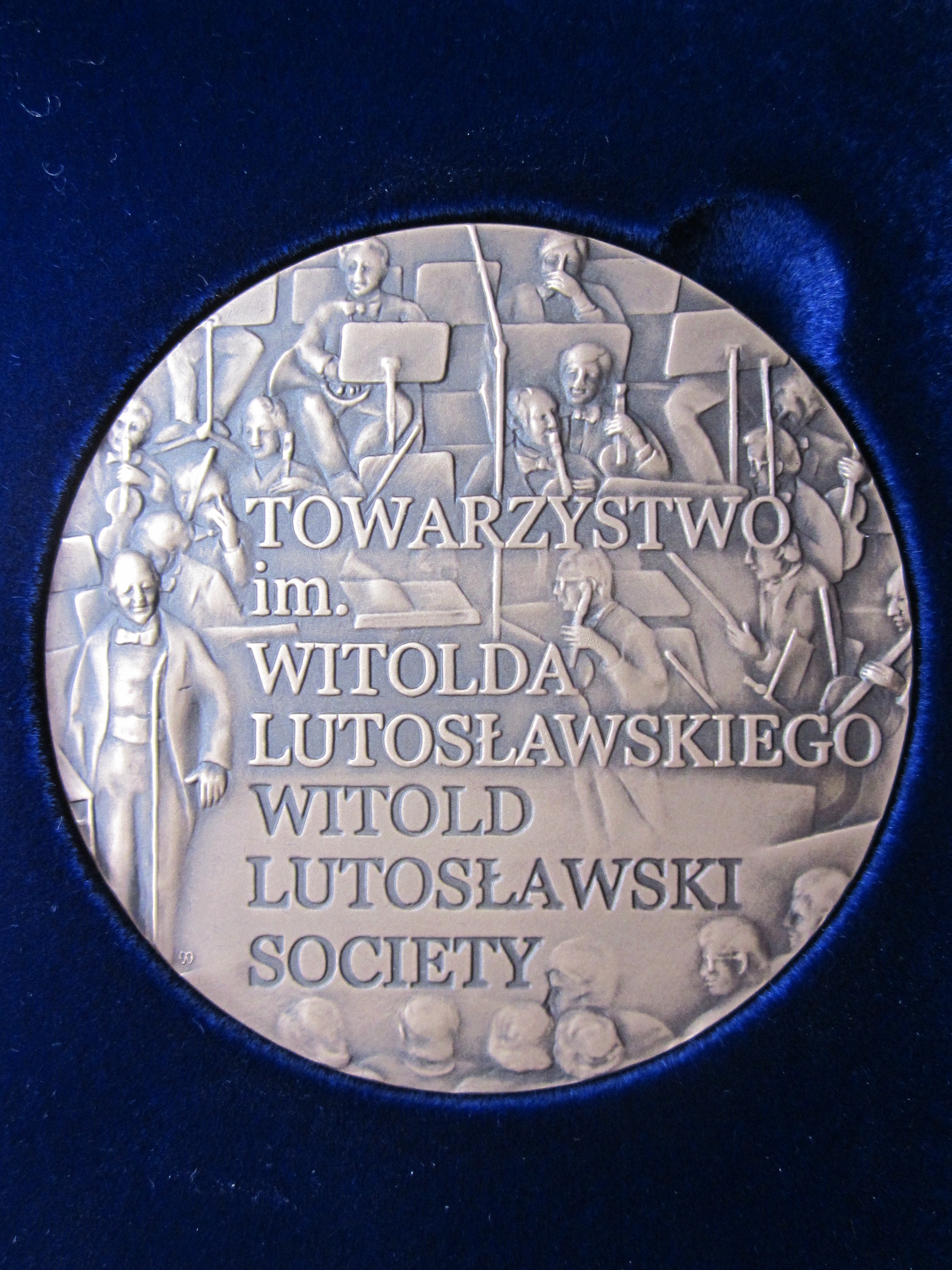
An unexpected part of the evening was the presentation of a specially minted medal by the Witold Lutosławski Society not only to Lutosławski’s stepson and wife, Marcin and Gabriela Bogusławski, but also to about a dozen other guests. These included the Polish conductor Jan Krenz, long a champion of Lutosławski’s music, Polish writers such as Mieczysław Tomaszewski (who was at the PWM publishers when Lutosławski’s career really took off in the early 1950s) and Michał Bristiger. Both Tomaszewski and Bristiger are in their 90s and as sprightly in body and spirit as ever. Younger Polish writers also honoured included Danuta Gwizdalanka and the composer Krzysztof Meyer, whose joint two-volume study of Lutosławski’s life and music is being issued in a single, German-language volume later this year, and Zbigniew Skowron, whose editorial and archival work has done much to bring Lutosławski’s music and thought to non-Polish readers.
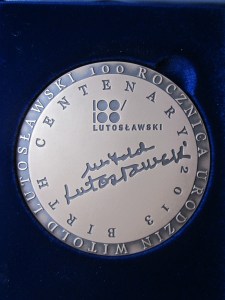

Non-Polish recipients included the German musicologist Martina Homma, the Russian musicologist Irina Nikolska, the American composer and author of the first major study of Lutosławski’s life and work, Steven Stucky, and two British writers: Charles Bodman Rae and myself. James Rushton of Chester Music accepted the medal as Managing Director of Lutosławski’s publishers, Chester Music. The following day, Anne-Sophie Mutter and Antoni Wit also received the medal on the stage of the Philharmonic Hall at the end of the opening centenary concert. The Poles are good at this type of recognition and we were all honoured and touched by the generosity of the gesture.
Day 2 (Friday, 25 January)
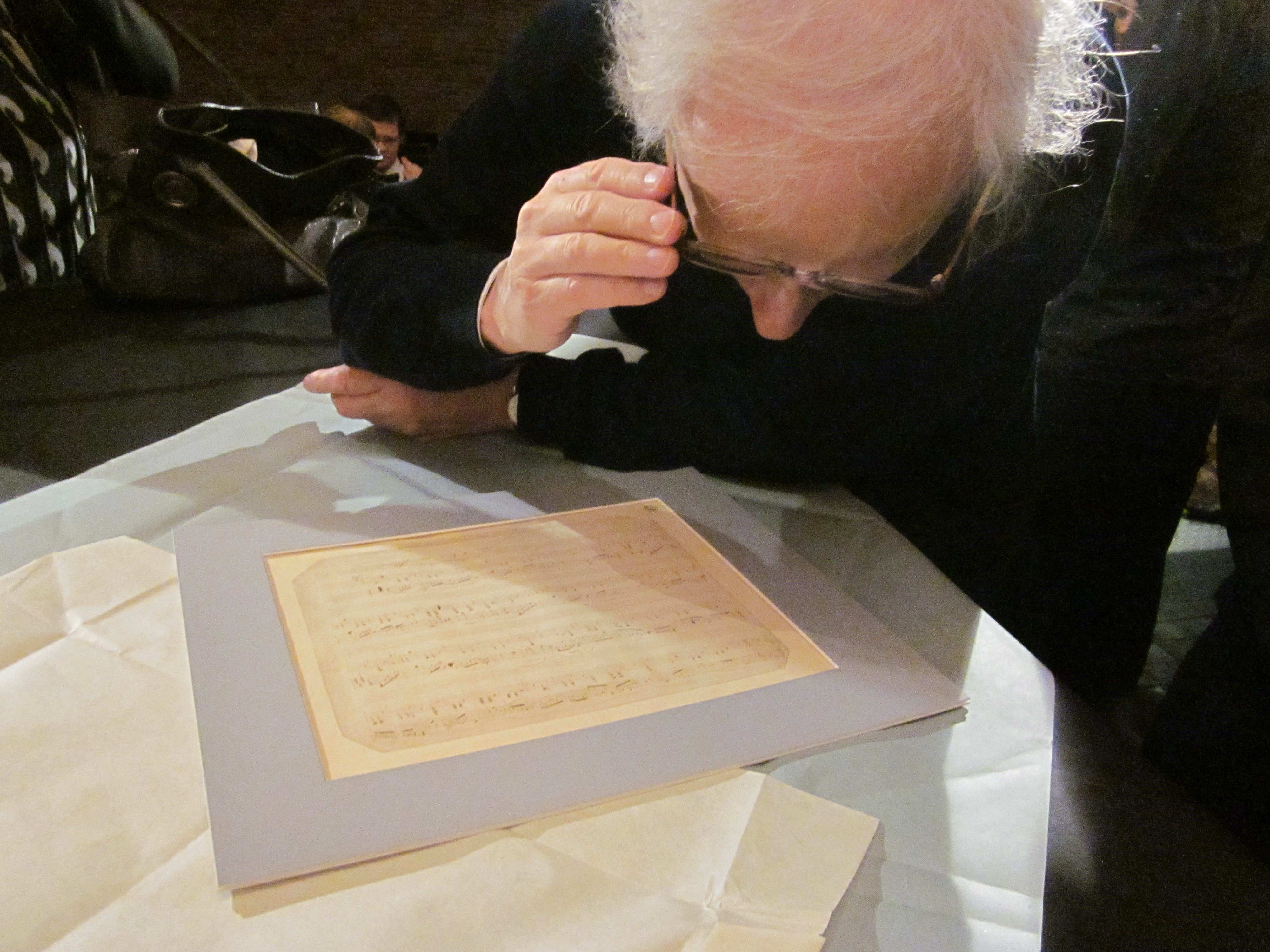
Today was the big day and a packed programme for the visiting guests. First stop was the Chopin Museum, where we were shown a recently purchased autograph of Chopin’s Waltz in F minor. Krzysztof Meyer inspected it closely.

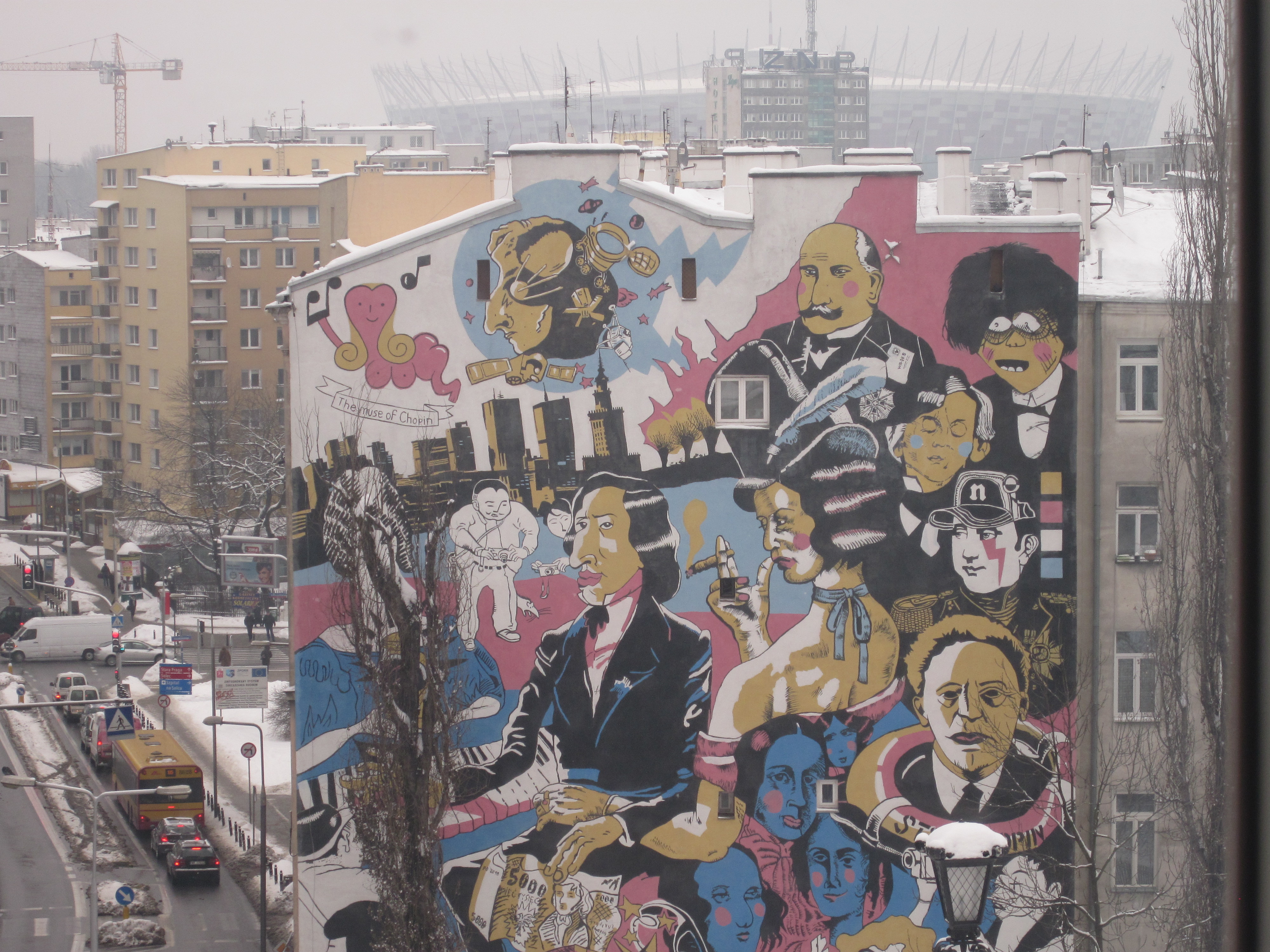
The Director of the Chopin Institute Artur Szklener and the Senior Curator of the Chopin Museum Maciej Janicki were our expert guides. Janicki then took us through the interactive displays and artefacts installed in the museum. We could also glimpse a more recent tribute to Chopin in the shape of a giant mural on a nearby building. You can see the even more giant and infinitely less prepossessing national stadium on the other side of the River Vistula.

At lunchtime we moved across from the reconstructed Ostrogski Palace that houses the Chopin Museum to the ultra-modern facilities of the National Frederic Chopin Institute. We weren’t there for Chopin, but for a press conference to launch a smartphone app: Witold Lutosławski: Guide to Warsaw. As I write, it’s available only on Android; the IoS version is awaiting approval from Apple.

I was impressed, not only by the way in which the creators outlined their intentions – principal among the people involved were (from left to right above) Grzegorz Michalski, President of the Lutosławski Society, Danuta Gwizdalanka, Kamila Stępień-Kutera and Artur Szklener – but also how good the application looked. It’s been designed by the Kraków-based company NETIGEN and project-managed by a former music student Kamil Ściseł.
 The app has English and Polish versions, numerous photos, spoken and written texts, and it guides the user through Lutosławski’s Warsaw, visiting over fifty locations. The team decided early on not to include music so as to keep the app manageable. It seemed from the demonstration to be both handsome and user-friendly and should prove to be a major source of interest to a wide spectrum of people around the world. It will be much cheaper for those with foreign SIM cards to use at home than on the streets of Warsaw, but it is designed to inform users who are following Lutosławski’s footsteps either on the ground or virtually.
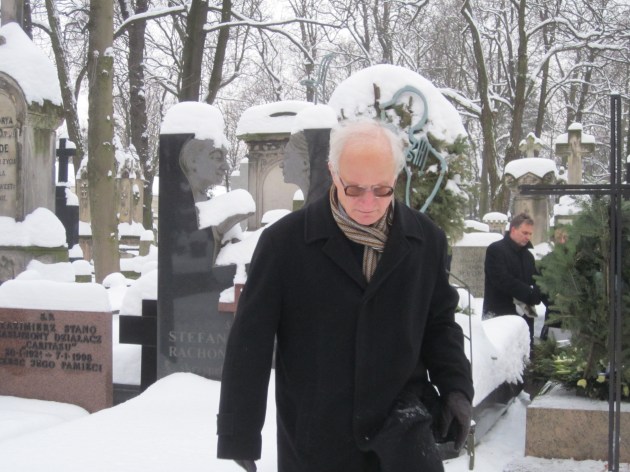
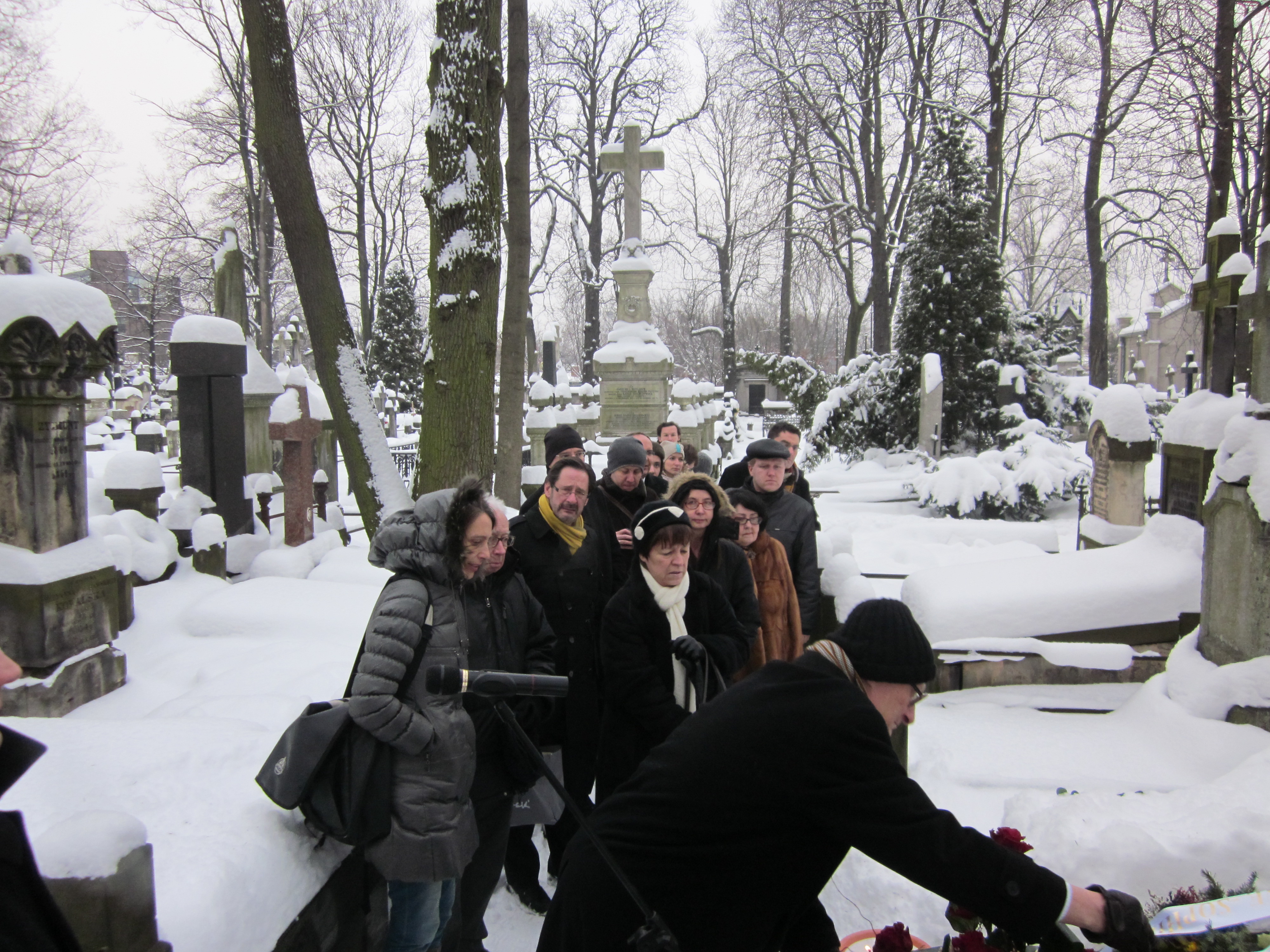
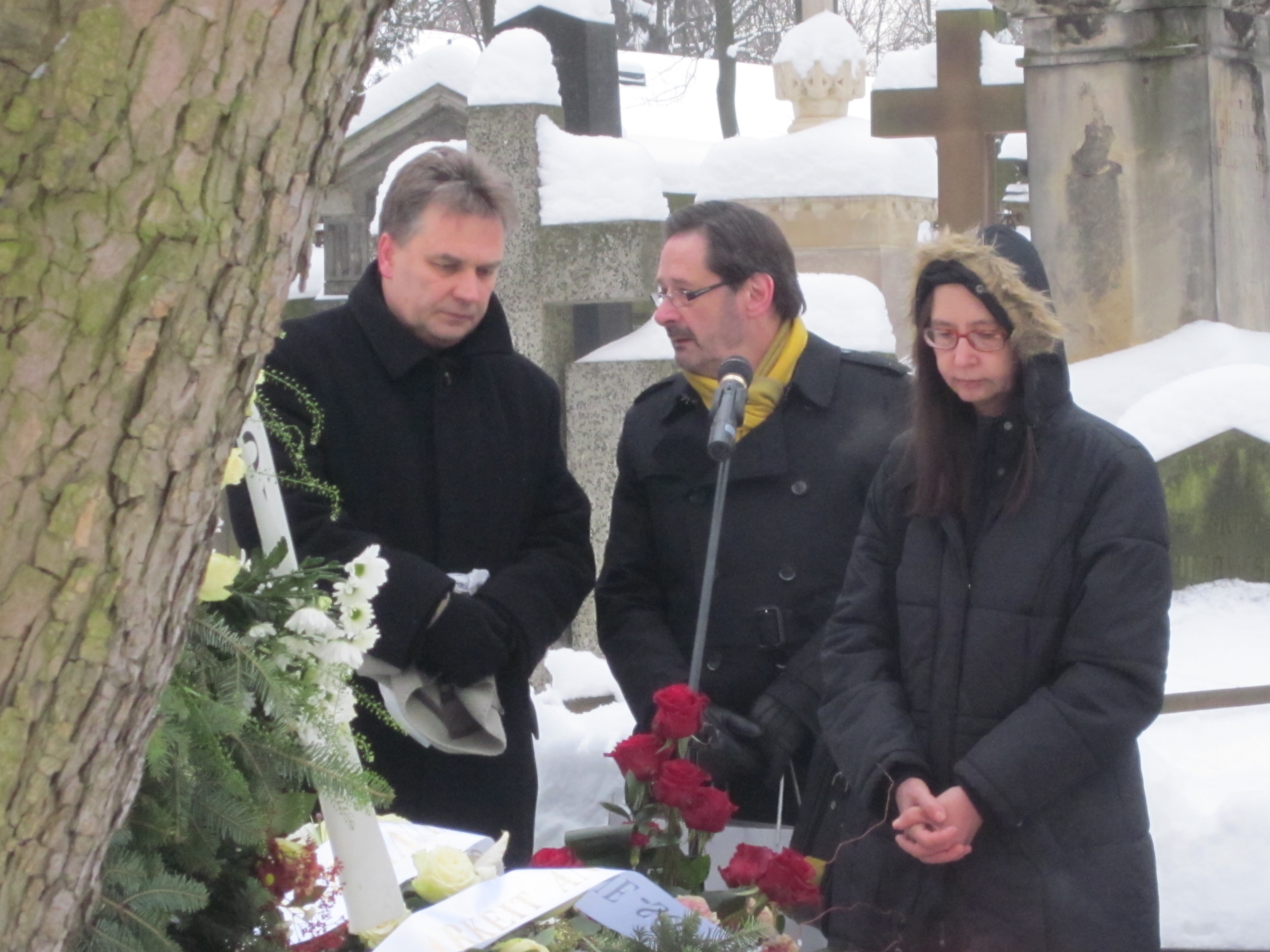
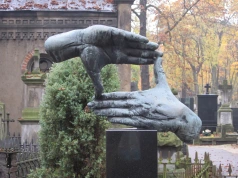
From the press confeence it was on to Warsaw’s Powązki Cemetery, where Lutosławski was buried on 16 February 1994. Most of us had been there many times before, not least because there are the graves of so many famous creative artists in its grounds. Lutosławski’s grave is close by those of many other musicians. It was getting pretty cold by mid-afternoon and the snow had piled up. Earlier visitors had, however, cleared the gravestone of Lutosławski and his wife Danuta and it was already covered in huge wreaths.
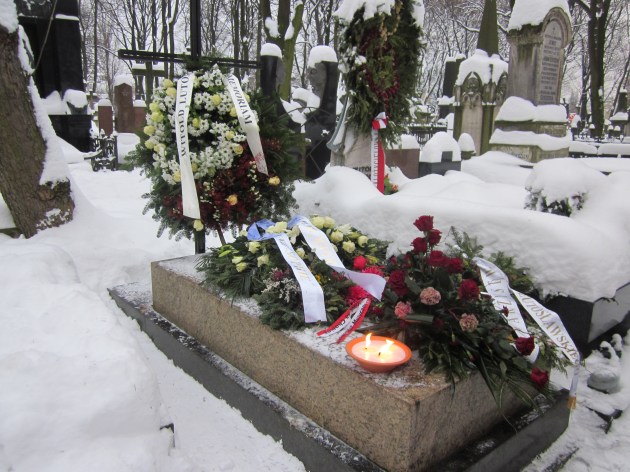
There was little room in the space between the rows of graves to fit everyone in. Krzysztof Meyer adjusted the wreath ribbons.

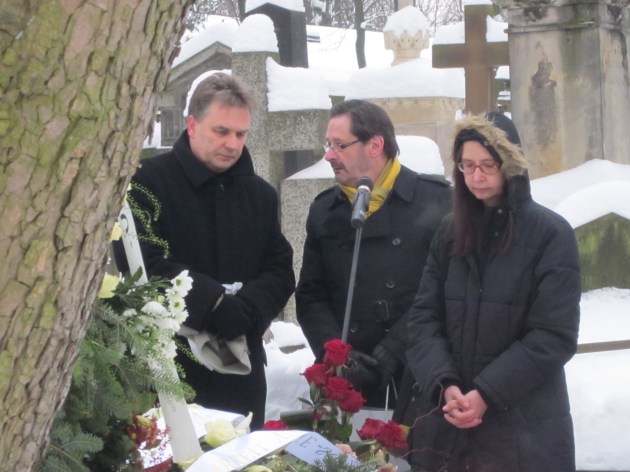
Speeches were made by the President of the Polish Composers’ Union Jerzy Kornowicz and by Steven Stucky.
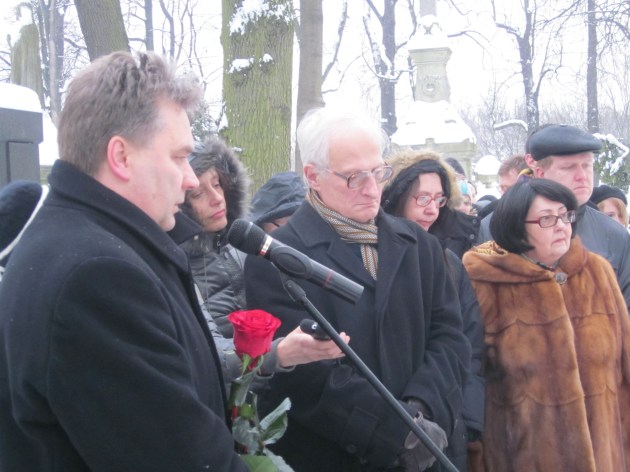
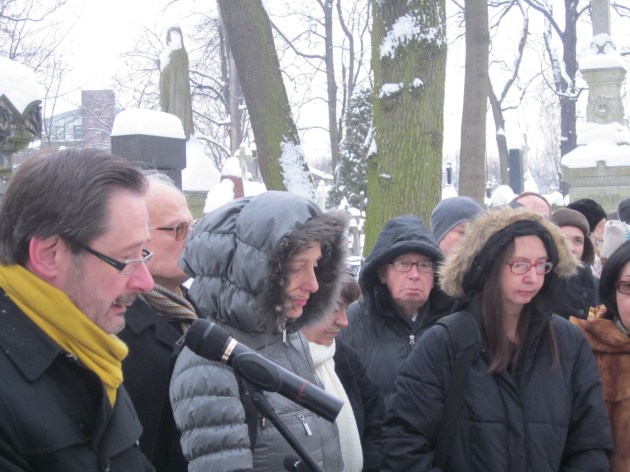
In the photo above, you can see (from left to right) Jerzy Kornowicz, Krzysztof Meyer, Martina Homma and Irina Nikolska. Below, Steven Stucky, Krzysztof Meyer and Danuta Gwizdalanka partly hidden, Mieczysław Tomaszewski, Martina Homma and Irina Nikolska (also partly hidden).
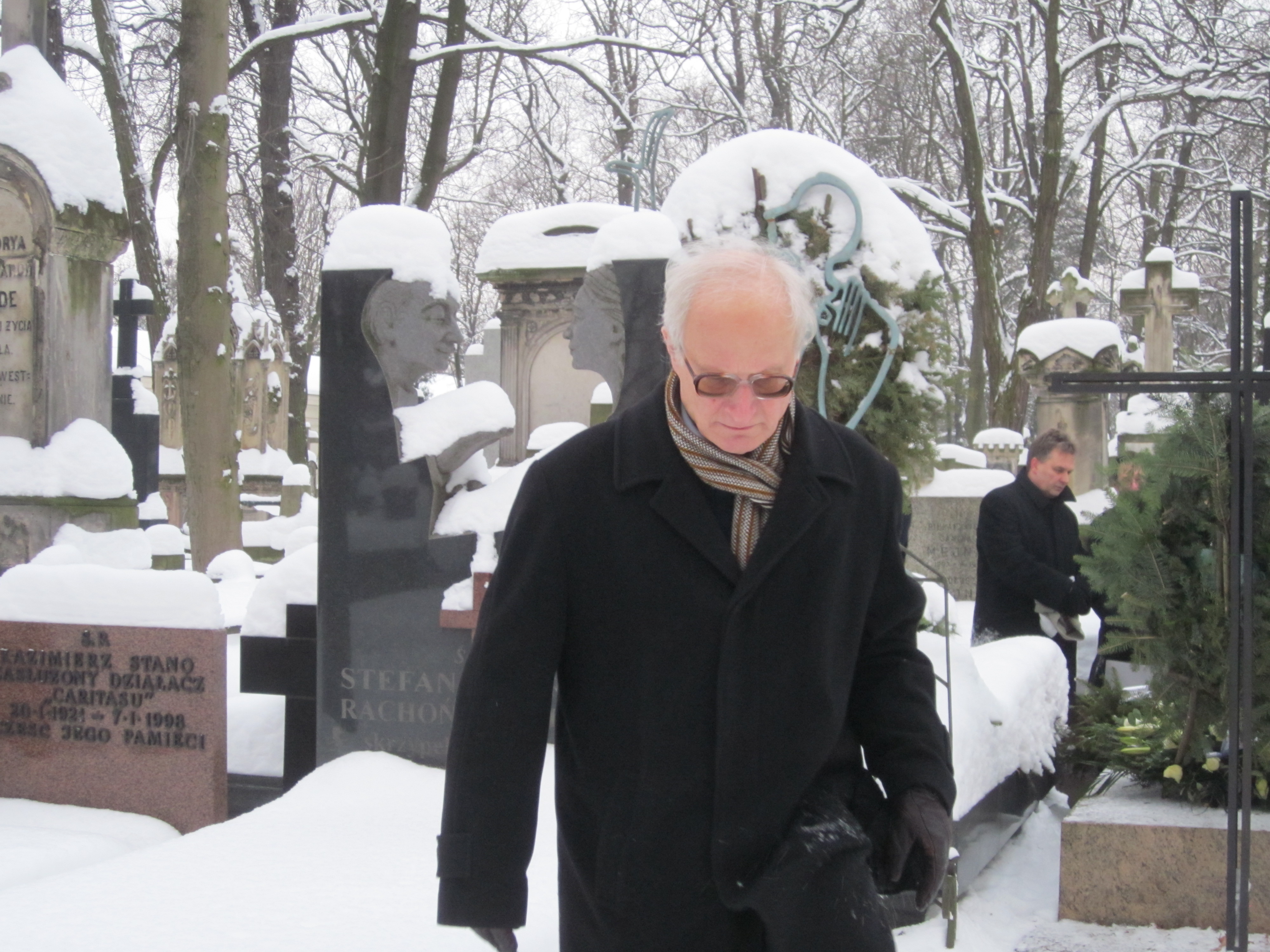
Being a little frivolous by nature, I couldn’t help noticing that the profile of the conductor Stefan Rachoń behind Lutosławski’s grave had been lent a certain Victorian air by the accumulation of snow.

I stepped the other side and was followed by Meyer through the snow drifts between the graves. I then took a final photo of Kornowicz, Stucky and Homma.
 The major event on the centenary of Lutosławski birth was the evening’s concert by the Warsaw Philharmonic under Antoni Wit. It was an interesting and in the event a brave choice to open with a piece not by Lutosławski but by one of the younger generation whom Lutosławski helped with scholarships and other funding. Pawel Szymański (b.1954) is arguably the best-known Polish composer of his generation, but he’s been out of the limelight for some time, mainly finishing his opera Qudsja Zaher (premiere, Teatr Wielki, Warsaw, 20 April 2013). His new orchestral piece, Sostenuto, is characteristically oblique, slow-moving (initially) and demanding of concentration. Its main climax approached Lutosławski’s in intensity and it subsided in a similar fashion. Szymański dedicated Sostenuto to Lutosławski, including a brief reference to the latter’s Partita (which I missed) and ended with a veiled reference, also missed, to Brahms’s Piano Concerto no.1. Szymański remains as enigmatic as ever.
Wit’s performance of Lutosławski’s Third Symphony was solid and well-paced, even if it didn’t fully catch fire. The fireworks came with Anne-Sophie Mutter’s performance of Partita-Interlude-Chain 2 in the second half. This is her piece (These are her pieces?) and she gave them all the subtlety and passion that they deserve. The hall was packed and it was great to meet up again with friends like the conductor Wojciech Michniewski (who’s conducting the premiere of Szymański’s opera) and the pianist and composer Zygmunt Krauze.
Day 3 (Saturday, 26 January)
The official celebrations are over for the time being. I decided to stay on for a few days, and today I had two events. The first was completely unrelated to Lutosławski. It was a piano recital by the Hungarian-born, Polish-domiciled Szábolsc Esztényi of music by his friend Tomasz Sikorski (1939-88). Sikorski, a contemporary of Krauze, was one of the most original voices in Polish music, and his strong, repetitive minimalist idiom is as challenging today as it was back in the 60s, 70s and 80s.
This recital was being given in the old Królikarnia palace in south Warsaw, which looked picturesque under lamplight, surrounded by deep snow, but was pretty cold inside too. The cause was the launch of two CDs – issued by Bôłt records in association with DUX and Polish Radio among others – of music by Sikorski. Esztényi’s double CD also includes two of his own works (Creative Music no.3 in memoriam Tomasz Sikorski, 1989, and Concerto, 1971). There’s also Presence (2007) by Kasia Głowacka. The other pieces, by Sikorski, are mainly archival – Echoes II (1963), Antiphones (1963), Diario 87 – as well as his Solitude of Sounds (1975). The second CD is by John Tilbury, who plays his own Improvisation for Tomasz Sikorski (2011) alongside Sikorski’s Autograph (1980), Rondo (1984) and Zertstreutes Hinausschauen (1971).
The Bôłt series is a fascinating and inventive mix of archival performances and new interpretations and I’ll be doing a substantial survey of some of its repertoire – around ten CDs – in the near future.
Unfortunately, I was double-booked that night and had the chance to hear only two of the Sikorski pieces in Esztényi’s recital, including Sikorski’s Sonant (1967). I was immediately struck by the correlation between Sikorski’s remorseless, expressionless repetitions and the opening of Lutosławski’s Cello Concerto. I wonder…
I rushed from south to north Warsaw via the magic of the metro, which offered relief from the temperatures which were plummeting towards -21C. I was on my way to an informal supper party at Lutosławski’s house. Unfortunately, I got lost on the way from the Plac Wilsona station and was lucky to find other souls out on the streets who could direct me towards Śmiała 39. I recognised it immediately, although I’d not seen it in the snow before.
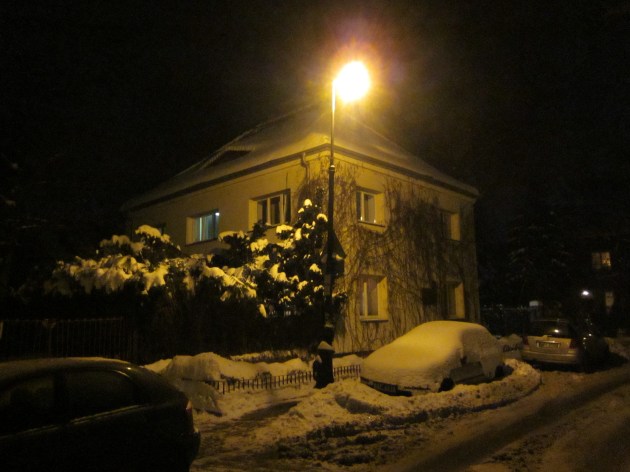
The giveaway was the relief plaque on the wall.

The house is now occupied by Lutosławski’s stepson and his wife, who welcomed us all inside with whiskey, wine and good food. It was nice to relax and to be back in this special place. At one point, we were led up to Lutosławski’s studio on the first floor (the lit window on the exterior photograph above), where I had spent three days exploring his books, sketches and scores in September 2002. The arm of the studio containing his desk and main bookshelves (by the lit window) is much as I remember it, whle some of the other bookshelves have been removed or replaced. Sadly, Lutosławski’s 1970 carpet that he bought in London is no more, revealing the clunky parquet flooring which he had covered over for acoustic purposes.
Day 4 (Sunday, 27 January)
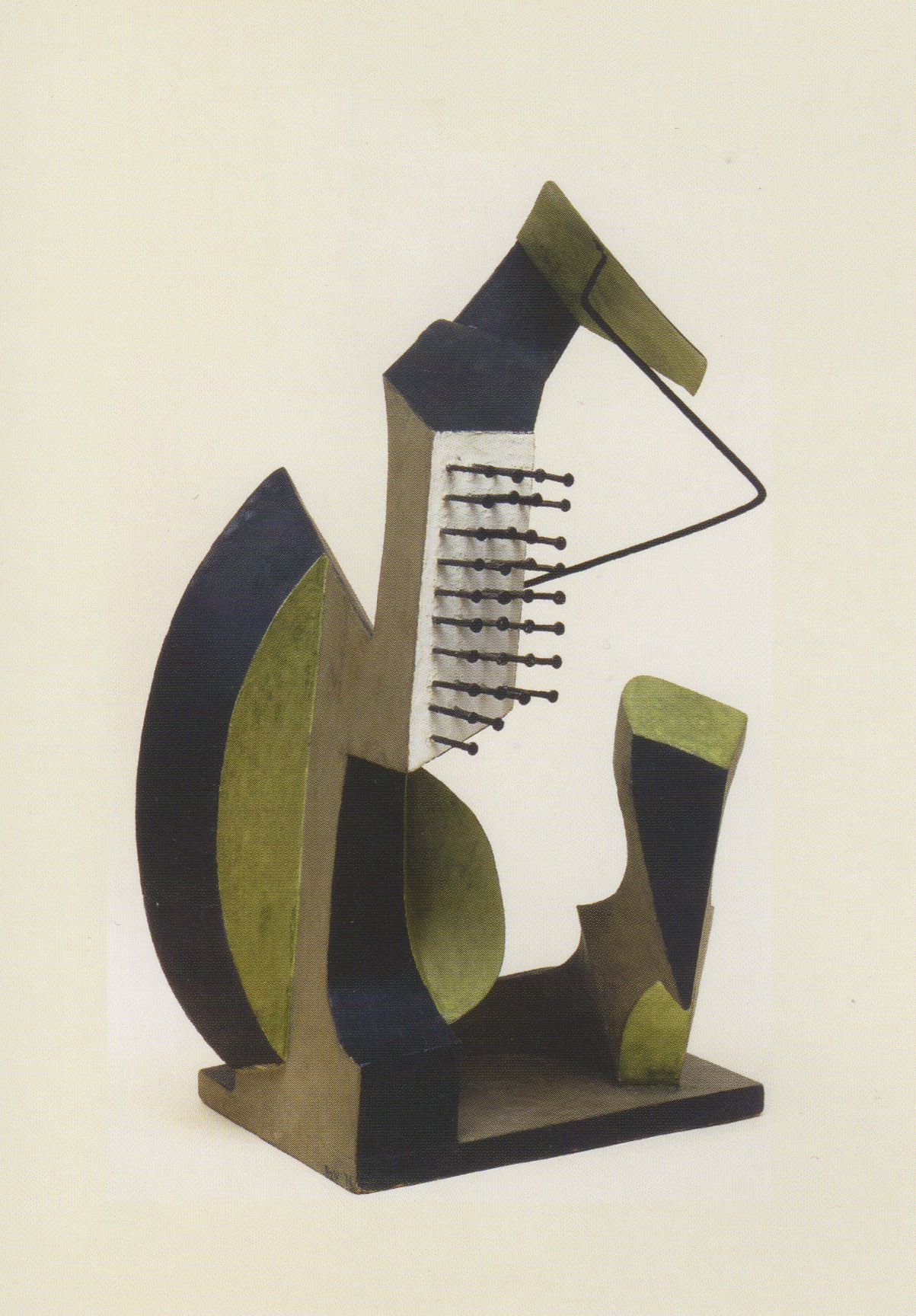
Bitterly cold again. A morning trip to visit the newly opened gallery at the National Museum devoted to 20th-century and 21st-century Polish art. It’s really good. The Poles have developed such an extraordinary visual acuity, teamed with a range of symbolism (much of it socio-political), that every item has something intriguing and stimulating to offer. There was Leopold Lewicki’s sculpture Musical Composition (1935), which offered multiple cubist viewpoints.

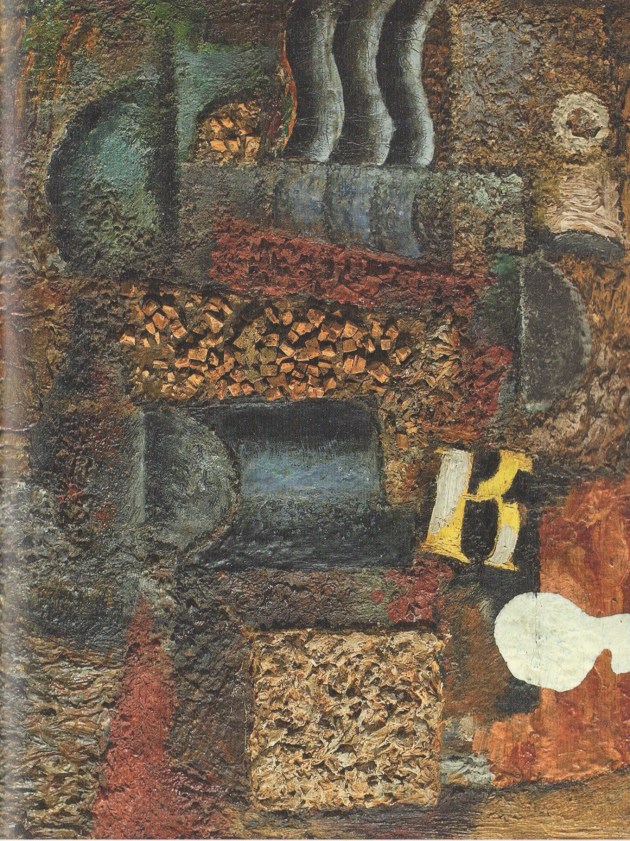
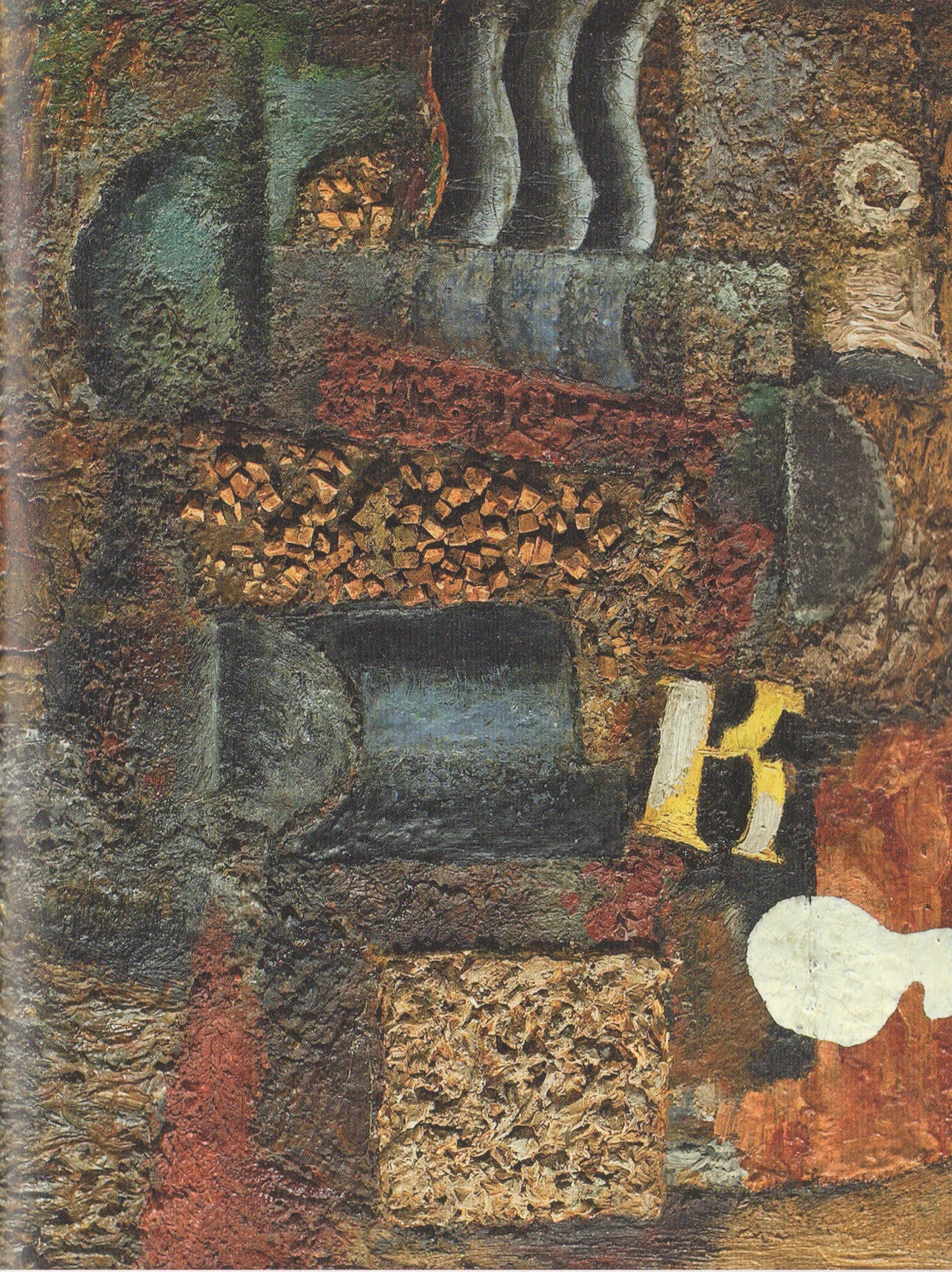
There were several pieces by Władysław Strzemiński, whose unistic paintings so inspired Krauze’s music in the 1960s. His little piece Cubism – tensions of material structure (1921) was particularly striking.
The period since 1945 was represented by some socialist-realist pieces through to contemporary film and video. If you are going to Warsaw, do visit. I was most thrilled to see in the flesh again Bronisław Linke’s Autobus, about which I have enthused previously in these pages. Close-up (and you can get much closer to the artwork here than in most of the other galleries I go to), this is a stunning, visceral work that has lost none of its power to shock since it was painted just over 50 years ago.
After a family lunch with my friends, it was off to the Lutosławski Studio at Polish Radio for a concert by the Polish Radio SO conducted by Łukasz Borowicz: Lutosławski’s Little Suite in its original version for chamber orchestra, Penderecki’s Piano Concerto in its revised version, and Stravinsky’s Symphony in C. This is a lively orchestra, giving its all to two relatively minor pieces by the Polish composers (I’m afraid that Penderecki’s Piano Concerto is as vacuous and overscored a piece as it was when I heard its Polish premiere in the original version in 2002; others disagree).
Day 5 (Monday, 28 January)
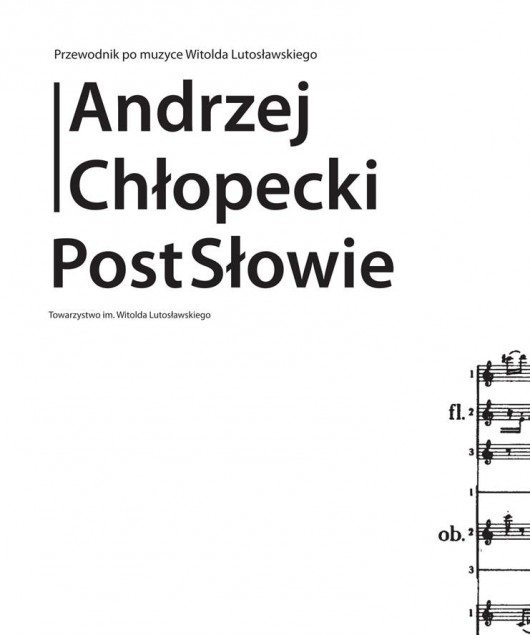
 I was back at Polish Radio this afternoon for the press launch of a book on Lutosławski by Andrzej Chłopecki, who died last autumn. It is subtitled ‘Przewodnik po muzyce Witolda Lutosławskiego’ and is available only in Polish. I’ll return in a future post to this rather special guide, to a new photo album and an 8-CD box set of archival recordings also published to mark Lutosławski’s centenary.
My final Lutosławski experience was in the evening’s concert by the Wrocław PO under its conductor Jacek Kaspszyk. The main item was Lutosławski’s Piano Concerto, played by Garrick Ohlsson, who won the Chopin Competition in Warsaw in 1970. He was still feeling his way into the piece (he’d played it for the first time just two days earlier, but every performer has to start somewhere!) and frankly there was no comparison with Krystian Zimerman’s magical performance in London with the Philharmonia under Esa-Pekka Salonen two days later. In the same way that the Philharmonia celebrations for Lutosławski are pairing him with two of his favourite composers (Debussy and Ravel), the Wrocław PO completed its concert with dynamic performances of Stravinsky’s Firebird suite and Ravel’s La Valse.
And so, as the temperature rose on Tuesday to a balmy 0C, I left Warsaw for London, thoroughly invigorated and grateful to friends old and new for five days of celebration for a composer who has been hugely important to me since I was a student.
Oh, the brush!
The Poles are so imaginative. The Adam Mickiewicz Institute, which along with the Institute of Music and Dance and the Witold Lutosławski Society has brought these events to fruition, decided to give a special present to its guests on Friday evening at the Philharmonic. It looked at first glance like an old-fashioned pencil box.

On opening it, there was a familiar, early photo of Lutosławski working at his piano.

Underneath, inside the box, was a pencil and a mini version of the brush in the photo.
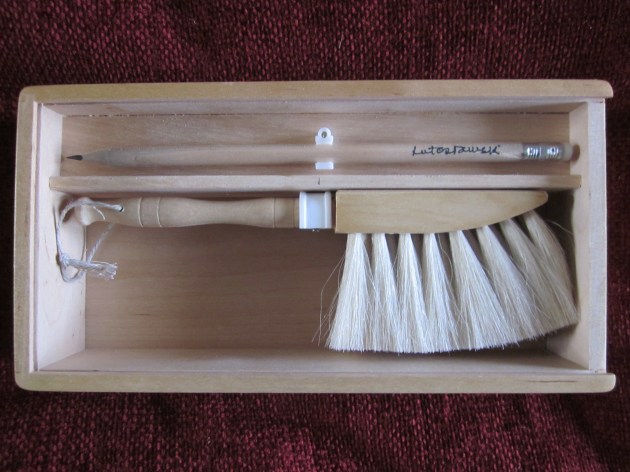
What was it for, you may ask? Clue: Lutosławski worked in pencil, frequently rubbing out and correcting his sketches and scores. And he was a naturally tidy man and disliked mess… I remember seeing a brush on his desk when I was in his studio in 2002, so this resonated with me. What a brilliant gift to bring back home!
 If you haven’t noticed them already, check out Michael McManus’s blogs celebrating the Lutosławski centenary. He blends personal reminiscence with insights into the works and their performances. He has some intriguing observations, not least on Perényi’s recent Berlin performance of the Cello Concerto under Simon Rattle (4.03.13) and on Stanisław Skrowaczewski’s interpretation of the Concerto for Orchestra in a rehearsal with the Hallé Orchestra (20.03.13). The blogs are available in the Gramophone online edition. There have been five so far.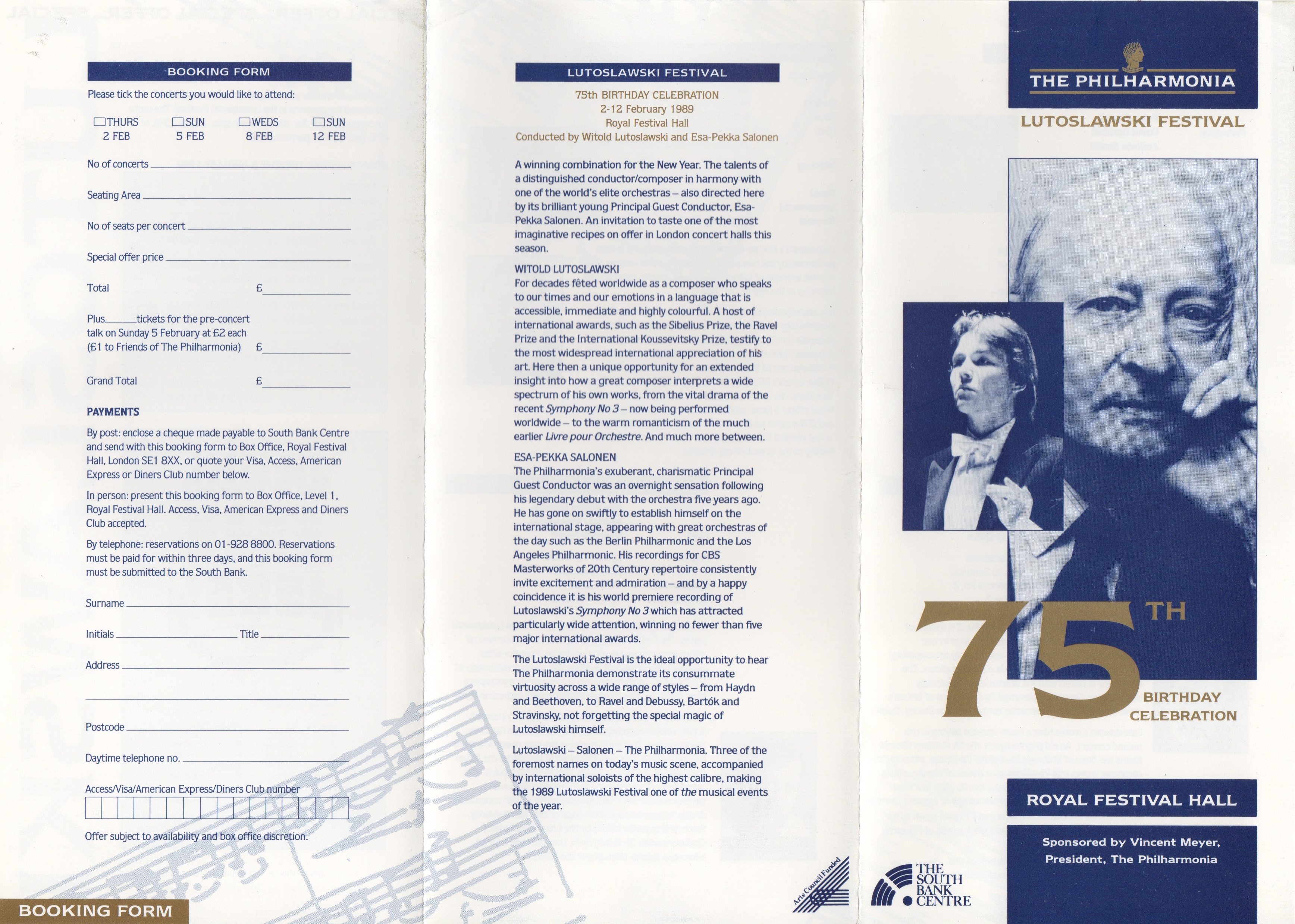











 On Polish Music