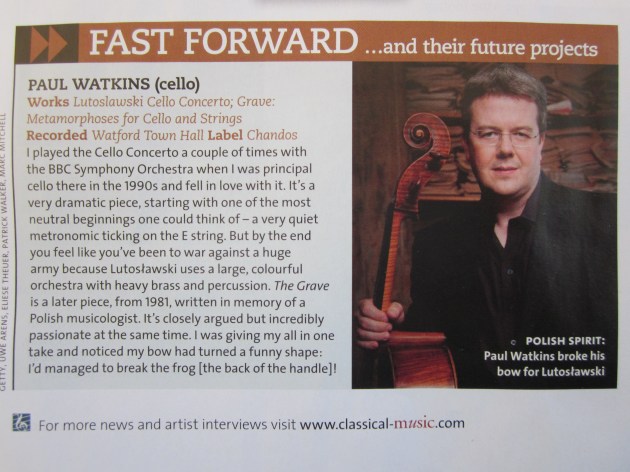
Where’s a musically literate editor when you need one? Here’s a panel from the September issue of the BBC Music Magazine, where Paul Watkins is interviewed in advance of the release of his recording with the BBC SO under Edward Gardner of Lutosławski’s Cello Concerto and Grave (Chandos CHSA 5106). I spotted the glaring transcription error (line 6), but my friend John Fallas spotted the funnier typographical one (line 9). Depressingly sloppy copy.
Thanks to the eagle eye of The Rambler – thanks, Tim! – I’ve just been reading an article uploaded by Agata Pyzik on her blogsite nuitssansnuit on 21 May 2012. Published in a shorter version a year ago in The Wire (March, 2011), her article ‘Polish Radio Experimental Studio released’ gives a brief overview of PRES in order to promote a new venture by the independent Polish label, Bôłt. Bôłt has recently remastered electronic music produced at PRES since its foundation in 1957. Key works, especially from the early years of PRES, are now available in digital form, and Bôłt deserves huge congratulation for taking the trouble to sort through the studio archives.
Pyzik’s article includes links to several sound files on YouTube. Its English translation is not always ideal, unfortunately, and there are a few loose ends, but it’s worth reading as an introduction to this formative period in the careers of Andrzej Dobrowolski, Włodzimierz Kotoński, Krzysztof Penderecki and Bogusław Schaeffer, among others. You will not yet find any music by Dobrowolski or Kotoński on the Bôłt series (but Pyzik provides YouTube links to a few of their pieces). I thought it might be helpful to write a few words on each of the six PRES CDs so far issued by Bôłt (there are over a dozen other CDs in its catalogue which range more broadly both chronologically and geographically outside Poland). You can access the Bôłt CD home page at http://boltrecords.pl/en_cd.html.
The first double CD (BR ES01) shows that Bôłt’s intentions are not just to provide an historical record of a past age. The first CD consists of seven tape pieces from the PRES archives (by Bohdan Mazurek, Penderecki, Eugeniusz Rudnik and Schaeffer). The second CD consists of new ‘covers’ of these pieces, plus another of Schaeffer’s Symphony (1966), although the original realisation of this historically significant work by Mazurek is not included. It does appear, however, on the sixth disc of the series, which is devoted to Schaeffer.
The second double CD (BR ES02) is devoted to Mazurek, whose name and achievement as a composer have for too long been overshadowed. In the early years, through the 1960s and beyond, Mazurek, like Rudnik, was one of the sound engineers employed by PRES, so his own compositional output never had the space to breathe that it deserved. This neglect has now been rectified. His pieces are presented solely in their original versions.
Elsewhere, the significant aspect of this venture – and I hasten to add that I’ve not yet had the opportunity to hear any of the discs so far issued – is the revisiting of the past and the possibility for listeners to compare originals with their covers. It’s a neat and inventive idea. The third, single CD (BR ES03) consists of new versions of PRES pieces, ranging from works by Rudnik and Mazurek to later works by younger composers Krzysztof Knittel and Elżbieta Sikora, performed by Zeitkratzer.
Knittel and Sikora reappear on the fourth, triple CD (BR ES04) along with Wojciech Michniewski. Although Michniewski has since made his career as a conductor, this trio, known collectively as KEW from their first-name initials, was a driving force as an improvising ensemble in the early 1970s. This is the CD issue that excites my anticipation most, because much of it has not been heard since those years. There are three substantial group tracks, one by Michniewski, seven by Knittel and five by Sikora.
Rudnik is also given a separate, single CD of his own (BR ES05), this time reinterpreted by D J Lemar (aka Marcin Lenarczyk), who has worked with a wide range of musicians, including the Royal String Quartet (as in a 2007 recording in which Szymanowski’s Symphony 4 makes an appearance – http://www.youtube.com/watch?v=NEEpLBctesM). The CD cover, by not mentioning Rudnik by name, implies that Lenarczyk’s improvisations are somehow more significant than Rudnik’s original input.
The last of the six CDs so far issued (BR ES06) is a double CD devoted to Schaeffer. The four originals on disc 1 are reinterpreted on disc 2 (there are two new versions of Assemblage to add to the two on BR ES01). Nowhere is the Bôłt approach more appropriate. Schaeffer has been an iconoclastic figure throughout his career and much of his experimental output was intentionally open to new versions. These six CD issues, comprising eleven discs in all, uniquely combine archival and live performances which promise to bring an important repertoire of the Polish avant-garde to the attention of new audiences.
If by its deeds a country disposes of or ignores its heritage, it can hardly expect that heritage to be known or appreciated abroad. And when composers die, it’s a truism that their music often slips from the concert hall or the airwaves. Some buck the trend: Lutosławski hasn’t done too badly since he died in 1994, and it’ll be interesting to see how much is made both in Poland and, more particularly, abroad, during the centenary of his birth in 2013. Not that I’m that fixated on anniversaries, but they are a useful tool for the celebration, or to remind us, of somebody or something which has fallen by the wayside and been forgotten. Such is the case with Kazimierz Serocki (1922-81).
Today – 3 March 2012 – is the 90th anniversary of Serocki’s birth. Any sign of a commemoration in Poland? None that I can see.* Anywhere else? Nope. On the other hand, Witold Szalonek, who was born on 2 March, was accorded an 85th-anniversary concert in Katowice last night, and thoroughly deserved it was too. But nothing for Serocki, it seems. Even the author of the one major book on him, Tadeusz A. Zieliński, has now gone – he died a week ago. Symptomatic of Serocki’s disappearance from view was the total absence of his music from a large-scale American public radio festival of Polish music in January (see my post of 25.01.12). For someone who had been at the epicentre of Polish musical life for over 30 extraordinary years, this was cruel.
* The only immediately forthcoming performance that I have been able to locate is of the orchestral Dramatic Story (1970), one of his most persuasive and inventive pieces. It’s being played in three weeks’ time, on 23 March 2012, in the inaugural concert of the ‘Poznań Spring’ Festival of Contemporary Music.
Serocki’s imaginative, experimental, avant-garde and often witty output from the late 1950s onwards has also been largely ignored by the record industry, even before the advent of CDs. The pat answer for this neglect might be that he died prematurely, aged 58. Had he lived into the digital age, I am convinced that he would now be better known. A more complex response would revolve around the nature of his output, which remained wedded to the experimental ethos of the 1960s, even at the end of his life when other composers around him were moving with the times and rounding off the edges of their radicality.
Commercial CDs
• 1951: Piano Concerto, DUX 0651 (rec.1999)
• 1952: Suite of Preludes for piano, nos 2-4, OCD 316 (1973)
• 1953: Suite for four trombones, BIS CD-694 (1994)
• 1953: Trombone Concerto, BIS CD-538 (1991)
• 1954: Sonatina for trombone and piano, Crystal CD 380 (1978), BIS CD-318 (1985)
• 1956: Sinfonietta for two string orchestras PNCD 474 (1959) – the last of Serocki’s neoclassical pieces
• 1963: A piacere for piano, AP 0016 (1999) – an open-form piece
• 1966: Continuum for six percussionists, OCD 324 (1982) – a spatial anticipation of Xenakis’s Persephassa
…….
Rather than launch into a detailed account of his music, here are some links which will give you some idea of his life and music. You can judge for yourself. By following them, you will be contributing to the dissemination of Serocki’s dynamic and distinctive music, so thank you!
YouTube
A larger number of works both pre-1956 and afterwards has been uploaded than is available on commercial CD. (There is a choice of amateur and professional performers of the early, neoclassical-based repertoire.) The list of uploaded music from 1956 onwards is still meagre (only one of the seven pieces below is a true video file).
On the plus side of the recent WQXR Q2 Muzyka Nowa week of Polish music was being introduced to the music of a handful or so of composers who are still in their mid 20s to late 30s. The five whom I mentioned briefly at the end of my review of Muzyka Nowa all have something different and interesting to say. So here are a few details, the odd observation, and some links. Each has his/her own website, either entirely in English or in English/Polish, where you can find all the details that they want you to know!
Jakub Ciupiński presented two short guest selections during Muzyka Nowa and was without doubt its star broadcaster. He studied at the Music Academy in Kraków, then at the Birmingham Conservatoire in the UK before moving on to the Juilliard School in New York, where he now lives. He has two compositional personalities. As (Jakub) Żak, he’s composed pop-electronica-world albums, the most recent of which is Dezyderata (2011). As Jakub Ciupiński, he has a wide range of output, from chamber and orchestral to live electronics. His elegant website has audio samples – including Morning Tale (2009) and Street Prayer (2009), which were played during Muzyka Nowa – and a video of the premiere of Flashbacks for small orchestra and electronics (2009). There are several uploads available on YouTube, including a two-part interview (in Polish, with video excerpts).
I was particularly interested to see that Ciupiński has brought the art of the theremin back to life: http://www.ciupinski.pl/Jakub_Ciupinski_-_homepage/Theremins.html. In 2009, Ciupiński co-founded a composer collective called Blind Ear Music, ‘a team of open-minded composers and great performers with incredible sight-reading ability’. Its activities are predicated on the real-time manipulation of loops, transmitted from a ‘master’ computer (composer) to ‘slave’ computer screens (performers). This is an aesthetic as well as a technical challenge, and you can check it out for yourself on their website, Blind Ear Music. (There doesn’t appear to have been any concert activity over the past year, however.)
Jacaszek, as he prefers to be known, is the best known, and oldest, of these five Polish composers. I know nothing about his background, except that he was trained as an art restorer and that his first compositional foray was to rip a recording by Jack DeJohnette and Keith Jarrett on the family’s PC in the mid-90s (source: a 2011 interview for the Czech radio station ‘Wave’: http://soundcloud.com/easterndaze/michal-jacaszek-interview). His website indicates his decided preference for acoustic over electronic sound sources. He’s particularly keen on the interaction of live instruments with electronically manipulated sound sources. Jacaszek’s myspace site (>Profile>Albums) currently hosts nine Vimeo videos. His is an immersive world, one which blends natural sounds, existing music and electronic manipulation. The reviews for his most recent album, Glimmer (2011), are enthusiastic. Here are links to a few that I’ve found on the web:
The Czech radio interview took place at the time that Jacaszek launched his Glimmer album at the 2011 UNSOUND festival in Kraków (it was broadcast during Muzyka Nowa last week). UNSOUND subsequently uploaded part of this event. If I’m not very much mistaken, there’s a clear reference in the closing minutes of this excerpt to the opening idea of Górecki’s Little Requiem.
Mateusz Ryczek is the youngest of this selection of Polish composers. He studied at the Music Academy in Wrocław and has already produced a sizeable body of work, ranging from chamber and orchestral pieces to music for the theatre. His works have been played at the Composers’ Union Youth Circle concerts at the ‘Warsaw Autumn’, from whose 2009 Sound Chronicle his NGC 4414 (2008) was played during Muzyka Nowa. Perusing his website, I came to the conclusion that he is energetic and rather good-humoured – as witnessed by his brief birthday salute to Lutosławski three days ago (I reposted it yesterday).
An audio file of the world premiere of NGC 4414 (which, for the uninitiated like me, is the name of a galaxy 60 million or so light years away) is available on Ryczek’s YouTube channel,<http://www.youtube.com/user/kompozer86>. It was given at the Musica Polonica Nova festival in Wrocław in 2008 by Kwadrofonik. Audio and video files may also be accessed on his websites.
Krzysztof Wołek’s interests embrace chamber, orchestral and electronic mediums; he also works in dance collaborations and with video. He has the most artful and informative of all the websites, including plentiful samples from his wide range of compositions, although I could find only looped excerpts lasting about 2′ each rather than complete works. This was a bit frustrating, as the excerpts whetted the appetite, from the early (A)Symmetrics for orchestra (1999) to Elements (2008), which was played during Muzyka Nowa (admittedly under the misapprehension that his surname was Wolef). Wołek’s complete Mobile Variations for six-channel tape (2005) is, however, on his myspace site and is a fresh take on an electronic soundworld that dates back to the 1950s. Educated initially at the Music Academy in Katowice, Wołek subsequently studied at the University of Chicago and now teaches at the University of Louisville.
If the photo on the homepage of her website is anything to go by, Agata Zubel is the most exuberant of the five in this selection. She studied both voice and composition at the Music Academy in Wrocław and she continues to combine both activities. As a singer, she performs music from Augustyn to Zubel, taking in classics like Berio’s Sequenza III along the way. As a composer, she works in a wide range of media, including music theatre, electronics and orchestral music (she already has three symphonies to her name). She tends to set modern poetry in her vocal works, particularly Beckett, as in Cascando (2007) which was broadcast during Muzyka Nowa. Her most recent piece What is the word, already dated 2012, is another Beckett setting. Like Wołek, Zubel has put only extracts on her website (they’re even shorter than Wołek’s), but her music has been released on several CDs, including the monographic Cascando (2010), and on DVD. Here she is in action as vocalist in her own Parlando for voice and computer (2000), recorded in Moscow last October.
I’ve just this minute come across a brief salute to Lutosławski by a Polish composer 73 years his junior. Mateusz Ryczek (b.1986) uploaded this two days ago, on what would have been Lutosławski’s 99th birthday – or, looked at another way, the start of his 100th year! Ryczek takes the opening gesture of the Third Symphony and refashions it into the opening of the Polish birthday song, Sto Lat (One Hundred Years).
In case you’re wondering, Polish musicians often abbreviate Lutosławski to ‘Lutos’. Non-Poles seem to say ‘Luto’.
The New Year brings a new CD in Chandos’s Muzyka polska series. It’s the third in Edward Gardner’s survey with the BBC Symphony Orchestra of the music of Witold Lutosławski. The performances have been stunning for their clarity and fresh insights into the orchestral music of the Polish composer, whose centenary will be celebrated in 2013. Word is already out that the next CD will include Symphony no.2 and the Cello Concerto, with Paul Watkins as soloist. I can’t wait!
This third CD comprises Symphonic Variations (1938), Variations on a Theme of Paganini (1941/78), Piano Concerto (1988) and Symphony no.4 (1992). The soloist in the two concertante works is Louis Lortie.
It seems a good moment – the 30th anniversary of the imposition of martial law in Poland – to post an English translation of Jacek Kaczmarski’s 1981 song Czerwony Autobus. I wrote on this six days ago, but did not then have a translation. Thanks to extremely helpful friends in Warsaw, I have been able to fashion a more-or-less literal translation, although the bite and cryptic nature of some lines remain hard to render in a foreign language.
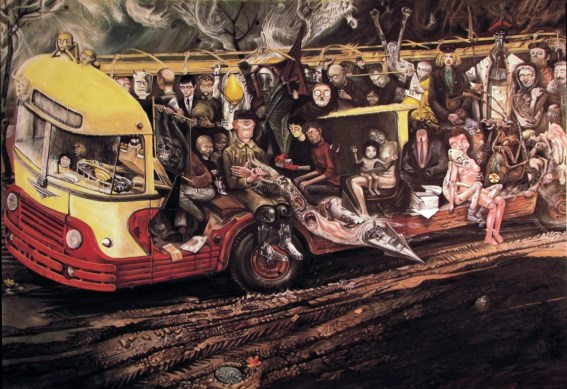
Interestingly, Kaczmarski reinvents some of the characters from his source of inspiration, Bronisław Wojciech Linke’s painting Autobus (1961). His performance (reposted below) is vehement, but the translation also reveals the anger in the text (the Polish lyrics and English translation are as side-by-side as I can make them in the WordPress system!). This recording was made before 13 December 1981, so formed part of the cultural-political landscape of the Solidarity period. Kaczmarski found himself abroad on that date and did not return until 1990. To give hope and support to his compatriots at home, he worked and broadcast for Radio Free Europe.
Pędzimy przez Polską dzicz
Wertepy chaszcze błota
Patrz w tył tam nie ma nic
Żałoba i sromota
Patrz w przód tam raz po raz
Cel mgłą niebieską kusi
Tam chce być każdy z nas
Kto nie chce chcieć – ten musi!
W Czerwonym Autobusie
W Czerwonym Autobusie
W Czerwonym Autobusie mija czas!
We tear through Poland’s wilderness
Bumpy roads, scrub, mud
Look behind, nothing there
But sorrow and shame
Look ahead, again and again
The destination entices with blue mist
Each of us wants to be there
Those who don’t want to, must!
In the Red Bus
In the Red Bus
In the Red Bus time goes by!
Tu stoi młody Żyd
Nos wskazuje Żyd czy nie Żyd
I jakby mu było wstyd
Że mimo wszystko przeżył
A baba z koszem jaj
Już szepce do człowieka
– Wie o tym cały kraj
Że Żydzi to bezpieka!
Myślimy, że poczeka!
Myślimy, że poczeka!
Myślimy, że poczeka, na nas Raj!
Here stands a young Jew
The nose shows if Jew or non-Jew
And as if he is ashamed
He had survived despite everything
A peasant woman with a basket of eggs
Is already whispering to someone
“The whole country knows about it
Jews are the secret police!”
We think that it will wait!
We think that it will wait!
We think that it will wait, for us – Paradise!
Inteligentna twarz
Co słucha zamiast mówić
Tors otulony w płaszcz
Szyty na miarę spluwy
A kierowniczy układ
Czerwony wiodąc wóz
Bezgłowa dzierży kukła –
Generalissimus!
Ich dziełem jest marszruta!
Ich dziełem jest marszruta!
Ich dziełem jest marszruta! – Luz i mus!
An intelligent face
That listens rather than talks
A torso wrapped in a coat
Tailor-made to fit a gun
And a steering system
Guiding the red wagon
A headless dummy steers
Generalissimus [Stalin]!
The route is up to them!
The route is up to them!
The route is up to them! – Take it easy, it’s a must!
Za robotnikiem ksiądz
Za księdzem kosynierzy
I ktoś się modli klnąc
Ktoś bluźni ale wierzy
Proletariacki herszt
Kapować coś zaczyna
Więc prosty robi gest
I rękę w łokciu zgina!
Nie ruszy go lawina!
Nie ruszy go lawina!
Nie ruszy go lawina! Mocny jest!
Behind a worker, a priest
Behind the priest, peasant recruits with scythes
And someone prays, cursing,
A blasphemer who believes
A proletarian boss
Gets what’s happening
So makes a simple gesture
“Up yours” with hand in elbow!
An avalanche won’t move him!
An avalanche won’t move him!
An avalanche won’t move him! He is strong!
A z tyłu stary dziad
W objęcia wziął prawiczkę
Złośliwy czyha czart
W nadziei na duszyczkę
Upiorów małych rząd
Zwieszonich u poręczy
Krew w żyły sączy trąd
Zatruje! I udręczy!
Za oknem Polska w tęczy!
Za oknem Polska w tęczy!
Za oknem Polska w tęczy! Jedźmy stąd!
And at the back an old creep
Clasps a virgin in his arms
A malicious devil lurks
In the hope of a soul
A row of little ghosts
Dangling from the handrail
Blood dribbles leprosy into veins
Poison them! And torture them!
Through the window, Poland in a rainbow!
Through the window, Poland in a rainbow!
Through the window, Poland in a rainbow! Let’s get out of here!
It’s true what they say. You wait for ages, then three buses come along all at once. After Szpilman and Winkler‘s happy vehicle, then Linke‘s tortured wreck, here’s another, angry red bus from Jacek Kaczmarski (1957-2004). Pianist, Painter, now Poet. Kaczmarski was also a singer-songwriter who was one of the voices of the free trade union Solidarity (Solidarność) in the early 80s.
In 1981, Kaczmarski penned a song as a direct response to Linke’s painting. Czerwony autobus, however, was not the only time that Kaczmarski turned to the visual arts for inspiration. Over 60 of his 800 poems and lyrics were direct responses to paintings by artists as varied as Pieter Brueghel, Caravaggio, Goya, Hals, Holbein, Manet and Vermeer, with Polish artists such as Maksymilian Gierymski, Jacek Malczewski, Jan Matejko and Witkacy providing equally strong stimuli. Kaczmarski’s output must have been one of the single most sustained creative collaborations between the visual arts, poetry and music. Some samples of this interaction can be found on the Polish-language Wikipedia page: http://pl.wikipedia.org/wiki/Jacek_Kaczmarski.
His musical style belonged to both Polish cabaret and the protest movement, with non-Polish icons including Georges Brassens and Bob Dylan. He was a mean classical guitarist and his vocal delivery was dynamic, expressive and urgent. This can be heard on his recording of The Red Bus, where he is accompanied on the piano. It comes from Muzeum, the third album he made with Przemysław Gintrowski (also voice/guitar) and Zbigniew Łapiński (voice/piano). Kaczmarski commented that:
“The programme of Muzeum came into being in 1981 and was based on selected works of historical Polish art. Its intention was to locate the experiences of the ‘Solidarity’ period within an historical perspective so that the listener would understand that he is a witness to a process and not to a one-off event.”
Kaczmarski’s published lyrics, printed below (there are some differences with the recording), make reference to characters in Linke’s painting, characters who were just as real to Kaczmarski in 1981 as they had been to Linke 20 years earlier. They were both a long way from the false dawns evoked by songs such as the original Czerwony autobus of 1952.
Pędzimy przez Polską dzicz
Wertepy chaszcze błota
Patrz w tył tam nie ma nic
Żałoba i sromota
Patrz w przód tam raz po raz
Cel mgłą niebieską kusi
Tam chce być każdy z nas
Kto nie chce chcieć – ten musi!
W Czerwonym Autobusie
W Czerwonym Autobusie
W Czerwonym Autobusie mija czas!
Tu stoi młody Żyd
Nos zdradza Żyd czy nie Żyd
I jakby mu było wstyd
Że mimo wszystko przeżył
A baba z koszem jaj
Już szepce do człowieka
– Wie o tym cały kraj
Że Żydzi to bezpieka!
Więc na co jeszcze czekasz!
Więc na co jeszcze czekasz!
Więc na co jeszcze czekasz! W mordę daj!
Inteligentna twarz
Co słucha zamiast mówić
Tors otulony w płaszcz
Szyty na miarę spluwy
A kierowniczy układ
Czerwony wiodąc wóz
Bezgłowa dzierży kukła –
Generalissimus!
Dziełem tych dwóch marszruta!
Dziełem tych dwóch marszruta!
Dziełem tych dwóch marszruta! – Luz i mus!
Za robotnikiem ksiądz
Za księdzem kosynierzy
I ktoś się modli klnąc
Ktoś bluźni ale wierzy
Proletariacki herszt
Kapować coś zaczyna
Więc prosty robi gest
I rękę w łokciu zgina!
Nie ruszy go lawina!
Nie ruszy go lawina!
Nie ruszy go lawina! Mocny jest!
A z tyłu stary dziad
W objęcia wziął prawiczkę
Złośliwy czyha czart
W nadziei na duszyczkę
Upiorów małych rząd
Zwieszony u poręczy
W żyły nam sączy trąd
Zatruje! I udręczy!
Za oknem Polska w tęczy!
Za oknem Polska w tęczy!
Za oknem Polska w tęczy! Jedźmy stąd!
I’ve just caught up with last Friday’s ‘Afternoon on 3’, which included a broadcast of (what I take to be) Edward Gardner’s forthcoming CD recording – with the BBC SO on Chandos – of Lutosławski’s Symphony 4 (1988-92). Unfortunately, the BBC’s ‘play it again’ technology has no sustaining power out here in the sticks (thanks, BT!), so it’s a halting, interrupted soundscape for me for the present.
Gardner’s series of Lutosławski recordings has been wonderful so far: fresh, vital, insightful. This performance fulfilled my high expectations: a searing opening section, followed by a great sense of motility, and a measured yet edgy lyrical build-up to the final climax. I’ve not heard as desolate a fall-away as here. The BBC SO’s playing is top-notch and Chandos has achieved an exemplary textural clarity. This third CD – which also includes the early Symphonic Variations, Lutosławski’s own orchestration of the Variations on a Theme of Paganini, and the Piano Concerto – is due out in the New Year.
In his discussion with Katie Derham beforehand, Gardner gave a succinct and helpful description of ‘aleatory’ as it applies to Lutosławski’s music, and what it means for the conductor, although it’s worth noting that most of Symphony 4 and of other late Lutosławski is conducted traditionally. Gardner also had a fascinating if unexplored take on the structure of Symphony 4. Lutosławski conceived of it as having two movements, played without a break. I hear it more as a fantasia masking a radical reconfiguration of the composer’s characteristic structural landmarks and procedures. Gardner hears it differently again: “You can hear four pretty distinct movements actually. You can hear a wonderfully chaos-to-form opening, a dance movement, a slow movement and a finale, I think.” It will be interesting to see how Gardner’s approach on the CD bears out this new perception.
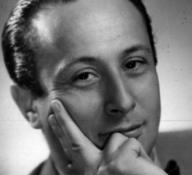
Thanks to an alert last night from a friend in Warsaw, I was reminded that today marks the centenary of the birth of Władysław Szpilman (1911-2000). Szpilman was well-known in Poland from the 1930s as a fine concert pianist and as a composer of concert music and popular songs, especially after World War II. He recounted his extraordinary survival of the war in his memoir Śmierć Miasta (Death of a City). The memoir was republished in English as The Pianist shortly before his death and turned into an award-winning, internationally popular film of the same title by Roman Polański (2002), with Adrien Brody playing the lead role.
I once sat behind the quiet, elderly Szpilman at a concert in Warsaw. I regret not speaking to him. Later, I wanted to reproduce the opening page of one of his songs – Jak młode Stare Miasto (Like The Young Old Town, 1951) – in my book Polish Music since Szymanowski (Cambridge, 2005). But permission was refused by his family as they thought that some of his songs were not representative of his talents (and also perhaps because 1951 was the height of the socialist-realist push in the arts). Yet this hugely popular song had already been released on CD (‘Golden Hits of Socialism’ [!], Intersonus ISO84). Such is the unpredictability of copyright permission.
In 2000, Polish Radio issued a 5-CD set of Szpilman’s performances and compositions (PRCD 241-245):
• CD 1: 19 songs (1952-91).
• CD 2: Szpilman as pianist – including in his own Concertino (1940), Rachmaninov’s Rhapsody on a Theme of Paganini (1954), Schumann’s Fantasy in C Major (1960) and two pieces by Chopin, including the Nocturne in C# minor (1980) with which he both closed Polish Radio broadcasts in 1939 and reopened them in 1945.
• CD 3: Szpilman as a member of the Warsaw Quintet – piano quintets by Brahms and Schumann (1963-65).
• CD 4: Szpilman with Bronisław Gimpel (who also led the Warsaw Quintet) – violin sonatas by Brahms (no.3), Grieg (no.3) and Franck (1958-65).
• CD 5: songs for children including three extended ‘musical fairytales’ (1962-75).
One of Szpilman’s most popular songs was Czerwony Autobus (The Red Bus, 1952). The recording on CD 1 above is particularly fine, not least because of its sense of good humour, considerably aided by Szpilman’s own swinging piano. Search it out if you can. That recording was made by the best close-harmony male-voice quartet of the time, Chór Czejanda (Czejanda Choir). They also made another, longer recording with dance orchestra. In the YouTube video below (Legendy PRL: Legends of the Polish People’s Republic), this audio recording is accompanied by shots of Warsaw buses in various ‘picturesque’ locations of the post-war socialist capital [14 October 2014: the original video – www.youtube.com/watch?v=x_xZGriR2DE – has since been withdrawn ‘for multiple third-party notifications of copyright infringement’. But there are several other videos with the same recording, so here’s one of them instead. The video element this time is not of buses, sadly, but still shots in black and white of scenes in Warsaw in the 1950s]. I’ve put my translation of the first three verses below. Enjoy!
When at dawn I run like a wind through the streets,
The city like a good friend welcomes me,
And – honestly – I wish you all such happiness
As every day gives me in Warsaw.
On board, please! No-one will be late for work,
We will go quickly, even though we’re surrounded by a forest –
A forest of scaffolding, which really does mean
That here time does not stand still.
The red bus rushes along my city’s streets,
Passes the new, bright houses and the gardens’ cool shade.
Sometimes a girl will cast us a glance like a fiery flower.
Not only ‘Nowy Swiat’* is new – here each day is new.
* ‘New World’, a beautiful old street in Warsaw, reconstructed after the war.
 The first double CD (BR ES01) shows that Bôłt’s intentions are not just to provide an historical record of a past age. The first CD consists of seven tape pieces from the PRES archives (by Bohdan Mazurek, Penderecki, Eugeniusz Rudnik and Schaeffer). The second CD consists of new ‘covers’ of these pieces, plus another of Schaeffer’s Symphony (1966), although the original realisation of this historically significant work by Mazurek is not included. It does appear, however, on the sixth disc of the series, which is devoted to Schaeffer.
 The second double CD (BR ES02) is devoted to Mazurek, whose name and achievement as a composer have for too long been overshadowed. In the early years, through the 1960s and beyond, Mazurek, like Rudnik, was one of the sound engineers employed by PRES, so his own compositional output never had the space to breathe that it deserved. This neglect has now been rectified. His pieces are presented solely in their original versions.
 Elsewhere, the significant aspect of this venture – and I hasten to add that I’ve not yet had the opportunity to hear any of the discs so far issued – is the revisiting of the past and the possibility for listeners to compare originals with their covers. It’s a neat and inventive idea. The third, single CD (BR ES03) consists of new versions of PRES pieces, ranging from works by Rudnik and Mazurek to later works by younger composers Krzysztof Knittel and Elżbieta Sikora, performed by
  Knittel and Sikora reappear on the fourth, triple CD (BR ES04) along with Wojciech Michniewski. Although Michniewski has since made his career as a conductor, this trio, known collectively as KEW from their first-name initials, was a driving force as an improvising ensemble in the early 1970s. This is the CD issue that excites my anticipation most, because much of it has not been heard since those years. There are three substantial group tracks, one by Michniewski, seven by Knittel and five by Sikora.
 Rudnik is also given a separate, single CD of his own (BR ES05), this time reinterpreted by D J Lemar (aka Marcin Lenarczyk), who has worked with a wide range of musicians, including the Royal String Quartet (as in a 2007 recording in which Szymanowski’s Symphony 4 makes an appearance –
  The last of the six CDs so far issued (BR ES06) is a double CD devoted to Schaeffer. The four originals on disc 1 are reinterpreted on disc 2 (there are two new versions of Assemblage to add to the two on BR ES01). Nowhere is the Bôłt approach more appropriate. Schaeffer has been an iconoclastic figure throughout his career and much of his experimental output was intentionally open to new versions. These six CD issues, comprising eleven discs in all, uniquely combine archival and live performances which promise to bring an important repertoire of the Polish avant-garde to the attention of new audiences.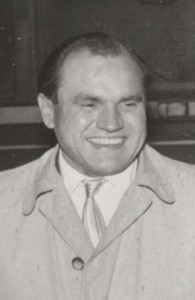
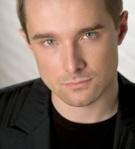 Jakub Ciupiński presented two short guest selections during Muzyka Nowa and was without doubt its star broadcaster. He studied at the Music Academy in Kraków, then at the Birmingham Conservatoire in the UK before moving on to the Juilliard School in New York, where he now lives. He has two compositional personalities. As (Jakub) Żak, he’s composed pop-electronica-world albums, the most recent of which is Dezyderata (2011). As Jakub Ciupiński, he has a wide range of output, from chamber and orchestral to live electronics. His elegant website has audio samples – including
  Jacaszek, as he prefers to be known, is the best known, and oldest, of these five Polish composers. I know nothing about his background, except that he was trained as an art restorer and that his first compositional foray was to rip a recording by Jack DeJohnette and Keith Jarrett on the family’s PC in the mid-90s (source: a 2011 interview for the Czech radio station ‘Wave’:
  Mateusz Ryczek is the youngest of this selection of Polish composers. He studied at the Music Academy in Wrocław and has already produced a sizeable body of work, ranging from chamber and orchestral pieces to music for the theatre. His works have been played at the Composers’ Union Youth Circle concerts at the ‘Warsaw Autumn’, from whose 2009 Sound Chronicle his NGC 4414 (2008) was played during Muzyka Nowa. Perusing his website, I came to the conclusion that he is energetic and rather good-humoured – as witnessed by his brief birthday salute to Lutosławski three days ago (
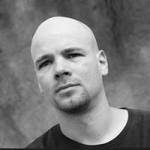 Krzysztof Wołek’s interests embrace chamber, orchestral and electronic mediums; he also works in dance collaborations and with video. He has the most artful and informative of all the websites, including plentiful samples from his wide range of compositions, although I could find only looped excerpts lasting about 2′ each rather than complete works. This was a bit frustrating, as the excerpts whetted the appetite, from the early (A)Symmetrics for orchestra (1999) to Elements (2008), which was played during Muzyka Nowa (admittedly under the misapprehension that his surname was Wolef). Wołek’s complete Mobile Variations for six-channel tape (2005) is, however, on his myspace site and is a fresh take on an electronic soundworld that dates back to the 1950s. Educated initially at the Music Academy in Katowice, Wołek subsequently studied at the University of Chicago and now teaches at the University of Louisville.
 If the photo on the homepage of her website is anything to go by, Agata Zubel is the most exuberant of the five in this selection. She studied both voice and composition at the Music Academy in Wrocław and she continues to combine both activities. As a singer, she performs music from Augustyn to Zubel, taking in classics like Berio’s Sequenza III along the way. As a composer, she works in a wide range of media, including music theatre, electronics and orchestral music (she already has three symphonies to her name). She tends to set modern poetry in her vocal works, particularly Beckett, as in Cascando (2007) which was broadcast during Muzyka Nowa. Her most recent piece What is the word, already dated 2012, is another Beckett setting. Like Wołek, Zubel has put only extracts on her website (they’re even shorter than Wołek’s), but her music has been released on several CDs, including the monographic Cascando (2010), and on DVD. Here she is in action as vocalist in her own Parlando for voice and computer (2000), recorded in Moscow last October.
 On Polish Music