Yesterday, I wrote a CD note for the piano and orchestra version (1978) of Lutosławski’s tour-de-force for two pianos, Variations on a Theme of Paganini (1941). It took me back over twenty years to when I conducted this version with the composer Kevin Volans at the piano and the Queen’s University SO in Belfast. We had enormous fun, especially with the syncopations, and the one slow variation, no.5, was magical in its simplicity. We especially liked kicking in with the funky rhythms of variation 9. What makes the orchestral version so rewarding is that Lutosławski repeats all but variations 10 and 11, swapping the solo and orchestral material for the repeat. (In fact, Paganini repeated the last 8 bars of each variation as well as the first 4, so Lutosławski’s orchestral version comes closer in its proportions to Paganini’s.) This way, he was able to give himself space to show off his scintillating orchestration and make this version a real match for the original.
It set me thinking about the circumstances in which Lutosławski composed his Variations. Musical life was heavily circumscribed in Nazi-occupied Poland. To scrape a living, Lutosławski and his fellow composer and pianist Andrzej Panufnik, then in their mid-late 20s, formed a piano duo and played in musical cafés. The Poles have always been resilient, and in the darkest days of the Second World War anything that lightened the mood and distracted people from their grim circumstances was welcomed. These cafés promoted all sorts of music, from complete cycles of the Beethoven sonatas to popular song and the light-music arrangements made by Lutosławski and Panufnik. They made over 200 such arrangements, but all were destroyed in the Warsaw Uprising of 1944. Lutosławski luckily took the score of the Variations on a Theme of Paganini with him when he fled the city. It whets the appetite for what we might have enjoyed had their arrangements survived and it’s a testament to the brilliance of their pianism.
A further thought on the aptness of Lutosławski’s take on Paganini’s Caprice no.24 for solo violin. Unlike Brahms, Rachmaninov and others, Lutosławski sticks close to the structure and material of Paganini’s original. In that sense it veers more towards being a modern realisation than a new composition. But he brings such imagination, joy and panache to the task, adding textures, counterpoints and edgy harmonies. It seems to me that, of all those composers who’ve been fascinated by Paganini’s theme and the virtuosity of this caprice, Lutosławski has come closest to its pyrotechnical spirit and yet made it his own.
I’m sharing a live recording (26 July) from this year’s Verbier Festival, where the pianists were Evgeny Kissin (I) and Martha Argerich (II). I was astonished to realise that Argerich is the same age as the Variations. Where other pianists sometimes push the tempos beyond their technique and mush the rhythms, the performance of Kissin and Argerich is crystal clear, glittering, with only a rushed cadence at the very end to mar a thrilling 5’. The original uploader has provided the printed music, expertly synced, for those who want to see as well as hear what a technically challenging piece this is!
Two years ago today, there appeared on YouTube four uploads that together formed a 33’ documentary film on Witold Lutosławski. I was alerted to the uploads last year and thought it might be useful to repost them, with a brief commentary and selected timelines for anyone unfamiliar with the music.
Open Rehearsals with Witold Lutosławskirecords the composer’s visit to the University of Southern California in Los Angeles, 21-29 January 1985, during which time he celebrated his 72nd birthday (25 January), although that event is not mentioned in the film. For some reason, the uploads have been dated 1984. The film was made by the Polish documentary and feature director, Paweł Kuczyński (left), and it appears to have been his first film (he uploaded it himself). Further details on Kuczyński may be found on his website <http://www.directing.com/index.html> and blog <http://deafearsmadness.blogspot.com>.
The occasion for the visit of Lutosławski and his wife Danuta was the official opening on 23 January of what was then known as the Polish Music Reference Center (PMRC) and is now known as the Polish Music Center (PMC). The PMRC had been the brainchild and passion of a Polish-American couple, Stefan and Wanda Wilk, whom I had the privilege and joy to get to know during a year’s research leave I had at the University of California, San Diego, in 1983-84. I spent many happy days in their company (and that of their dog) at their home in Los Angeles (the domestic interior, garden and dog are seen in the film) and it was thanks to their enthusiasm that I wrote a small monograph Grażyna Bacewicz: Chamber and Orchestral Music that was published by PMRC in 1985.
Wanda Wilk was the practical and tenacious driving force behind the PMRC project and had the bold idea at an early stage of asking Polish composers if they would be willing to donate manuscript scores to the library. Penderecki declined, but Lutosławski could see the huge potential of the Center and made an astonishing offer. He was prepared to donate not one but five music manuscripts. And these included some of his most significant scores from the preceding 20 years. It’s worth highlighting them here, because in the film all that is shown is a large black portfolio holding the manuscripts:
No donation since has matched Lutosławski’s generosity.
Lutosławski had just flown in from St Paul, Minnesota, where he’d attended the world premiere on 18 January of Partita for violin and piano (1984), given by Pinchas Zukerman and Marc Neikrug. An important element of his visit to Los Angeles was spending several days observing and conducting rehearsals of his music by students and staff at the School of Music at USC, as well as looking over student scores, giving interviews and attending concerts of his music. He also conducted the West Coast premiere of Chain 1 (1983). Kronos Quartet played the String Quartet (1964) and the British composer John Casken contributed a talk on Lutosławski. This was evidently a major Lutosławski residency and one to be treasured by those fortunate enough to have been present. Its success led 12 years later to a similar profiling of his younger compatriot, Henryk Mikołaj Górecki (‘Górecki Autumn’, 1-5 October, 1997).
Kuczyński intercuts and overlays film of Lutosławski at different rehearsals with the composer speaking about his musical aesthetics. If you are familiar with how Lutosławski discussed music in printed interviews you will find many typical tropes here, but they are no less interesting for actually seeing him speak about music and its contexts. There are occasional surprises, too. It would be fascinating to see the footage that was not included in the film.
It is particularly interesting to witness Lutosławski rehearsing with students, primarily on Mi-parti (which the students were preparing for a concert a few weeks later) and on Chain 1. There is also a delightful vignette of him conducting a student choir on the word ‘Fouille‘ from the second movement of Trois poèmes d’Henri Michaux (1963). The works heard in the film, in order of first appearance, are:
Part I: Mi-parti, Trois poèmes Part II: Trois poèmes, Grave for cello and piano (1981), Chain 1, String Quartet
Part III: Mi-parti, Chain 1, String Quartet, Melodie Ludowe/1 (1945), Paganini Variations for two pianos (1941)
Part IV: Chain 1, Mi-parti.
In the following commentaries, I’ve posted the four YouTube sections of the film as well as their urls if you want to have them in a separate window while reading the commentary. My observations are not comprehensive and the timings are approximate, but I hope that they add something to your enjoyment of Kuczyński’s valuable film.
0’00” [over] Mi-parti (3 before Fig.41)
Witold and Danuta Lutosławscy arrive at Los Angeles airport. On the walk out, Danuta is centre front row, with Wanda Wilk on the right. Witold is in the second row, with Stefan Wilk on the right. 1’00” First rehearsal with students on Mi-parti
[intercut with] 1’30” John Casken 4’56” Ceremonial donation of scores to PMRC 6’16” Wanda Wilk on Lutosławski 6’39” [home interview] Lutosławski on the Wilks; he later comments that life is still very difficult in Poland (he was speaking barely three years after martial law had been imposed in December 1981) and refers to ‘the Festival’, meaning the ‘Warsaw Autumn’ International Festival of Contemporary Music. 7’39” Open interview 8’16” Rehearsing ‘Fouille’, from Trois poèmes 8’47” on audiences
0’00” on audiences and listeners 0’35” Meeting with student composers including a somewhat unexpected and frank statement on Berg: “I’m always very impressed by some works of Alban Berg in spite of the very fact that I hate his sound language … his works had a tremendous impact on me”. 1’10” Rehearsing Trois poèmes/II 1’30” [garden interview] on themes, literary programmes: “Music is music for me. It’s just the free expression of human soul by means of acoustical phenomena”. 2’08” Rehearsal of Grave 3’55” Lutosławski suggestion to the cellist: “If you make the fortes attacking, aggressive, and the pianos without tension, like that – ‘pierced balloon’!” (laughs). 4’42” Rehearsal of Chain 1 5’16” [garden interview] on ‘key ideas’ and form in composing
[intercut with] 6’07” Kronos playing through the String Quartet. At that point – 26 years ago already! – Joan Jeanrenaud was the cellist in Kronos.
0’00” Kronos playing through the String Quartet 0’53” [open inteview] “Constant revolution – I think it’s over.” 1’25” Rehearsal of Mi-parti 1’58” Rehearsal of Chain 1 2’41” Lutosławski playing bb. 9-15 of ‘Ach, mój Jasieńko’, the first of Melodie ludowe, at the Wilks’s piano during photo shoot. 3’10”Mi-parti 3’45” [open interview] “I think there is a strong need of substance in music.” 3’55” Kronos playing the ‘Funèbre’ section of the String Quartet. Lutosławski looks particularly focused.
[over] 4’35” visual recap of handing-over ceremony 5’21” on the circumstances of the survival in 1944 of the score of the Paganini Variations, talking to the pianists Jean Barr and Armen Guzelimian; he does not mention his piano-duo partner, the composer Andrzej Panufnik, by name (their relationship was frosty after Panufnik left Poland in 1954 – I witnessed this personal distance first-hand at a rehearsal in Dublin in 1979). 6’02” Edited play-through of Paganini Variations (Theme, Vars 1, 9 and start of 10) 6’58” Seminar on his music: “Some irrational moments should be in music.” 7’25” [home interview]: on chance, but not in the way “my personal friend John Cage represents” and on rhythm. 8’51”Mi-parti
0’00” Rehearsal of Mi-parti
[intercut with]
[home interview] on the limits of chance procedures 1’34” Seminar on his music: about Chain 1, Fig. 47, percussion: “a little as if it were a person, a character in a play, you know, interrupting something, saying, “Shut up!” “. 2’18” Rehearsal of Chain 1 2’38” Seminar on his music 2’59” [garden interview] on not teaching, on focussing on his own techniques
[over and leading into] 3’50” Meeting with student composers; a rare recorded example of Lutosławski giving compositional advice! 4’50” [garden interview] on creative integrity [over visuals of rehearsal for Chain 1] 5’52” End of Mi-parti rehearsal
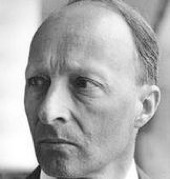
I was intrigued to discover last week that Witold Lutosławski (right) had identified two passages in his music where he was willing to acknowledge the influence of birdsong. The source was Bálint András Varga’s new book of interviews, Three Questions for Sixty-Five Composers (Rochester, NY: University of Rochester Press, 2011). Hungarian readers have had access to most of these interviews, plus a good few more that are not in the English edition, since its original publication 25 years ago as 3 Kérdés, 82 Zeneszerző (Budapest: Editio Musica Budapest (Zeneműkiadó Vállalat), 1986). But for English-language readers this is our first opportunity to study the responses of a wide range of composers to three identical questions (with follow-ups) that were posed to them by Varga.
His three questions were:
1. Have you had an experience similar to Witold Lutosławski’s? He heard John Cage’s Second Piano Concerto [sic: Varga refers to the Piano Concert (not Concerto)] on the radio – an encounter which changed his musical thinking and ushered in a new creative period, the first result of which was his Jeux vénitiens (1960-61).
2. A composer is surrounded by sounds. Do they influence you and are they in any way of significance for your compositional work?
3. How far can one speak of a personal style and where does self-repetition begin?
Lutosławski’s response to 1. was already contained in Varga’s valuable interview with him that he conducted in Warsaw in 1973 – Lutosławski Profile (London: Chester Music, 1976), the first extended dialogue with Lutosławski published in English. Lutosławski’s reaction to 3. came in written form and is too guarded to be revelatory, except for his acknowledgment that Varga was right to spot a motivic connection [a fairly minor one, in truth] between the central section of ‘Capriccio notturno e Arioso’ in the Concerto for Orchestra (1950-54) and the opening and closing bars of Novelette (1978-79).
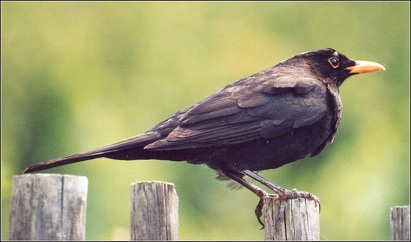
Lutosławski was the most reticent of composers when it came to acknowledging extramusical connections in his pieces, but in answer to question 2. he cites the blackbird, again in Novelette. He says that “in the fourth movement [‘Third Event’], I have recognized the blackbird in the rhythm of the main subject as played by the violin[s] [fig.26]”. Varga includes a reproduction of the theme (p.163), which Lutosławski wrote out for him on his Budapest hotel’s headed notepaper. It was apparently a Norwegian blackbird!
An even more tantalising prospect is raised by Lutosławski’s second example, the opening solo flute phrases of the third movement of Jeux vénitiens (1960-61): “They do not recall the song of any particular species, yet they do make the impression of birdsong”. The flute solo dominates this movement (written solely for the revised, Warsaw version of Jeux vénitiens) and plays variants of nine different motifs – could its entire cantilena have some coincidental link with birdsong? Or was a greater part or all of it an unrevealed inspiration for the composer?
This is a fascinating proposal, because all of these nine motifs also appear – again in variation, but this time superimposed – in the seven-voice woodwind texture in section A of the first movement. Could this texture be a bird chorus? It is surely no accident that the motif which Lutosławski picks out is the sole survivor (it’s the opening motif of the first flute part in this Warsaw version) from the discarded Venice version of section A, where it appears as the third motif in the second flute.
Bird chorus? I am surely not the only listener to have heard echoes of Ravel’s ‘Dawn Chorus’ from Daphnis et Chloé – and even perhaps of the fantastical sylvan opening of Szymanowski’s First Violin Concerto (1916) – in the opening of Lutosławski’s Piano Concerto (1988).
This woodwind texture is also presaged in the first movement of his Trois poèmes d’Henri Michaux (1961-63) at Figs 85-89. Listen elsewhere in this movement, to the elusive woodwind texture (again!) between Figs 35-84, and the aural equivalent of starlings flocking at dusk springs to mind. During this section, the chorus sings of ‘Ombres de mondes infimes, ombres d’ombres, cendres d’ailes‘ (‘Shadows of infinitesimal worlds, shadows of shadows, ashes of wings’).
Such avian speculations are not as idle or as inappropriate as they might seem. Lutosławski’s first observation in 2. is: “I do not use the sounds of nature consciously in my musical work but they must exert a subconscious influence because, when looking through the finished score, I have in the past come upon traces of them in the themes of some of my pieces”.
Which pieces might these be? Mi-parti (1976)? Would we be looking exclusively for woodwind textures? Not if Lutosławski’s observation about Novelette is taken into account. So how about the String Quartet (1964)? Or Paroles tissées (1965)? And what of Partita (1984), Chantefleurs et Chantefables (1989-90), both composed after Lutosławski’s responses to Varga’s questions?
”Birds are sometimes genuine artists commanding respect. Near Warsaw, around three o’clock one summer night, I heard one which possessed a breathtaking facility of variation.”
Was this Lutosławski’s epiphanic moment, akin to Szymanowski’s evocation of ‘a nightingale singing spontaneously in the fragrant May nights’?


 On Polish Music