• Lutosławski: A Christmas Carol

Poland has a wonderfully rich heritage of carols.  In 1946, as the country was recovering from the devastation of World War II, Lutosławski collected together a set of Dwadzieście kolęd (Twenty Carols) for voice and piano; in 1984-89, he arranged them for soprano, female choir and chamber orchestra.

Exactly 22 years ago today (14 December 1990), in Aberdeen in Scotland, Lutosławski conducted the premiere of this second version, with Susan Hamilton, the Scottish Philharmonic Singers and the Scottish Chamber Orchestra.

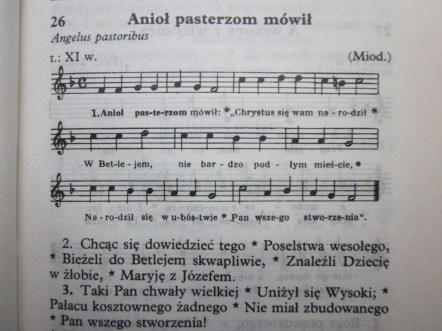
Here’s a recording of the first carol in the set, ‘Anioł pasterzom mowił’ (The Angel Said to the Shepherds).  The text is 11th-century, the music from the Śpiewnik kościelny (Church Hymnbook, 1838-53) compiled by Michał Marcin Mioduszewski.  On this recording, only verses 1 and 3 are sung.  The melody has an interesting construction of eleven bars (Lutosławski repeats the last seven).


IMG_7124 copy

• Poles launch ‘100/100 Lutosławski’

18619_437344239663934_545288166_nLutosławski year was officially launched in Warsaw yesterday under the banner ‘100/100 Lutosławski’.  A new website has been published (in Polish/English), but precise details of events are yet to be fully revealed.  I outlined the details of the Philharmonia’s splendid Woven Words website, launched in October, in an earlier post.  Here, I’ll outline what has so far emerged from Polish sources.

Websites

• http://lutoslawski.culture.pl/web/lutoslawskien  The ‘100/100 Lutosławski’ website, hosted by the Adam Mickiewicz Institute, is a companion to the one launched to mark the 75th anniversary of Szymanowski‘s death earlier this year. It currently has a three SoundCloud clips (Concerto for Orchestra, Symphonies 3 and 4), though not all the clips and the accompanying notes are credited.  There’s a short video discussion between Steven Stucky and Esa-Pekka Salonen as well as videos shared with the Woven Words website.  Its Calendar of events has still to be unveiled, and its list of Resources consists at the moment only of a short bibliography that has got as far as the letter ‘R’ (so no Stucky yet…).  No doubt the whole website will become more fully populated in the coming days and weeks.
• http://www.lutoslawski.org.pl/en/lutoslawski2013/info  This is the home of the Witold Lutosławski Society, which has existed since the late 1990s.  Like ‘100/100 Lutosławski’, it has both a Polish and an English site.  It promises details shortly.  By the way, for anyone with a short orchestral piece close to hand, the WLS is hosting a composition competition with a deadline of 25 January 2013, the 100th anniversary of the composer’s birth.  The competition’s regulations may be accessed here.

Performances

The Lutosławski components of the Warsaw Philharmonic’s forthcoming programmes have been published for some time and may be found by scrolling the Warsaw Philharmonic’s concert schedule.  Its celebrations begin on 11 January 2013.  Until the ‘100/100 Lutosławski’ Calendar is uploaded, you can find details of quite a few concerts worldwide at https://www.facebook.com/LutoslawskiCentennialCelebration, under ‘About’.

Recordings

It seems to me that it has been non-Polish ensembles and recording companies who have been taking the lead in this area of activity, notably the BBC SO under Edward Gardner for Chandos (4 CDs since 2010, a fifth on its way). Next month, Sony re-releases the Los Angeles PO/Salonen recordings of Symphonies 2-4 plus their newly-recorded version of the First Symphony.  The Polish Accord label started its Lutosławski Opera Omnia series in 2008, but there has been no further release since the third CD in 2010.  I am not privy to Polish recordings planned for release in 2013.  I am, however, very excited by the two ventures outlined below.

UnknownAs part of the official launch yesterday in the Witold Lutosławski Studio at Polish Radio and Television, the Polish National Audiovisual Institute (NInA) issued a press release (in Polish) containing the following information:

• A unique collection of recordings will be made available on the nina.gov.pl portal in the second half of 2013. All of Lutosławski’s compositions will be uploaded in at least one performance.  (As the 80th birthdays of Henryk Mikołaj Górecki (d. 2010) and Krzysztof Penderecki also fall in 2013, their music will be similarly covered by NInA next year.)  This online collection – drawn from Polish Radio archives – will be developed further in due course.  Its accompanying texts, by the late Polish Radio broadcaster and musicologist Andrzej Chłopecki, will be available in both Polish and English.

• NInA will also issue a six-disc set called ‘Lutosławski/świat’ (Lutosławski/World) – 5 CDs and a DVD – in the second half of 2013.  The vast majority of these recordings, from Polish Radio and WFDF (Documentary and Feature Film Studio), are being released for the first time.  They include archive recordings conducted by Lutosławski, and the booklet notes, many by young musicologists, promise fresh perspectives.  The project editor is Adam Suprynowicz.

What is especially interesting in the Polish context is the promise that Lutosławski’s complete output will be represented, including those works (socialist-realist pieces, film music and popular songs) which, as the press release says, ‘he himself sometimes wanted to forget’.  This promises to be a fascinating document, one which sets Lutosławski’s rich legacy of pieces and recordings in the broadest possible context.

• Jeux vénitiens: R3’s 50th Modern Classic

I’ve just caught a fine performance of Lutosławski’s Jeux vénitiens (1960-61) on BBC iPlayer (Radio).  It was from last Saturday’s Hear and Now on Radio 3, so it’ll be available for another 96 hours.  For the past year, Hear and Now has been using part of its precious hour and a half each Saturday night to highlight a composer and a work which has brought something new to music in the second half of the 20th-century.  It has been an absorbing series, with many well-known names and pieces passed over in favour of something more radical, curious or forgotten.  You can download the spoken introductions to all 50 ‘modern classics’ here.

At one stage, the producers were thinking of including Górecki’s Symphony no.3 in the roster, but in the end the only Polish piece to make it onto the list was Lutosławski’s Jeux vénitiens.  No, there wasn’t even a space for Penderecki’s Threnody, one of the iconic works from the 1960s.  Ah well.  But Jeux vénitiens is a good example of Polish experimentalism at its height (it’s contemporaneous with the Penderecki).

On the podcast, Esa-Pekka Salonen and Paul Griffiths give succinct comments, mainly on the (then new) aleatory component in his musical language, though its twelve-note harmonic aspect is not neglected.  Curiously, the words ‘aleatory’ and ‘ad libitum’ are mentioned by neither Salonen nor Griffiths (maybe ‘random’ and ‘uncoordinated’ have displaced terms which now may be thought as too unfamiliar).  Equally, ‘twelve-note’ (harmony) is notable by its absence.  It’s a pity, perhaps, that other aspects specific to the piece are given short shrift, or not mentioned at all. There is no reference to how the music develops in any of the movements (brutal intercutting in the first, accelerated superimposition in the fourth), no mention of thematic connections between the first and third movements, no notice given to the way that Lutosławski links the third and fourth movements harmonically.

It is very nice to hear Lutosławski himself talking (he, however, does mention ‘ad libitum’ and ‘aleatoric’), from an interview made with an unheard Thea Musgrave in 1973.  By that time, he had already adopted his defensive posture against being associated closely with Cage (and other ‘more radical’ composers).  He makes his point with some force in this interview, which suggests that he was already somewhat impatient with such links being made on a routine basis by commentators.  His closing comments about the future direction of avant-garde music also make for interesting listening.

The timing of this broadcast is opportune.  Not only does Jeux vénitiens complete the ’50 Modern Classics’ series, but its position looks ahead to 2013 and the centenary of Lutosławski’s birth on 25 January.  I hope he’ll receive a good hearing on Radio 3 next year, as long as Britten, Verdi and Wagner don’t hog the limelight.

• Jazz & Experimental Music from Poland

At the end of this month, Polish and British musicians are getting together in London for four nights of jazz and experimental music.  If last year’s programme is anything to go by, audiences at The Forge (25.11), Vortex Jazz Club (26.11), Queen of Hoxton (27.11) and The Hackney Cut (28.11) are in for something special.  The experimental music scene in Poland – across a whole range of genres and disciplines – has never been more vibrant.

Among those appearing are the Postaremczak/Kusiołek Duo (sax/accordion), three solo jazz musicians – Hubert Zemler (percussion), Rafał Mazur (acoustic bass guitar) and Marcin Masecki (piano), who made such an impression last year – the Warsaw-based band ParisTetris and the Levity trio.

Also taking part are UK musicians including Vocal Constructivists (who will be singing works by my own composition teacher, the iconoclastic Bogusław Schaeffer), Cornish-born Jim Hart (vibes) and Patrick Farmer, who’s creating a programme of installations and performances based on the ‘absent’ sounds of the city, in collaboration with Krzysztof Topolski and Kacper Ziemianin (who also appeared last year).

You can access all the necessary details @ http://www.experimentalpl.co.uk.  This highly informative site – complete with artist bios, videos and audio files – also includes details of last year’s programme: http://jazz.deconstructionproject.co.uk.

• New Article (Lutosławski’s Parallel Lives)

I’ve just posted a new article – ‘Parallel Lives of a Captive Muse’ – which has been published at www.woven-words.co.uk as part of the Philharmonia Orchestra’s celebration of the centenary of Lutosławski’s birth next year.

• Lutosławski Centenary 2013: Philharmonia

We are still over two months from the actual centenary of the birth of Witold Lutosławski (25 January 2013), but things are already hotting up.  I, for one, am busy preparing copy for Belgium, Germany and the UK, and this morning I’m doing a telephone interview for the in-house magazine of the Witold Lutosławski PO in Wrocław.

But by far the most intensive preparations outside Poland – so far – have been taking place in London for the Philharmonia Orchestra’s three-concert series at the South Bank Centre in January and March next year.  The soloists are Krystian Zimerman, Truls Mørk, Jennifer Koh and Matthias Goerne.  There are also three associated chamber recitals and one orchestral concert performed by students from the Royal College of Music.  Most of the concerts place Lutosławski’s music alongside repertoire by other composers: Chopin, Szymanowski, Roussel, Ligeti and (principally) Ravel and Debussy.

And that’s not all: the Philharmonia is taking parts of its Lutosławski programme – called ‘Woven Words’ after his piece Paroles tissées (1965) – to nine other cities between February and September 2013: Tokyo, Warsaw, Modena, Oviedo, Madrid, Dresden, Vienna, Ljubljana and Berlin.  Full details of the programme and schedule may be found at http://woven-words.co.uk, but here’s a list of the pieces by Lutosławski that are being performed in London by the Philharmonia and the Royal College of Music.

Philharmonia  30 January: Musique funèbre and Piano Concerto.  7 March: Cello Concerto and Concerto for Orchestra.  21 March: Symphony no.4, Les Espaces du sommeil and Chain 2.
RCM  4 February: String Quartet.  6 February: Jeux vénitiens and Symphony no.3.  27 February: Two Studies and Bucolics.  6 March: Mini Overture, Fanfare for CUBE, Epitaph, Subito, Grave and Dance Preludes.

The Philharmonia doesn’t do things by halves.  There was a press launch in  London in late October (unfortunately while I was in Warsaw), fronted by the two men whose idea this celebration has been: the conductor Esa-Pekka Salonen, who knew Lutosławski well and has long championed his music,  and the composer Steven Stucky, the author of the eloquent Lutosławski and His Music (1981).  The Philharmonia’s website http://woven-words.co.uk is a substantial achievement in itself, with a gallery of archival photographs assembled, special films made and essays written for the occasion.

Films

Salonen and Stucky travelled to Poland in the summer of 2012.  The results may be seen in five contextually stimulating films in which they chart Lutosławski’s life and work, with archive stills and footage as well as a wealth of location shots (I liked the appearance of Blikle’s famous café in ‘World War II’!).  Some of Lutosławski’s rarely seen manuscripts are discussed (especially in ‘Stalinist Years’) and there are excerpts from the music (the main footage being of the Concerto for Orchestra).  Archive footage of the composer is also incorporated.  The widow of Władysław Szpilman (The Pianist) appears in the third film, while  Charles Bodman Rae (first two films) and Zbigniew Skowron (fourth film) also make telling contributions.

• Early Life
• World War II
• Stalinist Years
• Maturity
• In Conversation

Essays

The Philharmonia has commissioned five essays, which I understand will also appear in the programme book for the series (Steven Stucky’s insightful notes for the orchestral programmes are also presented in advance on the website).

Steven Stucky, ‘Remembering Lutosławski’
Charles Bodman Rae, ‘Lutosławski and the Scars of Wars’
Adrian Thomas, ‘Lutosławski- Parallel Lives of a Captive Muse’
Nicholas Reyland, ‘Essences and Essentials: Lutosławski’s Musical Stories’
Zbigniew Skowron, ‘Lutosławski’s Aesthetics and Their Sources’

My own essay is also available on this site here.

• Grave matters

I’m catching up on Polish arrears, having dallied since my visit to Warsaw last month by staying in London to see Covent Garden’s Ring cycle (frankly, I might just as well have listened to it on the radio, so inept and wilfully contrary was the set design and production; the final half hour in particular was a total travesty).  And then I succumbed to a week of ‘underweatherness’ here in Cornwall, and that has meant a backlog of deadlines.

Today – 12 November 2012 – is the second anniversary of the death of Henryk Mikołaj Górecki.  Two nights ago, Polish Television broadcast a new documentary about him (Please Find, directed by Violetta Rotter-Kozera), with contributors from Europe and America, including myself.  I should have been in Katowice last Friday to see a private screening with the family, but circumstances got in the way.  I’m looking forward to seeing it in due course.

This morning, BBC Radio 3 broadcast the second movement of his Third Symphony, choosing not Dawn Upshaw’s breakthrough recording (now 20 years old), but the first ever recording, by Stefania Woytowicz with the Polish Radio Symphony Orchestra, conducted by Jerzy Katlewicz.  Upshaw and Woytowicz are two quite different singers, and I admire them both, but for me that first recording captures the excitement and extraordinary atmosphere of the late 1970s and the powerful shock that the symphony made on me and on others who were lucky enough to come across it at the time.  It was this recording, for example, that captivated the conductor David Atherton, who played a huge role in promoting it during the 1980s.

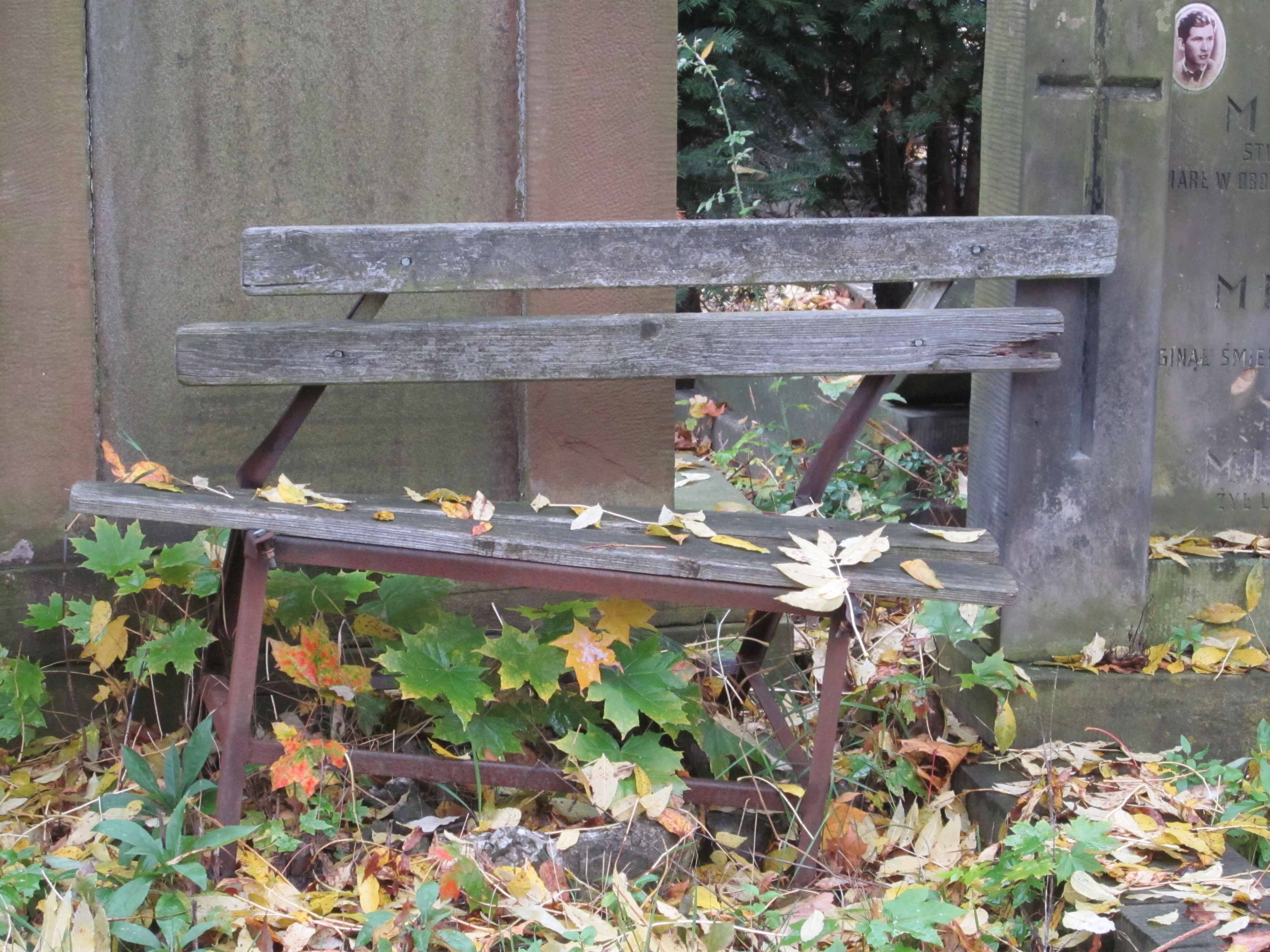
This is all a bit by-the-by.  I had intended to visit Henryk’s grave on my visit to Katowice.  Niestety, nie zdążyłem.  I did, however, manage to visit Powązki Cemetery in Warsaw last month, mainly to pay homage to particular people, but also to sample again its special atmosphere.

…….

Finding it as it was.

…….

My first main port of call was the grave of my friend, the Polish musicologist and critic, Andrzej Chłopecki, who had died a month earlier.

…….

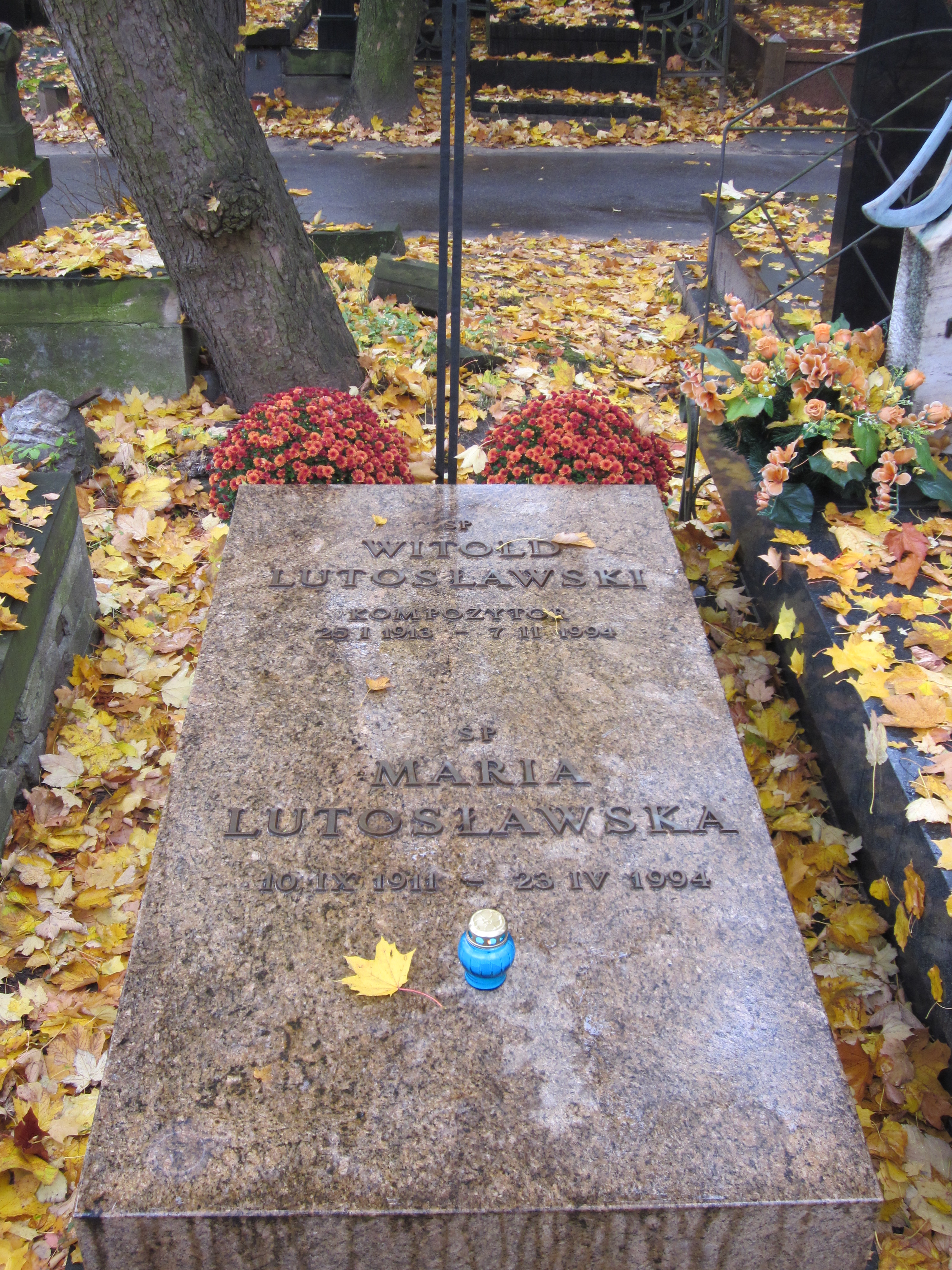
Some distance away, not far from the cemetery chapel, lie a number of composers and conductors who shaped Polish music in the second half of the twentieth century.  First and foremost, there’s the grave of Witold Lutosławski and his wife.

Here’s the grave from the rear.  I was present at his funeral and watched from this vantage point as his stepson climbed into the grave to place his urn on the floor of the chamber.  It now has a classically restrained gravestone and had evidently been attended to recently.

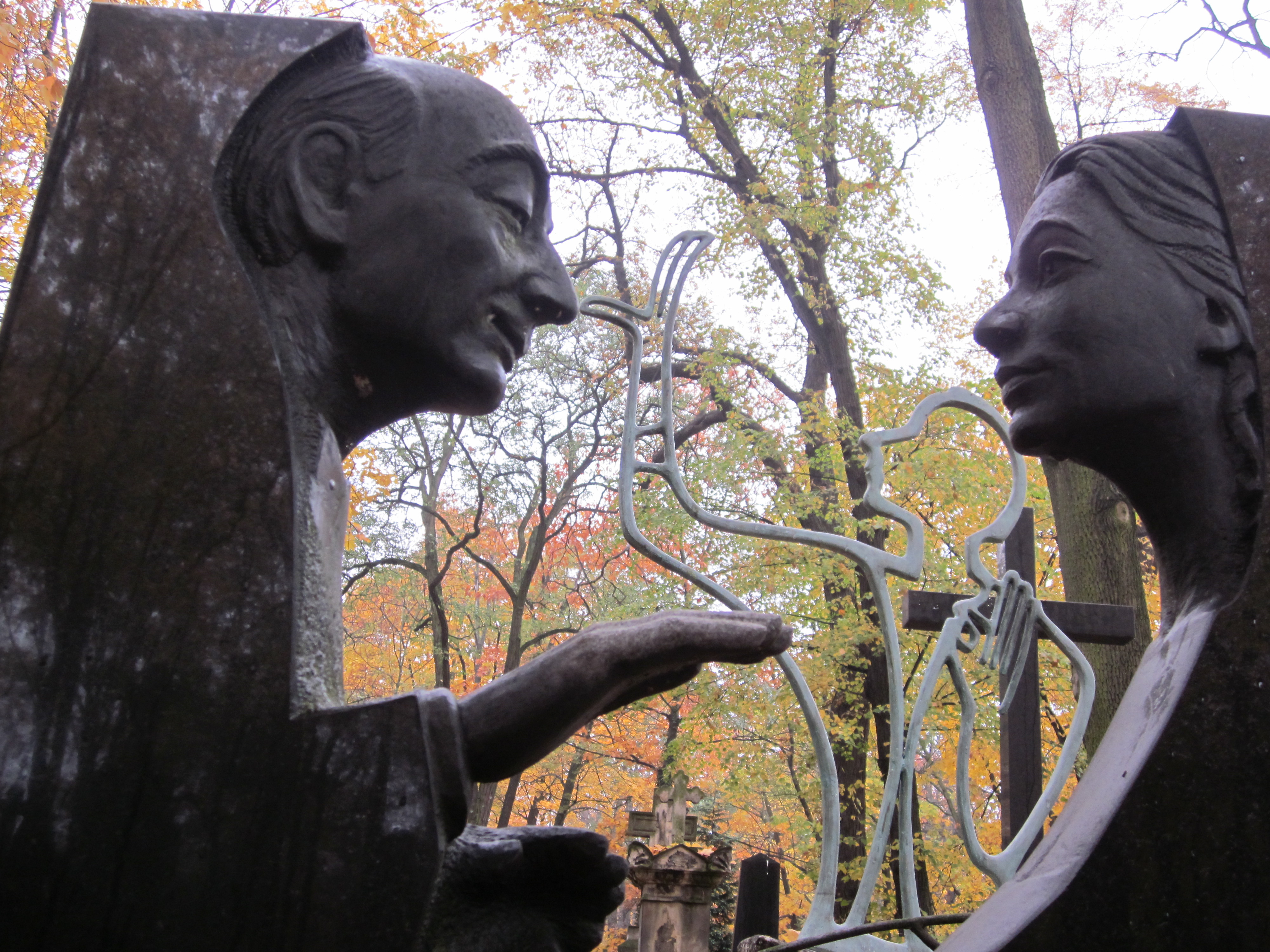
Next door lies that great champion of Polish music, the conductor Witold Rowicki. His grave is more demonstrative!

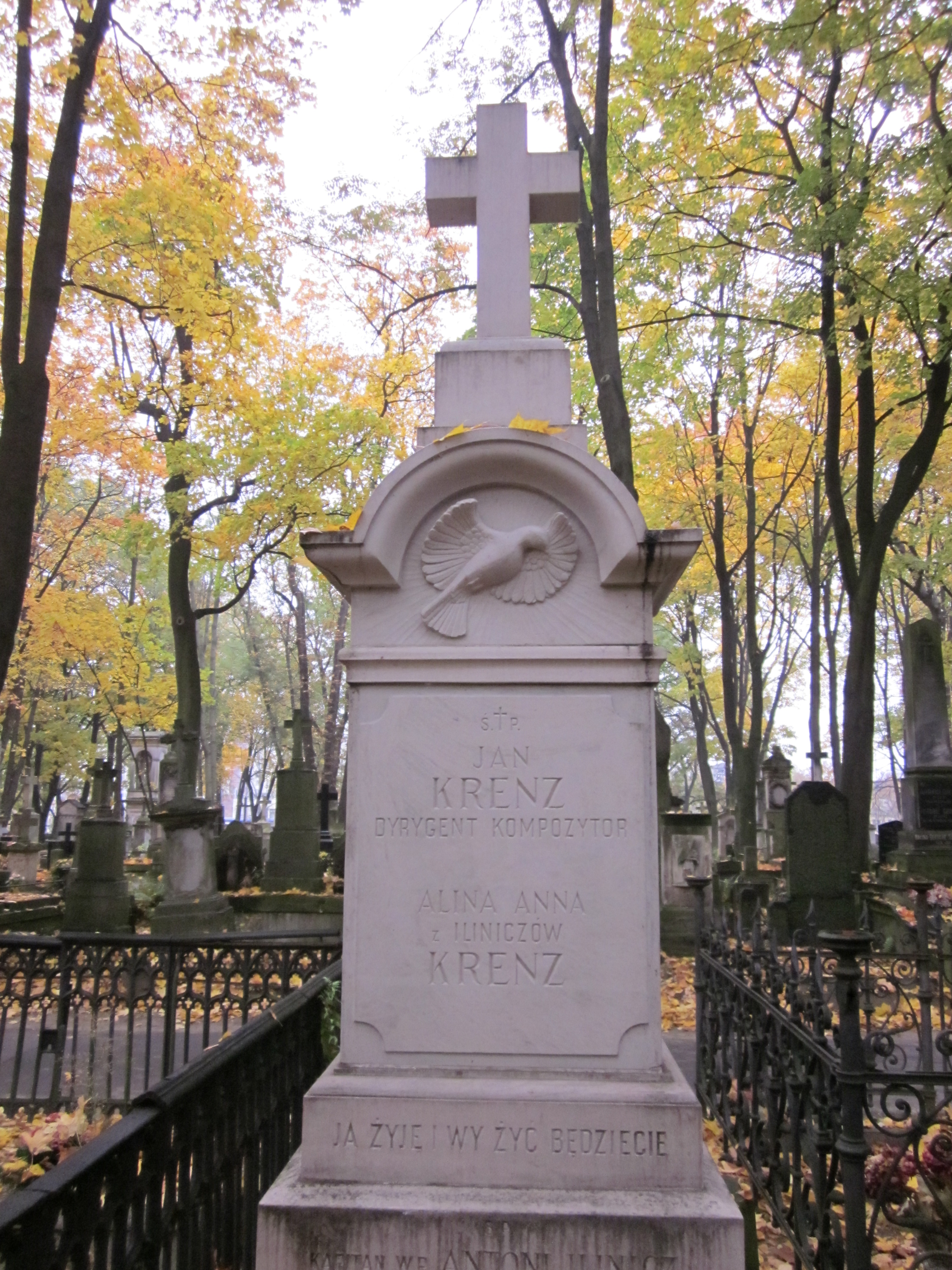
A little further to the right of Rowicki’s grave is one set aside for Jan Krenz, a champion of contemporary Polish music.  It seems strange to me (but it’s not unusual there) that such monuments are erected before death.

Behind Rowicki’s grave is that of Stefan Rachoń – a far less well-known conductor, at least outside Poland –  and his widow, the opera singer Barbara Nieman.

On the other side of the main path from these graves are several more.  Notable among them are those of Kazimierz Serocki and Tadeusz Baird, whose music deserves to be far more widely known and appreciated.  Baird, Krenz and Serocki formed ‘Grupa ’49’ as the youngest generation of composers during post-war socialist realism.

…….

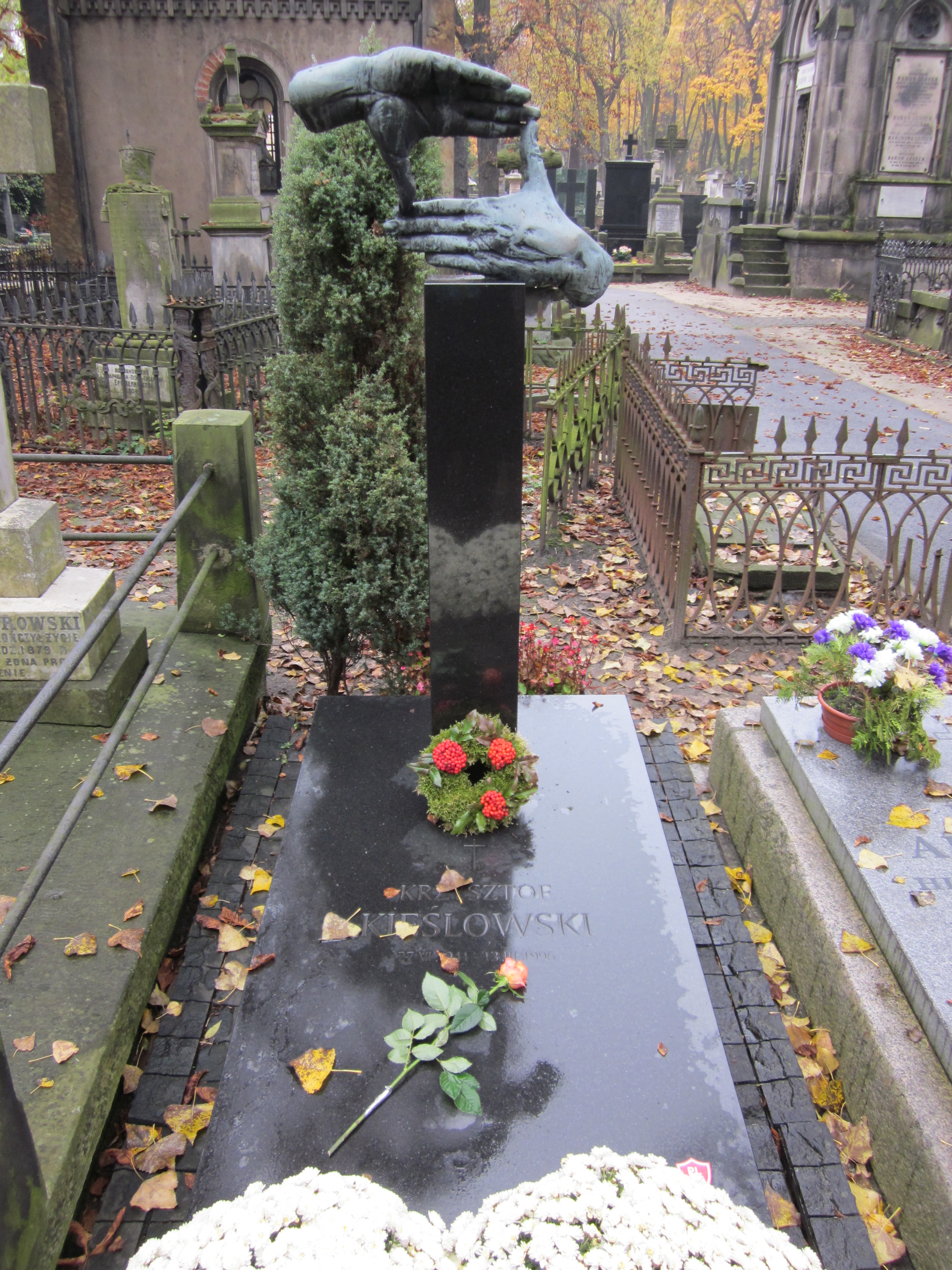
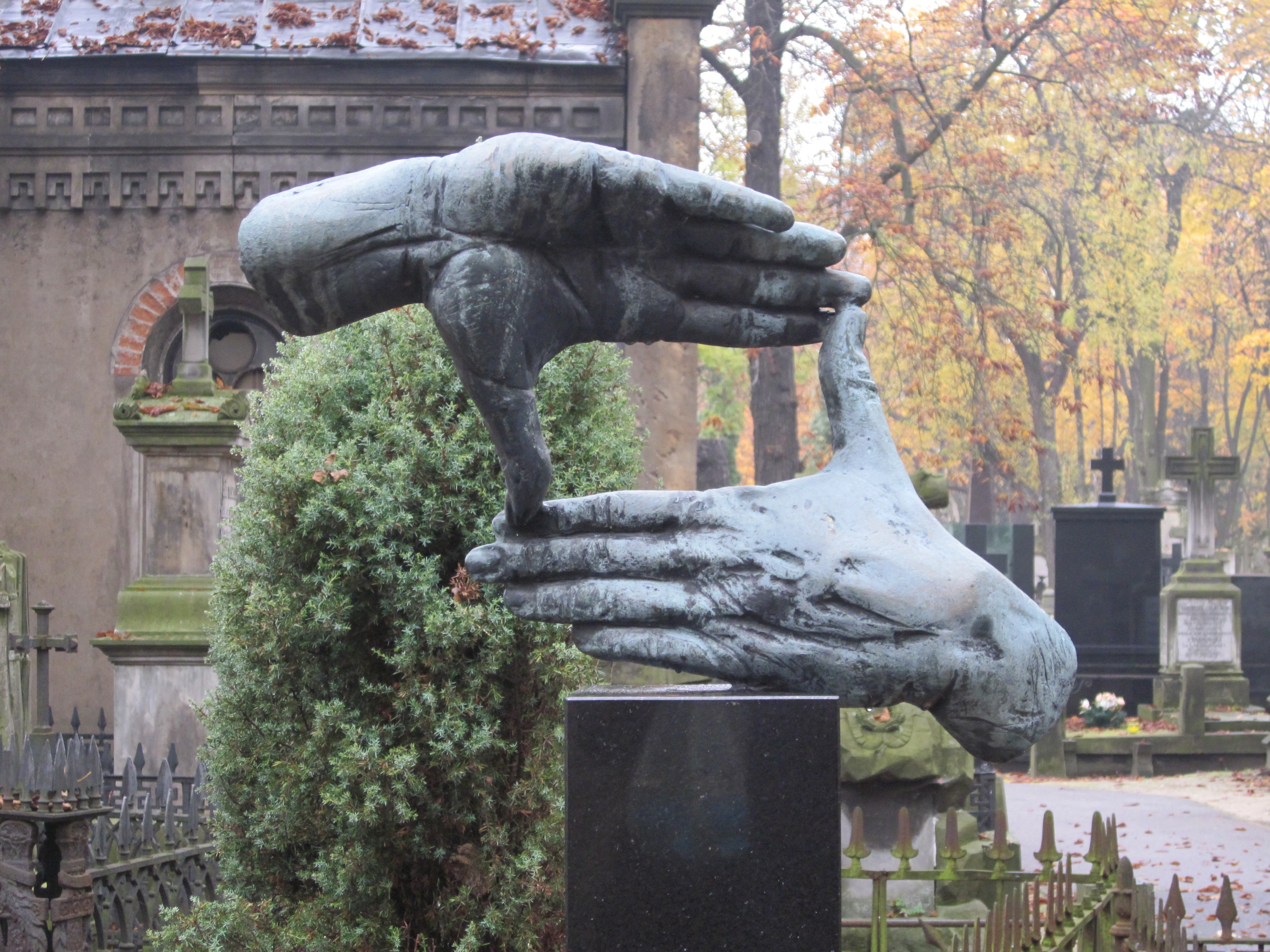
One of the most striking graves is that of the film-maker, Krzysztof Kieślowski.  If only I had his eye for framing.

• New CD Note (Lutosławski vol.4/Chandos)

It’s been ten months since the release of the third volume of Edward Gardner’s Lutosławski series with the BBC Symphony Orchestra.  Now volume four has appeared, and it’s a cracker (for the first time in the series, the cover illustration comes from outside Warsaw – it’s Wrocław).  The preceding CDs were:

Orchestral Works: Concerto for Orchestra, Symphony 3, Chain 3
Vocal Works: Lacrimosa, Silesian Triptych, Sleep, sleep, Paroles tissées, Les Espaces du sommeil, Chantefleurs et Chantefables
Orchestral Works II: Symphonic Variations, Paganini Variations, Piano Concerto, Symphony 4

Lutosławski: Orchestral Works III opens with Little Suite (1950), a work whose spirited nature masks the subtlety of its language when most other Polish composers were buckling under the weight of socialist-realist expectations.  A decade and a half later, Lutosławski was wrestling with large-scale form in his Second Symphony (1965-67), which is given an exceptionally persuasive reading here.  The soloist on this CD is Paul Watkins, who not only plays the Cello Concerto (1970) – which must have easily surpassed any other concerto written since then in its number of CD recordings – but also Lutosławski’s orchestration of Grave for cello and piano (1981/82).

Here’s the link to my booklet note for Lutosławski: Orchestral Works III, or you can scroll the CD NOTES tab above.

• Prix Europa for ‘Warsaw Variations’

Huge congratulations to Alan Hall of Fallingtree Productions on winning ‘Best European Radio Music Programme’ last week at the 2012 Prix Europa in Berlin. The award was given for his half-hour programme ‘Warsaw Variations’, first broadcast on BBC Radio 4 on 20 December 2011.

‘Warsaw Variations’ charts the musical friendship of Witold Lutosławski and Andrzej Panufnik during and after World War II.  Among its interviewees are Camilla Panufnik, my former PhD student Beata Bolesławska and myself. Alan was one of my colleagues at Radio 3 in the early 1990s.  He later went independent and is one of the most inventive and insightful producers around.  It was an absolute delight to work with him again.

You can hear the programme via the Fallingtree website:
• http://fallingtree.co.uk/listen/warsaw_variations

A few other links:
• http://www.thenews.pl/1/11/Artykul/116810,BBC-radio-feature-on-Polish-music-wins-Prix-Europa-
http://www.fallingtree.co.uk/news/2012/triple_awards_success_at_the_prix_europa!
• https://www.facebook.com/fallingtreeproductions

• New Website for Serocki

http://www.serocki.polmic.pl

The uploading of a website devoted to the life and music of Kazimierz Serocki is hugely to be welcomed.  Serocki was one of the giants of post-war Polish music – he stood alongside Bacewicz, Baird, Górecki, Lutosławski and Penderecki.  Yet his music has languished both at home and abroad since his death in 1981 at the age of 59.  This new venture will surely do much to bring his name and output to a wider audience.  It exists in parallel English and Polish versions.

It’s hosted by the Polish Music Information Centre in Warsaw and has been brought to fruition as a partnership between the Polish Composers’ Union (ZKP) and POLMIC, facilitated by the software company Noyamundi.  The content has been created by Dr Beata Bolesławska-Lewandowska and Dr. hab. Iwona Lindstedt.  The texts have been written by Dr Lindstedt, whose most recent publication is Sonorystyka w twórczości kompozytorów polskich XX wieku [Sonoristics in the Work of Twentieth-Century Polish Composers] (Warsaw: University Institute of Musicology, 2011).

The site is easy to navigate.  There are six main sections: Biography, Timeline, Creative Output, Symphonic Frescoes, Gallery and Bibliography.  As yet, there is no Discography nor a list of recordings made or held by Polish Radio or Polish Television.  In this absence, you can find some information in one of my earlier posts, Serocki: A Severe Case of Neglect (3 March 2012).

Biography

Serocki’s biography has been broken down into four sections: Childhood and youth, In the new reality, Between Poland and the world and The composer’s personality. These are fluently written and are full of contextualised detail. There are plentiful quotations, especially in the final section’s recollections by his friends and colleagues.  It turns out the Serocki was much more of a recluse, unwilling to talk about his music, than his now more famous and younger compatriot, Górecki.

Timeline

The Timeline is divided into decades: 1922-29, 1930s, 1940s, 1950s, 1960s, 1970s and 1980-81.  While some of its material is also to be found in the Biography, there are new details, illustrations and quotes.

Creative Output

Your instincts may draw you first to the Chronological list of works. The full details of dates of composition, premiere and publication, however, and of the location of the manuscript if unpublished, are to be found under Works by genre.  The entries under Works in detail are effectively mini programme notes, but can also be unexpectedly illuminating, such as that for Swinging Music, which draws on a lecture that Serocki gave in Basel in 1976.

The main weight of this section of the website is given over to four essays: Early works (1946-56, in three parts), Intermedium: dodecaphony and pointillism (1956-60), Mature works (1961-81, in three parts) and On Kazimierz Serocki’s film music.  Those looking for analytical insight into Serocki’s music will find an entrée here.

These essays take the reader smoothly through Serocki’s career, pointing out key aspects and complementing the details held for specific pieces in Works in detail.  They provide a good foundation for anyone minded, and able, to get hold of the scores and recordings for further study (outside Poland, unfortunately, it is no easy matter to gain access to such materials).  In the essay on the early works, it is good to see that Serocki’s contribution to the genre of the mass song is addressed (this aspect of life in the early 1950s is often glossed over).  The decision to group the mature works from 1960 into ‘Notation and sound space’, ‘Poetics of sounds’ and ‘Open form’ acknowledges the three main threads in Serocki’s creative thinking.  The essay on the film music is especially welcome.

Symphonic Frescoes

This section seems incomplete at present.  The first and second movements are represented by a recording of the work’s Polish premiere (at the 1964 Warsaw Autumn) with an accompanying scrolling score.   It is a great idea that brings one of Serocki’s most brilliant works to life.  Let’s hope not only that the rest of Symphonic Frescoes will be uploaded at a future date but also that other works will be similarly treated.  This would get round the perpetual bind that is the lack of scores and recordings outside Poland.

Gallery

This has four subsections: Music, Voices, Video, Pictures.  Many of the items here appear in the earlier sections of the website.

Music: here you can listen to fragments of over 30 compositions from across Serocki’s career.  These soundbites last between one and six minutes, so you can get a good idea of not only each work but also each movement.  At some point it would be wonderful if complete pieces and movements were available.
Voices: at present, there are five friends and colleagues of Serocki whose spoken reminiscences of the composer (in Polish) have been gathered together from the archives.  The speakers are the composer Augustyn Bloch (seven extracts), the singer and author Hanna Wąsalanka, aka Sister Blanka (six), the Hungarian pianist and composer Szábolcs Esztényi (six), the composer Włodzimierz Kotoński (five) and the clarinettist Czesław Pałkowski, best known perhaps for being a member of the Music Workshop ensemble (four).  These reminiscences cover a wide range of topics, from Serocki’s famous sense of humour to recollections of Darmstadt.  There are no transcriptions or translations here, but transcriptions of excerpts from this archival sound material do appear earlier in the site, especially in Creative Output.
• Video: these are mostly short excerpts from performances at ‘Warsaw Autumn’ festivals of Episodes (1958-59), Niobe (1966), Poezje (1968-69), Fantasia elegiaca (1971-72, Ad Libitum (1973-77) and Pianophonie(1976-78).  There is also a complete performance of Continuum (1965-66), a voice-over introduction to an excerpt from Swinging Music (1970) played by Zygmunt Krauze’s Music Workshop, and a short animated filmWspaniały marsz (Splendid March, 1970) for which Serocki wrote the music.

If you want to hear complete performances of works by Serocki, several are currently on YouTube (some added quite recently), including the pieces for trombone from the early 1950s, Sinfonietta (1956), Episodes, Segmenti (1961), A piacere (1963), Symphonic Frescoes (1964), Continuum, Swinging Music, Fantasmagoria (1971) and Pianophonie.
A video of Fantasmagoria has recently been uploaded at http://www.youtube.com/watch?v=JUzWEotLN0Q, as has one of Fantasia elegiaca at http://www.youtube.com/watch?v=g4NuCcpakbU.

Pictures: these are grouped in six categories – Documents and correspondence (58), Photos (34), Printed scores (110), Music manuscripts (27), Texts (32) and Press clippings (32).  Although none of the texted items is translated here (some appear elsewhere on the site), the caption beneath each image is usefully in English. These are fascinating documents to explore, giving new insights into all periods of his public and personal life.

Bibliography

The Bibliography is almost exclusively of Polish sources, including items by the main authors on Serocki’s music, such as Tadeusz Zieliński and Tomasz Kienik, who have each published several articles.  Zieliński’s study O twórczości Kazimierza Serockiego [On Kazimierz Serocki’s Oeuvre] (Kraków: PWM, 1985) remains the only monograph on Serocki’s music.  There is also a short list of primary sources (lecture typescripts, manuscript notes) held in the Warsaw University Library (BUW).