• New CD of Górecki Church Songs

It emerged last week that twenty church songs by Henryk Mikołaj Górecki will be released on CD later this year.  So far, 2013 has been dominated in Poland by celebrations of the centenary of the birth of Witold Lutosławski.  As the year progresses, attention will no doubt turn also to events marking the birth 80 years ago of not only Górecki (who died in 2010) but also Krzysztof Penderecki (who is still very much alive).  In October, for example, the festival that Górecki oversaw in Bielsko-Biała will acknowledge all three composers with a concert devoted to each (I am looking forward to hearing Górecki’s Second Symphony ‘Copernican’ and Lutosławski’s Cello Concerto – with Marcin Zdunik – and Trois poèmes d’Henri Michaux).

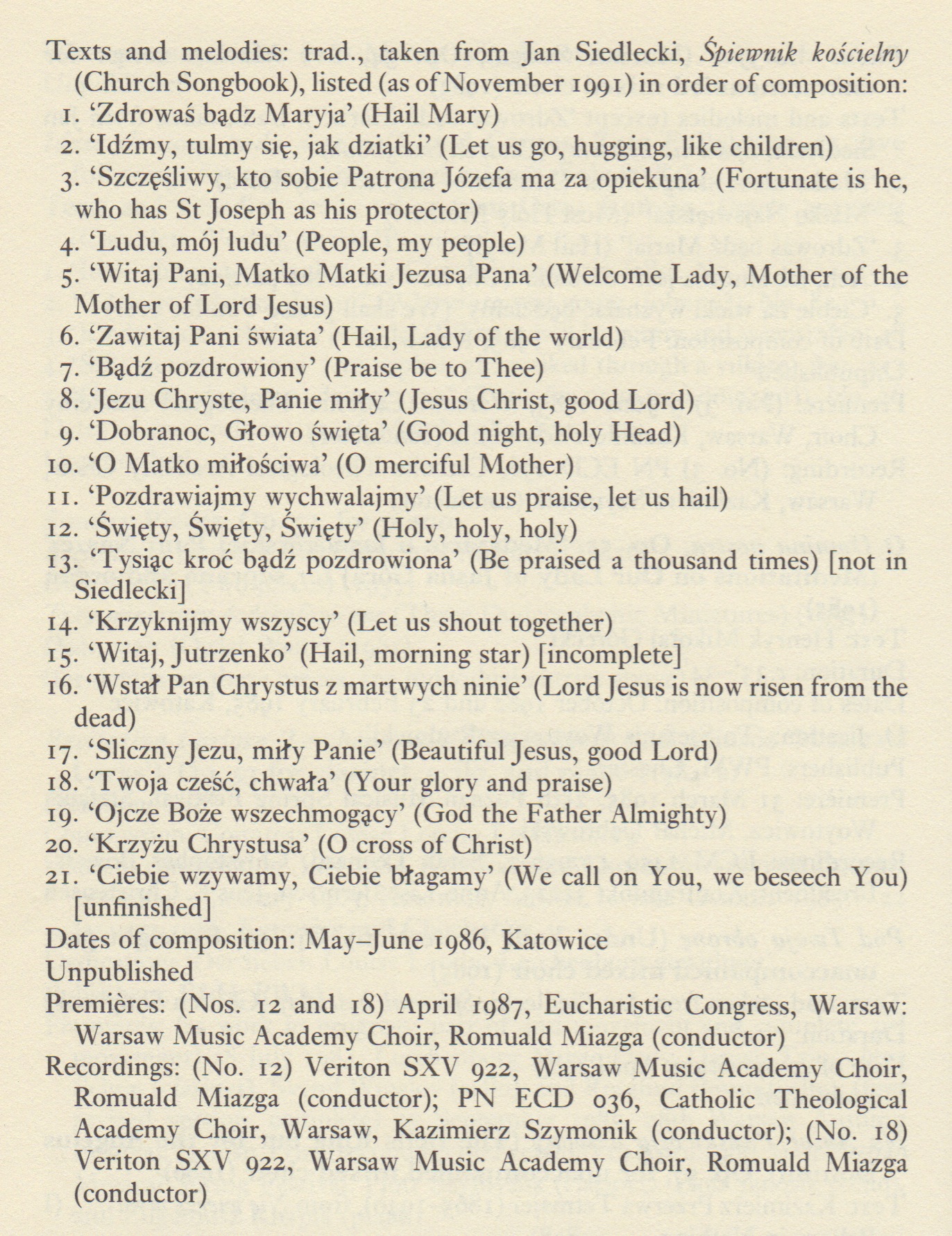
When I was researching my book on Górecki, I stayed with him in Katowice on two occasions in 1993 and 1994. During these visits, he sat at the piano and played through all of his completed but unpublished pieces.  When it came to his vocal music, he would also sing along lustily.  Among the pieces that he showed me were his Church Songs, which he had arranged in May-June 1986.  They are beautifully moulded miniatures, one- or two-voice hymns whose melodies he had harmonised simply but tellingly.  I published a list of the nineteen hymns that he said that he had completed, plus two others that he wanted to work on further.

HMG Church Songs (as of Nov. 1991)

What is interesting about the new CD – whose full list of contents has not yet been revealed – is that it consists of twenty Church Songs.  However, in naming five of them, an article in Dziennik Polski (21 May 2013) raises questions of whether my list is now inaccurate (it was copied from Górecki’s own list of November 1991), whether some titles have been changed or whether there are a few different songs that have replaced some on my chronological list or been added to it.  The article mentions hymns nos. 1, 11 and 14, but also names two that are not on my list nor can I find in my copy of the source hymn-book, first published in 1878: Pieśń o św. Mikołaja (Song about St Nicholas) and Idźmy do miłosierdzia (Let us go to mercy).  Intriguing.  Time will tell.  The CD should be ready by the end of June.

• Polish Music at the 2013 BBC Proms

Polish Music at the 2013 BBC Proms

p0179z7mThe 2013 BBC Proms have been launched today.  It is great to see Polish music taking a prominent role, instigated by the centenary this year of the birth of Witold Lutosławski.  This is no mean feat, given that 2013 also marks the centenary of the birth of Benjamin Britten and the bicentenaries of Verdi and Wagner.  And this is not to mention other anniversaries, like the 50th anniversary of the death of Francis Poulenc.

There are seven pieces by Lutosławski in this year’s programme.  There are also two by both Andrzej Panufnik (his centenary falls next year) and Karol Szymanowski.  And there is one each by Henryk Mikołaj Górecki and Krzysztof Penderecki, who were born 80 years ago.  There is also a concert including music of the Polish Renaissance.  An outline calendar of Polish music at the 2013 Proms is given below.

My essay for the BBC Proms Guide may be read here.

Prom 1 • 12 July
• Lutosławski: Variations on a Theme by Paganini

PCM 1 • 15 July
• Lutosławski: Partita

Prom 8 • 17 July
• Lutosławski: Cello Concerto

Prom 9 • 18 July
• Szymanowski: Symphony no.3 ‘Song of the Night’

PCM 2 • 22 July
• Polish and other European Renaissance Music

Prom 32 • 7 August
• Lutosławski: Symphonic Variations
• Lutosławski: Piano Concerto

Prom 44 • 15 August
• Penderecki: Concerto Grosso

Prom 55 • 23 August
• Lutosławski: Concerto for Orchestra
• Panufnik: Tragic Overture
• Panufnik: Lullaby

PSM 4 • 24 August
• Lutosławski: Paroles tissées

Prom 68 • 2 September
• Szymanowski: Violin Concerto no.1

Prom 71 • 4 September
• Górecki: Symphony no.3 ‘Symphony of Sorrowful Songs’

• Lutosławski: Ein Leben in der Musik

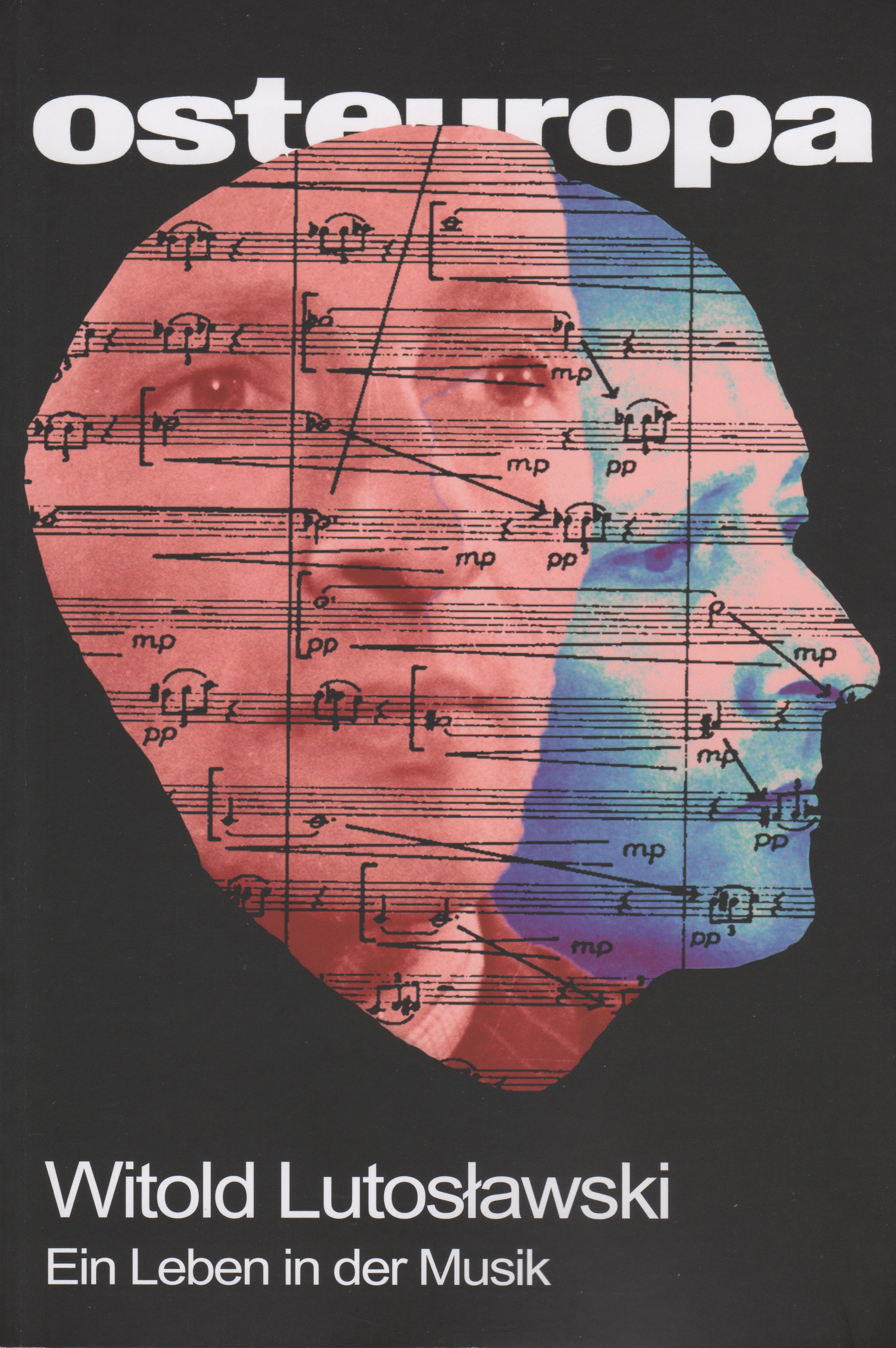
WL OsteuropaKickstarting the Lutosławski centenary in print is this volume which has just appeared in the osteuropa series (I received my copy today).  It contains thirteen items from Germany, Poland, Russia and the UK:

• Danuta Gwizdalanka: ‘Klassiker der Avantgarde. Witold Lutosławski: Leben und Werk’
• Anne-Sophie Mutter: ‘ “Ein neuer musikalischer Kosmos”. Über Witold Lutosławski’
• Dorota Szwarcman: ‘Auf den Schultern von Riesen. Lutosławski und seine Vorgänger’
• Dorota Kozińska: ‘Gründe und Abgründe. Lutosławski und der Sozialistische Realismus’
• Maciej Gołąb: ‘Lutosławski auf der Suche. Elemente und Ursprünge des Frühwerks’
• Krzysztof Meyer: ‘Pan Lutosławski. Erinnerungen an meinen Lehrer und Freund’
• Sebastian Borchers: ‘Von Warschau nach Darmstadt und zurück. Lutosławski, Penderecki und Górecki’
• Rüdiger Ritter: ‘Heißhunger auf Neue Musik. Das Ende des Stalinismus und der Warschauer Herbst
• Wojciech Kuczok: ‘Unsortierte Bemerkungen. Von Lutosławski zur schlesischen Komponistenschule’
• Adrian Thomas: ‘Das Cello-Konzert lesen. Lutosławski und die Literatur’*
• Izabela Antulov: ‘Wütender Antagonismus. Lutosławskis Cello-Konzert’
• Vladimir Tarnopol’skij: ‘ “Ein Symbol der Freiheit”. Lutosławskis Einfluss auf der Sowjetunion’
• Adam Wiedemann: ‘Heiliger Witold, bitte für uns’

This issue also includes a CD with two pieces: Lutosławski’s Cello Concerto (the Naxos recording by Andrzej Bauer with the Polish National Radio SO under Antoni Wit) and Krzysztof Meyer’s Farewell Music (1997), written in tribute to Lutosławski.  The abstracts are also given in English and may be accessed online here.  The volume may be ordered online here (22 euros).

* This is a translation of my paper ‘Lutosławski and Literature’ (2010).

• Grave matters

I’m catching up on Polish arrears, having dallied since my visit to Warsaw last month by staying in London to see Covent Garden’s Ring cycle (frankly, I might just as well have listened to it on the radio, so inept and wilfully contrary was the set design and production; the final half hour in particular was a total travesty).  And then I succumbed to a week of ‘underweatherness’ here in Cornwall, and that has meant a backlog of deadlines.

Today – 12 November 2012 – is the second anniversary of the death of Henryk Mikołaj Górecki.  Two nights ago, Polish Television broadcast a new documentary about him (Please Find, directed by Violetta Rotter-Kozera), with contributors from Europe and America, including myself.  I should have been in Katowice last Friday to see a private screening with the family, but circumstances got in the way.  I’m looking forward to seeing it in due course.

This morning, BBC Radio 3 broadcast the second movement of his Third Symphony, choosing not Dawn Upshaw’s breakthrough recording (now 20 years old), but the first ever recording, by Stefania Woytowicz with the Polish Radio Symphony Orchestra, conducted by Jerzy Katlewicz.  Upshaw and Woytowicz are two quite different singers, and I admire them both, but for me that first recording captures the excitement and extraordinary atmosphere of the late 1970s and the powerful shock that the symphony made on me and on others who were lucky enough to come across it at the time.  It was this recording, for example, that captivated the conductor David Atherton, who played a huge role in promoting it during the 1980s.

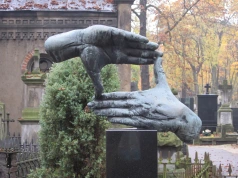
This is all a bit by-the-by.  I had intended to visit Henryk’s grave on my visit to Katowice.  Niestety, nie zdążyłem.  I did, however, manage to visit Powązki Cemetery in Warsaw last month, mainly to pay homage to particular people, but also to sample again its special atmosphere.

…….

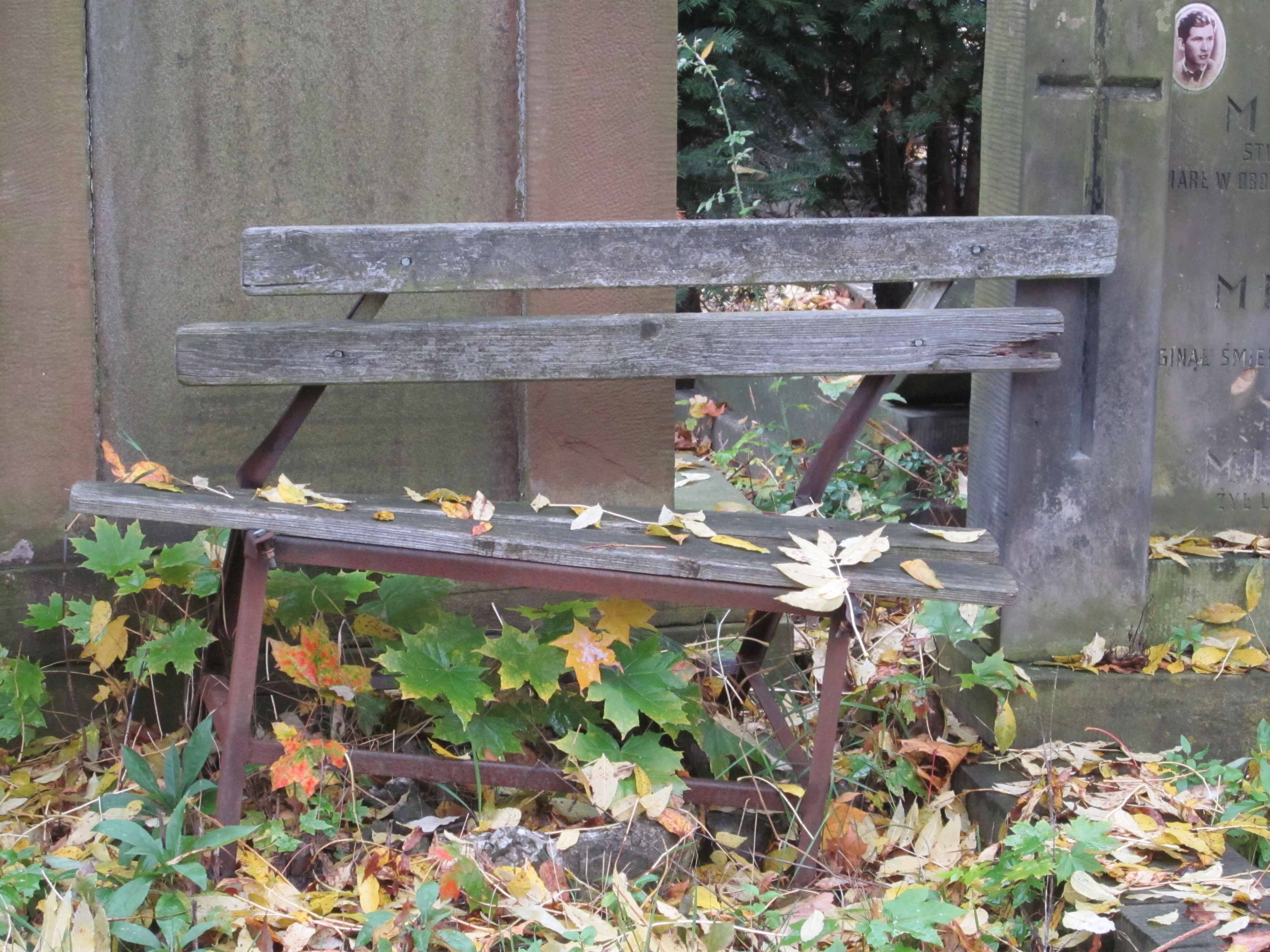
Finding it as it was.

…….

My first main port of call was the grave of my friend, the Polish musicologist and critic, Andrzej Chłopecki, who had died a month earlier.

…….

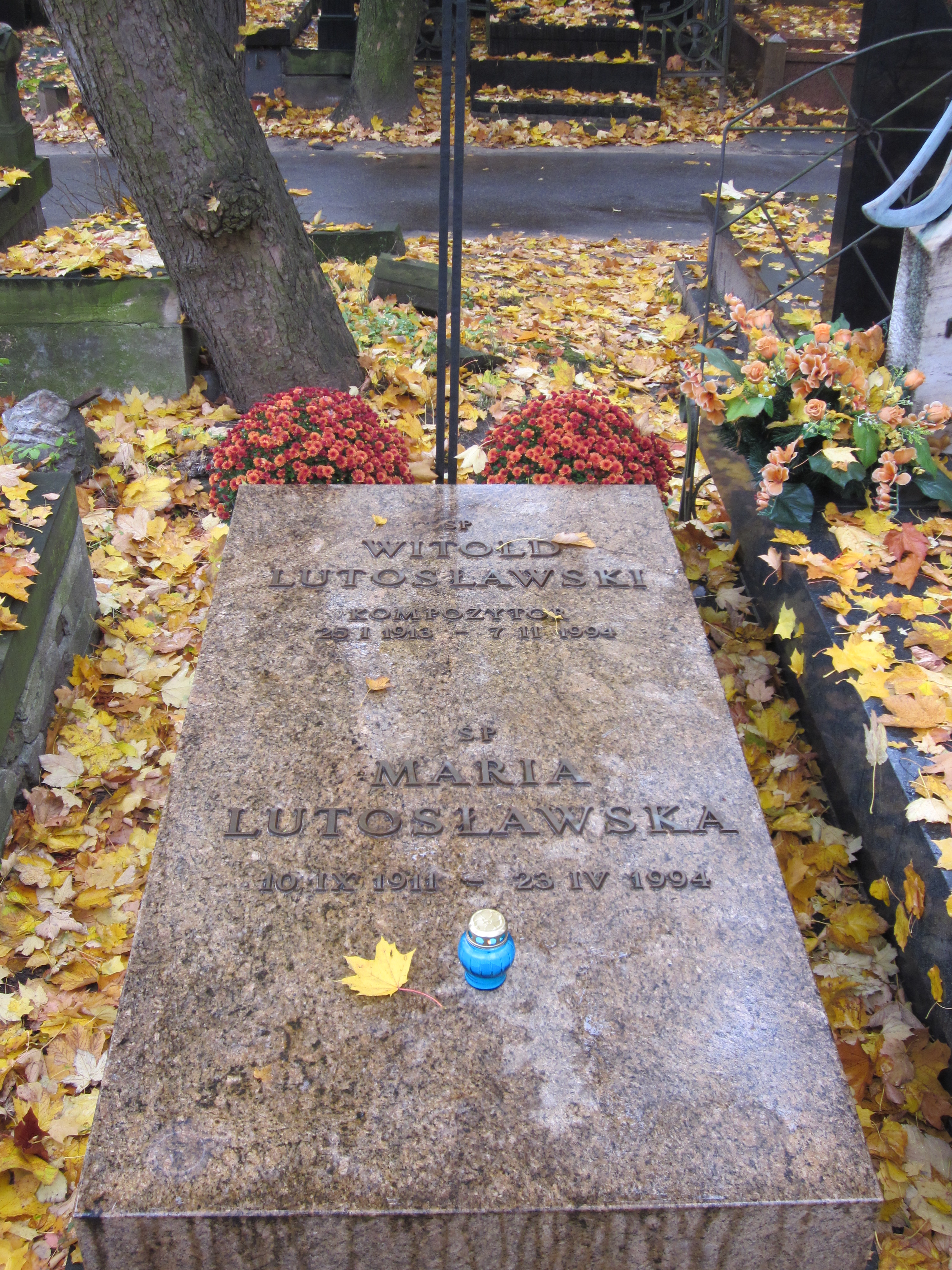
Some distance away, not far from the cemetery chapel, lie a number of composers and conductors who shaped Polish music in the second half of the twentieth century.  First and foremost, there’s the grave of Witold Lutosławski and his wife.

Here’s the grave from the rear.  I was present at his funeral and watched from this vantage point as his stepson climbed into the grave to place his urn on the floor of the chamber.  It now has a classically restrained gravestone and had evidently been attended to recently.

Next door lies that great champion of Polish music, the conductor Witold Rowicki. His grave is more demonstrative!

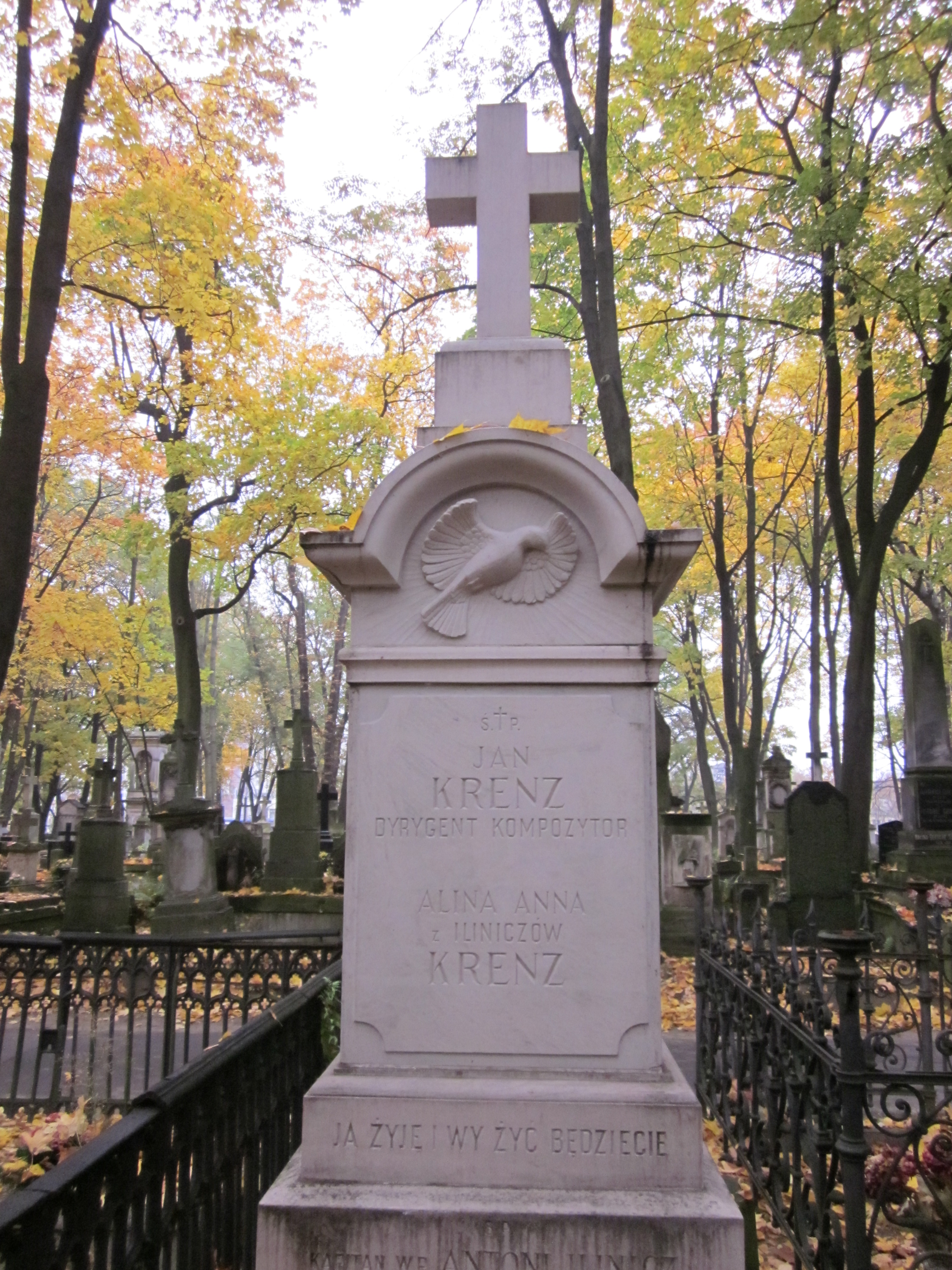
A little further to the right of Rowicki’s grave is one set aside for Jan Krenz, a champion of contemporary Polish music.  It seems strange to me (but it’s not unusual there) that such monuments are erected before death.

Behind Rowicki’s grave is that of Stefan Rachoń – a far less well-known conductor, at least outside Poland –  and his widow, the opera singer Barbara Nieman.

On the other side of the main path from these graves are several more.  Notable among them are those of Kazimierz Serocki and Tadeusz Baird, whose music deserves to be far more widely known and appreciated.  Baird, Krenz and Serocki formed ‘Grupa ’49’ as the youngest generation of composers during post-war socialist realism.

…….

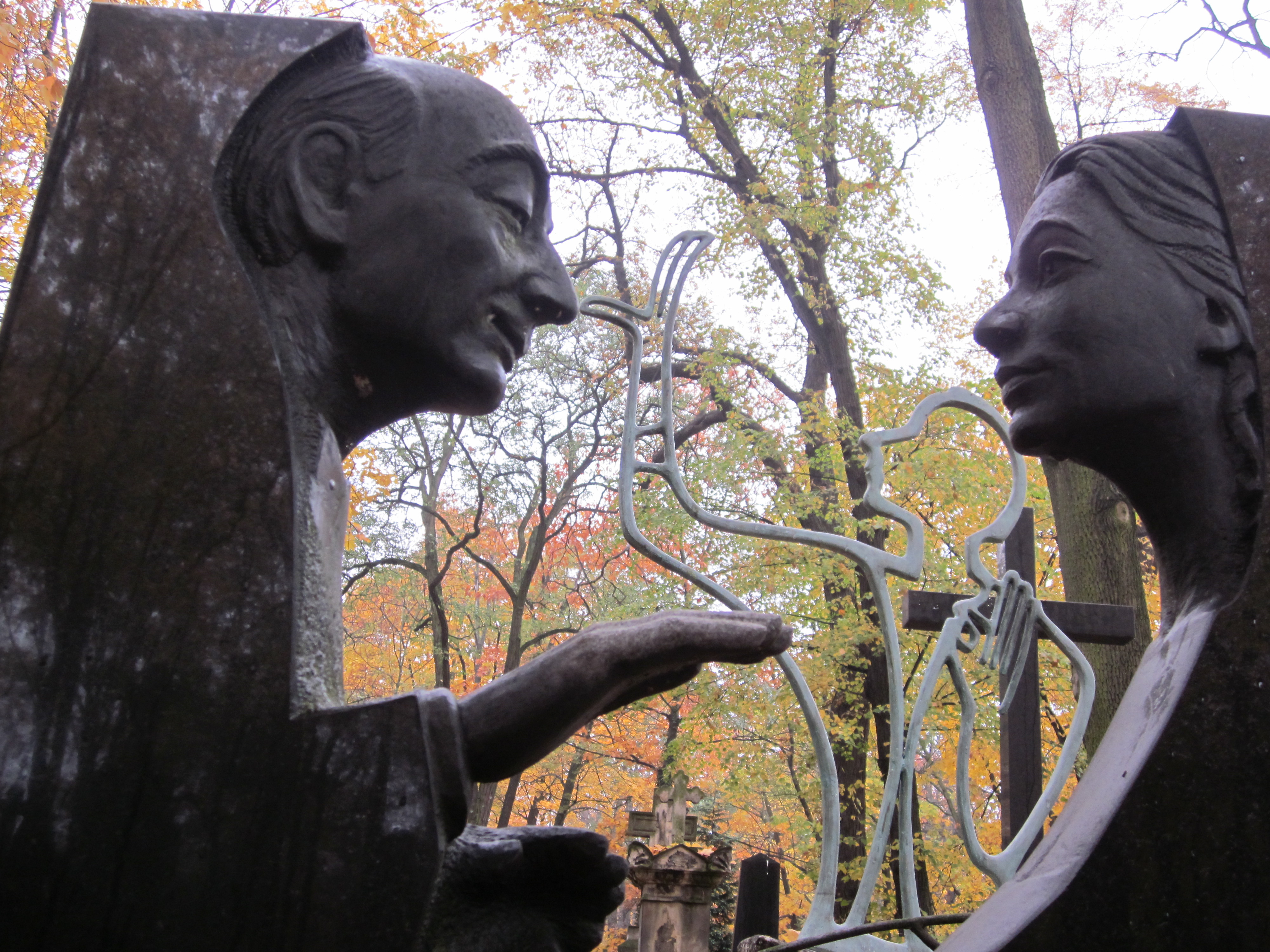
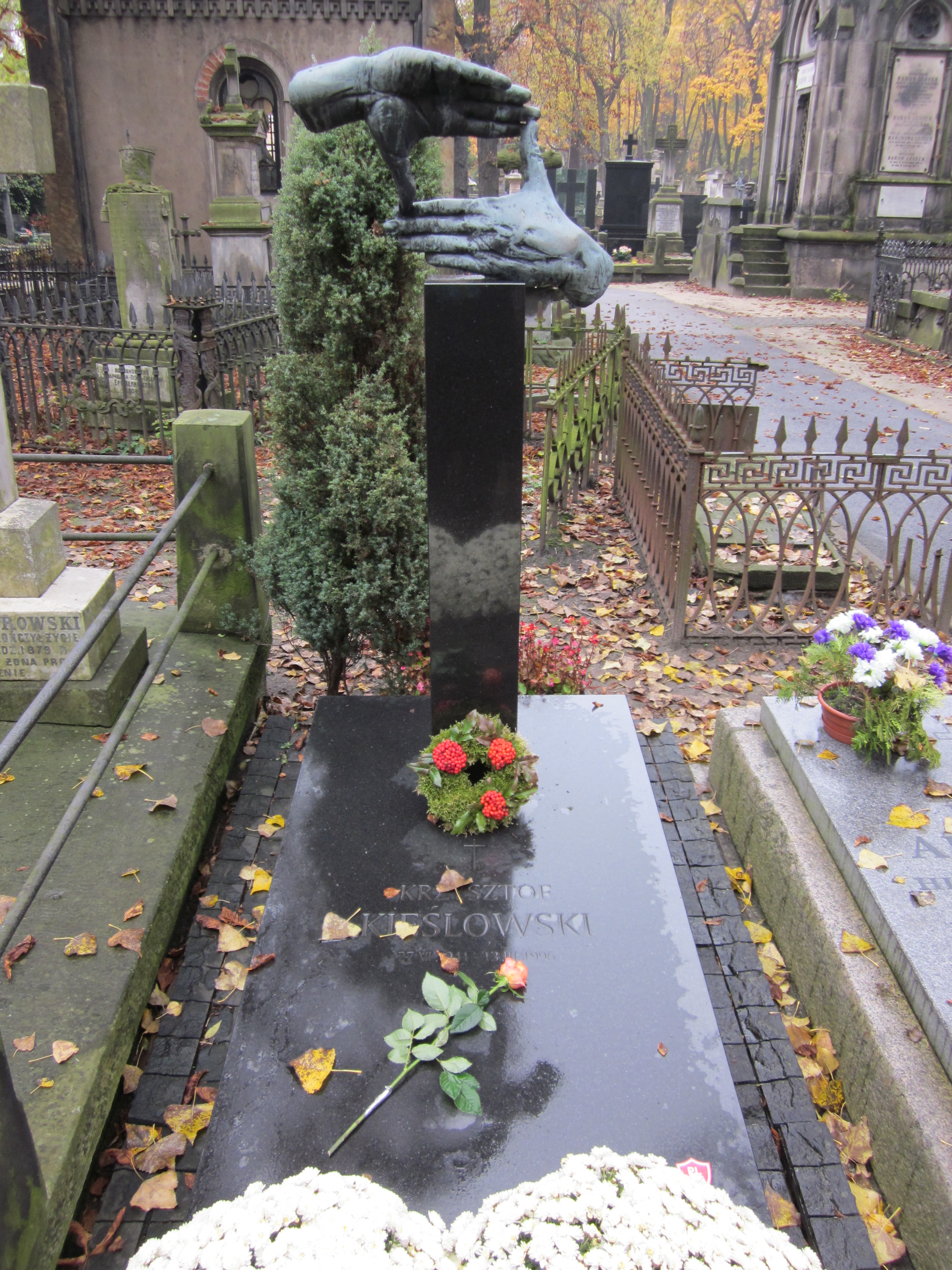
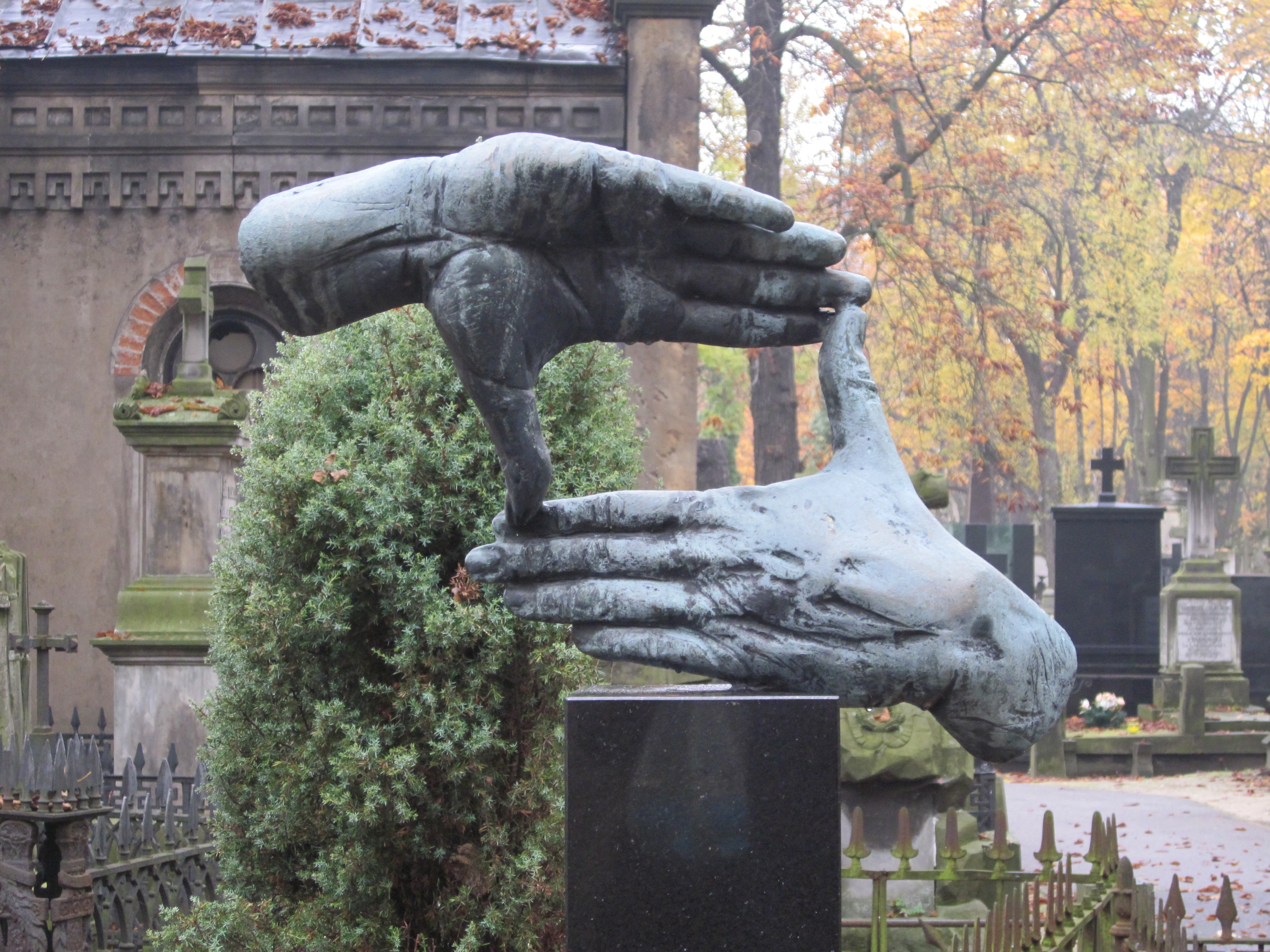
One of the most striking graves is that of the film-maker, Krzysztof Kieślowski.  If only I had his eye for framing.

• New Polish Pantheon in Kraków

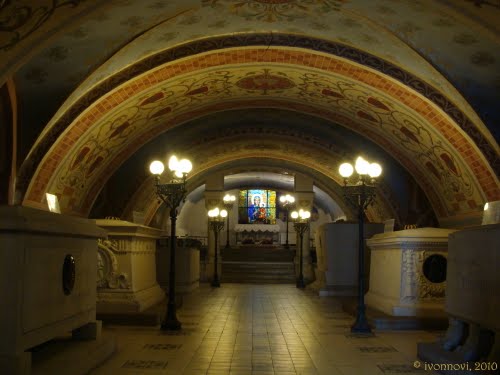
Last week it was announced that a new Polish Pantheon would be established in Kraków.  The existing Krypta/ Panteon Zasłużonych (Crypt/Pantheon of the Distinguished), under St Stanisław’s Church on Skałka, has no more room.

The existing Crypt was first brought into use in 1880, and first honoured Jan Długosz, an early Renaissance historian and diplomat.  Over the past 130 years, the Crypt of the Distinguished has become the final resting place of just twelve more men (no women), most of whom were writers and many of whom had Kraków connections.

Photo: Ivonna Nowicka (2010). Szymanowski’s tomb is on the far left


1880  Jan Długosz
1881  Wincenty Pol
1881  Lucjan Siemieński
1887  Józef Ignacy Kraszewski
1893  Teofil Lenartowicz
1897  Adam Asnyk
1902  Henryk Siemiradzki
1907  Stanisław Wyspiański
1929  Jacek Malczewski
1937  Karol Szymanowski
1954  Ludwik Solski
1955  Tadeusz Banachiewicz
2004  Czesław Miłosz


Wyspiański was also a renowned artist, and his interment and that of the painter Siemiradzki seem to have opened the way for other non-literary figures to be included: Malczewski (painter), Szymanowski (composer), Solski (actor and theatre director) and Banachiewicz (mathematician and astronomer).

As the above list indicates, the Crypt was used very intermittently, so can hardly be said to be representative of the great and the good from the worlds of the arts and sciences over the last 130 years.  I wonder whom the authorities have got in mind for the new Pantheon, which will be under the Church of SS Peter and Paul, close to Kraków’s city centre?  They could, I imagine, disinter some who are already dead, such as the composers Witold Lutosławski (Warsaw) or Henryk Mikołaj Górecki (Katowice), but somehow I think that is unlikely.  When Krzysztof Penderecki’s time comes, he might be a likely candidate, not least because he is Kraków born and bred.  Among literary figures, Wisława Szymborska – who died earlier this year and, like Miłosz, was a Nobel laureate – might be considered.  It remains to be seen how the new Pantheon will mark the resting places of those who have been cremated.

The Poles are attached to their great figures and believe in good memorials.  Being given a magnificent tomb in such a crypt, however, is no guarantee of long-lasting recognition or significance, especially outside Poland, as the list of those in the existing Crypt makes evident.

Sometimes you can find just as much dignity and remembrance in a graveyard open to the air.  The Powązki Cemetery in Warsaw is a case in point.  It is the resting place of huge numbers of distinguished people from all walks of life, from times of both peace and war.  There is a particular area with a cluster of composers and performers, including Lutosławski, Baird, Serocki, Rowicki and many others.  I make a point of going to Powązki when I am in Warsaw for more than a couple of days.  Next time I go, I will search out the grave of my friend and distinguished music critic and thinker, Andrzej Chłopecki, who was buried there three days ago.

• New CD Note (Górecki/Hyperion)

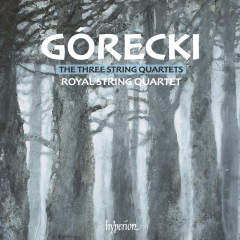
hmg-hyperion-2011This is the third time that I have written CD booklet notes on the Górecki string quartets. Back in 1993, I wrote on no.2 ‘Quasi una fantasia’, followed 14 years later by no.3 ‘.. songs are sung’, both for Kronos on Nonesuch.  In 2008, the Silesian Quartet – great friends of the composer – brought out all three quartets on EMI Poland.  Now, in 2011, another Polish ensemble, the young and dynamic Royal String Quartet, has recorded these quartets for Hyperion.  It has been a privilege to revisit these three masterpieces in its company.


Here’s the link to my note for this new Górecki CDor you can scroll the CD NOTES tab above.

• New CD Note (Górecki/Decca)

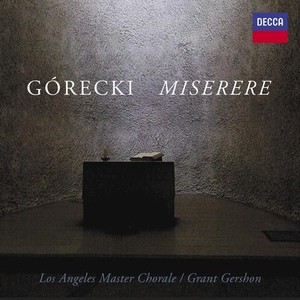
Two fine new CDs of Górecki’s choral music have appeared recently, one by British performers, one by Americans. First out was ‘Henryk Górecki: Totus Tuus’, sung by the National Youth Choir of Great Britain, conducted by Mike Brewer, on Delphian (DCD34054).  Second to appear was ‘Górecki: Miserere’, sung by the Los Angeles Master Chorale, conducted by Grant Gershon, on Decca (478 3537).  The NYCGB seems to be marginally the larger of the two sizeable choirs.  Both are superbly blended and able to sustain the long and often quiet lines and harmonies of Górecki’s music.  The two repertoires complement one another nicely, with only the previously unrecorded Lobgesang (2000) on both discs.  Together, they give as representative a survey of Górecki’s sacred choral music (mostly a cappella) as you could wish for.  And you can also appreciate the contrasts between young and mature voices.

The Delphian CD contains Euntes ibant et flebant (1972), Amen (1975), Totus Tuus (1987), Lobgesang and Salve, sidus Polonorum (2000).  The excellent booklet note is by Ivan Moody.  The full texts are included, in Latin/Polish and in English.

The Decca CD contains Miserere (1981), Five Marian Songs (1985) and Lobgesang. The full texts are included, in Latin/Polish, German, French and English.

Here’s the link to my booklet note for Górecki: Miserere, or you can scroll the CD NOTES tab above.

• Górecki’s ‘Ad Matrem’ premiere on video

Once again I’m indebted to the eagle eyes of Tim Rutherford-Johnson (http://johnsonsrambler.wordpress.com/) who tweeted yesterday (https://twitter.com/#!/moderncomp) about a YouTube video he’d discovered of the premiere of Górecki’s Ad Matrem.  It’s a black and white film made by Polish Television on 24 September 1972 at the final concert of that year’s ‘Warsaw Autumn’ festival.  The venue was the National Philharmonic Hall, with Stefania Woytowicz and the National Philharmonic SO and Choir conducted by Andrzej Markowski.  It’s a bit of a shame that the film cuts out just before Górecki came onto the stage to acknowledge the applause.


The Górecki concluded the concert, and therefore crowned the festival.  Ad Matrem was preceded in the programme by a typically eclectic festival mix of repertoire: Schoenberg’s Five Orchestral Pieces, Tomasz Sikorski’s Holzwege (Paths to Nowhere, premiere), Franco Oppo’s Digressione (Polish premiere) and Penderecki’s Partita (also a Polish premiere), with soloists Felicja Blumental and Terje Rypdal.*

Woytowicz went on to give the premieres of Górecki’s second and third symphonies as well as O Domina nostra, which was dedicated to her.  (She also sang Lutosławski’s Lacrimosa at his funeral in 1994.)

Markowski was a great supporter of Górecki’s music, having given the premiere of his Epitafium at the second ‘Warsaw Autumn’, in 1958, and conducting several subsequent premieres: Little Music II (‘Warsaw Autumn’, 1967), Wratislaviae gloria (Wrocław, 1969), Old Polish Music (‘Warsaw Autumn’, 1969) and the Second Symphony with Woytowicz (Warsaw, 1973).  Markowski was a passionate advocate not only of Górecki’s music but also that of other contemporary composers from home and abroad.  Something of his character may be gleaned from the fact that he fought in the Warsaw Uprising of 1944 as a member of the Polish underground Home Army.

Górecki’s Ad Matrem (1972) is a powerful and lean work.  The chorus utters only two words (‘Mater mea’), just twice in the early stages. The music’s trajectory, from pulsing bass drums, through these interjections and on to a luminous dominant thirteenth and beyond, is very striking, not least because Górecki places these textures sparingly.  The soprano does not sing her four words (‘Mater mea, lacrimosa dolorosa’) until the closing bars.  I’ve often thought of this approach as painterly in the sense that Patrick Heron, for example, created abstract paintings with a huge swathe of one colour at one end of the canvas but very telling and contrasting colour-blocks at the other end or in isolated patches in between.

* Despite Ad Matrem being one of the most unconventionally moving and striking of Górecki’s works, it has remained largely unrecognised outside Poland, even though it won First Prize at the UNESCO Composers’ Rostrum in Paris in 1973.  In the UK, it took the initiative of the British composer John Casken to bring about the UK premiere. This took place, performed by students at Manchester University under his direction, in December 2002, a full thirty years after its premiere in Warsaw.

• Polish Radio Choir to be liquidated?

Chór Polskiego Radia (1948-2012?)

Last November, I joined the Polish Radio Choir in Durham for the start of its UK tour.  Yesterday, I learned that, unless Polish Radio relents, the choir is to be liquidated.  It’s a strong term, ‘liquidation’, reserved for businesses or the horrors of ethnic cleansing.  But it’s the one chosen by Polish Radio to describe its decision about the Kraków-based Radio Choir.  Coming on the eve of the 75th anniversary (today) of Polish Radio’s cultural channel PR2 (the equivalent of BBC R3 in the UK), this news could hardly have been more pointed.

There is still an outside chance that the choir will be saved, but it looks like a forlorn hope.  The Minister of Culture yesterday reiterated his offer of an annual subsidy of 800,000 zł.  It was there on the table before the Polish Radio Management Board took its executive decision last week, but it had no effect.  800,000 zł is a sizeable offer – the equivalent of c.£162,630 – and represents almost 50% of the total annual cost of the choir, £1.7m zł (= c.£345,589). In the larger scheme of things, it’s not a huge sum of money to pay each year for such a world-class ensemble (individual annual salaries must average around £10K). Whether Polish Radio reverses its decision at the meeting of its Supervisory Board on 15 March is anybody’s guess, but the omens do not look good.

Whatever public hand-wringing goes on, whatever platitudes are uttered about painful decisions and whatever regrets expressed (and how hollow such sentiments ring), the fact is simple.  Like any organisation that finds itself in financial straits, priorities are made and if an individual or group is not deemed central to future operations, then that’s it.  Polish Radio evidently thinks that this outstanding choir is no longer essential, even though it has been a key part of its cultural strategy since the choir was founded in 1948.  It has been one of its most distinguished – and economically effective – cultural ambassadors.  If Polish Radio had wanted to keep the choir, it could and would have, and some other sector of the organisation would have suffered instead.  I’m not in a position to know what elements in Polish Radio’s current programming policy are more central, more essential or more worth saving, but you can bet your bottom złoty that they ain’t going to add quality to its cultural programming.

One of the key elements in any public broadcasting strategy is to provide programming initiatives that are distinctive. In music, that requires ‘house’ orchestras and other ensembles, like specialist choirs.  With far fewer commercial pressures than independent orchestras and choirs, these performing bodies are in a position to put on concerts whose repertoire can often, indeed should be more adventurous and wide-ranging.  The BBC Singers, whose history dates back almost 90 years to the mid-1920s, are, at 24 singers, fewer in number than their Polish counterparts but fulfil a similar function, with challenging and less frequently performed repertoire at their core. Fortunately, the BBC Singers seem secure in the BBC’s cultural strategy, but if they were ever to come under threat the outcry would be enormous.

Polish Radio, however, has ridden roughshod over the national outcry at its decision.  All the major cultural institutions in Poland – including the Ministry of Culture and its generous offer of recurrent subsidy – plus numerous individuals, including senior composers such as Krzysztof Penderecki and Wojciech Kilar, have argued cogently against it, but to no avail.  If nothing changes a fortnight today, the choir will be disbanded this summer.

I have a personal reason to be dismayed by this, as I took part (giving pre-concert talks) in the choir’s UK tour last November.  They sang at Durham Cathedral, King’s Place in London, St George’s in Bristol and St George’s Hall in Liverpool.  They gave wonderfully attuned performances of a cappella pieces by their compatriot Henryk Mikołaj Górecki, who had died just a year earlier.  Audiences were mesmerised not just by the music but by the exceptional quality of the choir’s sound.  Enthusiastic applause and standing ovations were instinctive responses.

This is a lamentable turn of events, and an unwarranted farewell is on the cards.  One last, unexpected memory for me was from the choir’s first night, in Durham Cathedral.  They had hardly begun the concert, with Górecki’s peaceful Totus Tuus, when the building seemed to be assaulted by a barrage of explosions as if we were under siege.  Not a single singer blinked, no-one looked askance, no voice wavered.  They didn’t know it, but it was Bonfire Night.  I am sure that they will bear the next few months with similar dignity and sense of musical purpose if the worst comes to the worst.

If you want to write a letter of protest, you can do so by contacting the President of the Polish Radio Supervisory Board, Mr. Stanisław Jędrzejewski (who will chair the board meeting on 15 March), at <marta.rybak@polskieradio.pl>.
• New Concert Hall for Katowice

Not before time, and after several years of planning, the building contract was signed today for a new concert hall in Katowice, Poland.  Its ambitious completion date is by the end of next year.  It will be the home of the Polish Radio National Symphony Orchestra (NOSPR) and will also include a chamber-sized hall.

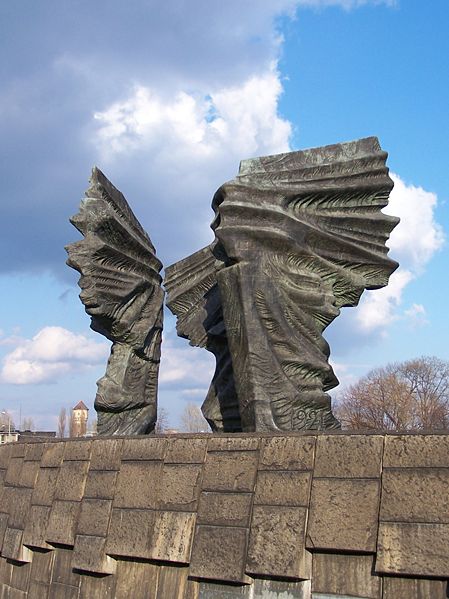
The new hall will be situated to the north of the city centre, not far from where the composers Henryk Mikołaj Górecki and Witold Szalonek lived, as well as the conductor Jan Krenz.  Its near neighbours will be the monument to the three Silesian Uprisings of 1919-21

and the Flying Saucer arena (Spodek), below.  I remember being taken aback by both the monument (1967) and this space-age construction (1971) as I walked to my first meeting with Górecki in Spring 1972.

The new concert hall will seat 1800, the chamber hall 300.  Here’s a promotional and rather stylish virtual tour of the new building, with both the monument and the arena appearing in the final image. The building’s columnar exterior seems to be a reference to the architecture of the brown-brick miners’ community built outside Katowice at Nikiszowiec at the start of the 20th century.  It is well worth a visit.

Although the video’s sound-track uses Brahms, I’m told that the huge music relief on the curved wall in the atrium will be from the manuscript of Beethoven’s Ninth Symphony.