• A Polish Quintet

On the plus side of the recent WQXR Q2 Muzyka Nowa week of Polish music was being introduced to the music of a handful or so of composers who are still in their mid 20s to late 30s.  The five whom I mentioned briefly at the end of my review of Muzyka Nowa all have something different and interesting to say.  So here are a few details, the odd observation, and some links.  Each has his/her own website, either entirely in English or in English/Polish, where you can find all the details that they want you to know!

Jakub Ciupiński (b.1981)

http://www.ciupinski.pl/
http://www.myspace.com/jakubciupinski
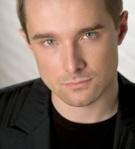
Jakub Ciupiński presented two short guest selections during Muzyka Nowa and was without doubt its star broadcaster.  He studied at the Music Academy in Kraków, then at the Birmingham Conservatoire in the UK before moving on to the Juilliard School in New York, where he now lives.  He has two compositional personalities.  As (Jakub) Żak, he’s composed pop-electronica-world albums, the most recent of which is Dezyderata (2011). As Jakub Ciupiński, he has a wide range of output, from chamber and orchestral to live electronics. His elegant website has audio samples – including Morning Tale (2009) and Street Prayer (2009), which were played during Muzyka Nowa – and a video of the premiere of Flashbacks for small orchestra and electronics (2009).  There are several uploads available on YouTube, including a two-part interview (in Polish, with video excerpts).

I was particularly interested to see that Ciupiński has brought the art of the theremin back to life: http://www.ciupinski.pl/Jakub_Ciupinski_-_homepage/Theremins.html.  In 2009, Ciupiński co-founded a composer collective called Blind Ear Music, ‘a team of open-minded composers and great performers with incredible sight-reading ability’.  Its activities are predicated on the real-time manipulation of loops, transmitted from a ‘master’ computer (composer) to ‘slave’ computer screens (performers).  This is an aesthetic as well as a technical challenge, and you can check it out for yourself on their website, Blind Ear Music.  (There doesn’t appear to have been any concert activity over the past year, however.)

(Michał) Jacaszek (b.1972)

http://www.jacaszek.com/
http://www.myspace.com/jacaszek
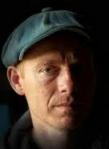
Jacaszek, as he prefers to be known, is the best known, and oldest, of these five Polish composers.  I know nothing about his background, except that he was trained as an art restorer and that his first compositional foray was to rip a recording by Jack DeJohnette and Keith Jarrett on the family’s PC in the mid-90s (source: a 2011 interview for the Czech radio station ‘Wave’: http://soundcloud.com/easterndaze/michal-jacaszek-interview).  His website indicates his decided preference for acoustic over electronic sound sources.  He’s particularly keen on the interaction of live instruments with electronically manipulated sound sources.  Jacaszek’s myspace site (>Profile>Albums) currently hosts nine Vimeo videos.  His is an immersive world, one which blends natural sounds, existing music and electronic manipulation.  The reviews for his most recent album, Glimmer (2011), are enthusiastic.  Here are links to a few that I’ve found on the web:

• http://themuseinmusic.com/2011/11/27/no-one-reads-reviews-anymore-glimmer-by-jacaszek
• http://pitchfork.com/reviews/albums/16150-glimmer/
• http://www.bbc.co.uk/music/reviews/fj8r
• http://www.residentadvisor.net/review-view.aspx?id=10178

The Czech radio interview took place at the time that Jacaszek launched his Glimmer album at the 2011 UNSOUND festival in Kraków (it was broadcast during Muzyka Nowa last week).  UNSOUND subsequently uploaded part of this event.  If I’m not very much mistaken, there’s a clear reference in the closing minutes of this excerpt to the opening idea of Górecki’s Little Requiem.

Mateusz Ryczek (b.1986)

http://mateuszryczek.com/
http://www.myspace.com/mateuszryczek

Mateusz Ryczek is the youngest of this selection of Polish composers. He studied at the Music Academy in Wrocław and has already produced a sizeable body of work, ranging from chamber and orchestral pieces to music for the theatre.  His works have been played at the Composers’ Union Youth Circle concerts at the ‘Warsaw Autumn’, from whose 2009 Sound Chronicle his NGC 4414 (2008) was played during Muzyka Nowa.  Perusing his website, I came to the conclusion that he is energetic and rather good-humoured – as witnessed by his brief birthday salute to Lutosławski three days ago (I reposted it yesterday).

An audio file of the world premiere of NGC 4414 (which, for the uninitiated like me, is the name of a galaxy 60 million or so light years away) is available on Ryczek’s YouTube channel,<http://www.youtube.com/user/kompozer86>.  It was given at the Musica Polonica Nova festival in Wrocław in 2008 by Kwadrofonik.  Audio and video files may also be accessed on his websites.

Krzysztof Wołek (1976)

http://www.krzysztofwolek.com/
http://www.myspace.com/krzysztofwolek
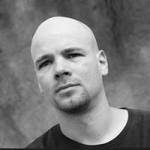
Krzysztof Wołek’s interests embrace chamber, orchestral and electronic mediums; he also works in dance collaborations and with video.  He has the most artful and informative of all the websites, including plentiful samples from his wide range of compositions, although I could find only looped excerpts lasting about 2′ each rather than complete works.  This was a bit frustrating, as the excerpts whetted the appetite, from the early (A)Symmetrics for orchestra (1999) to Elements (2008), which was played during Muzyka Nowa (admittedly under the misapprehension that his surname was Wolef).  Wołek’s complete Mobile Variations for six-channel tape (2005) is, however, on his myspace site and is a fresh take on an electronic soundworld that dates back to the 1950s. Educated initially at the Music Academy in Katowice, Wołek subsequently studied at the University of Chicago and now teaches at the University of Louisville.

Agata Zubel (b.1978)

http://www.zubel.pl/

If the photo on the homepage of her website is anything to go by, Agata Zubel is the most exuberant of the five in this selection.  She studied both voice and composition at the Music Academy in Wrocław and she continues to combine both activities.  As a singer, she performs music from Augustyn to Zubel, taking in classics like Berio’s Sequenza III along the way.  As a composer, she works in a wide range of media, including music theatre, electronics and orchestral music (she already has three symphonies to her name).  She tends to set modern poetry in her vocal works, particularly Beckett, as in Cascando (2007) which was broadcast during Muzyka Nowa.  Her most recent piece What is the word, already dated 2012, is another Beckett setting.  Like Wołek, Zubel has put only extracts on her website (they’re even shorter than Wołek’s), but her music has been released on several CDs, including the monographic Cascando (2010), and on DVD.  Here she is in action as vocalist in her own Parlando for voice and computer (2000), recorded in Moscow last October.
• Carols in the Raw

As a counterpoint to the increasingly saccharine carols that flood Christmas here in the UK, here are two unvarnished examples from the Polish highlands.  Each brings an edgy reality to Christmas traditions.

The first is from Pieniny, on the Dunajec river north of Zakopane.  It’s one of Poland’s favourite carols, ‘Oj, maluski, maluski’ (Oh little one, little one), sung here by a young child, with male-voice refrain.  There’s a charming little video loop accompanying this ungilded rendition.


The second is a rough-edited sequence of vocal and instrumental music sung and played by the ‘Giewonty’ ensemble.  (Giewont is the peak overshadowing Zakopane.  Its huge metal cross was nearly my undoing when in 1997 I scrambled to the summit in a ferocious storm and was a mere two metres from the cross when it was struck by lightning …)

This lively sequence was taken from an evening’s carousel in the Willa Orla (Eagle Villa) in Zakopane on 26 December 2007.  It’s vigorous, youthful and passionate.  OK, it’s been packaged a bit, but once inside you get a good feel for the atmosphere of góral celebrations of Christmas.  Wesołych Świąt!


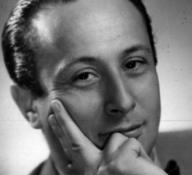
• The Pianist (b. 5.12.1911) and his Red Bus

Thanks to an alert last night from a friend in Warsaw, I was reminded that today marks the centenary of the birth of Władysław Szpilman (1911-2000). Szpilman was well-known in Poland from the 1930s as a fine concert pianist and as a composer of concert music and popular songs, especially after World War II.  He recounted his extraordinary survival of the war in his memoir Śmierć Miasta (Death of a City).  The memoir was republished in English as The Pianist shortly before his death and turned into an award-winning, internationally popular film of the same title by Roman Polański (2002), with Adrien Brody playing the lead role.

I once sat behind the quiet, elderly Szpilman at a concert in Warsaw.  I regret not speaking to him.  Later, I wanted to reproduce the opening page of one of his songs – Jak młode Stare Miasto (Like The Young Old Town, 1951) – in my book Polish Music since Szymanowski (Cambridge, 2005).  But permission was refused by his family as they thought that some of his songs were not representative of his talents (and also perhaps because 1951 was the height of the socialist-realist push in the arts). Yet this hugely popular song had already been released on CD (‘Golden Hits of Socialism’ [!], Intersonus ISO84).  Such is the unpredictability of copyright permission.

In 2000, Polish Radio issued a 5-CD set of Szpilman’s performances and compositions (PRCD 241-245):

• CD 1: 19 songs (1952-91).
• CD 2: Szpilman as pianist – including in his own Concertino (1940), Rachmaninov’s Rhapsody on a Theme of Paganini (1954), Schumann’s Fantasy in C Major (1960) and two pieces by Chopin, including the Nocturne in C# minor (1980) with which he both closed Polish Radio broadcasts in 1939 and reopened them in 1945.
• CD 3: Szpilman as a member of the Warsaw Quintet – piano quintets by Brahms and Schumann (1963-65).
• CD 4: Szpilman with Bronisław Gimpel (who also led the Warsaw Quintet) – violin sonatas by Brahms (no.3), Grieg (no.3) and Franck (1958-65).
• CD 5: songs for children including three extended ‘musical fairytales’ (1962-75).

One of Szpilman’s most popular songs was Czerwony Autobus (The Red Bus, 1952).  The recording on CD 1 above is particularly fine, not least because of its sense of good humour, considerably aided by Szpilman’s own swinging piano.  Search it out if you can.  That recording was made by the best close-harmony male-voice quartet of the time, Chór Czejanda (Czejanda Choir).  They also made another, longer recording with dance orchestra.  In the YouTube video below (Legendy PRL: Legends of the Polish People’s Republic), this audio recording is accompanied by shots of Warsaw buses in various ‘picturesque’ locations of the post-war socialist capital [14 October 2014: the original video – www.youtube.com/watch?v=x_xZGriR2DE – has since been withdrawn ‘for multiple third-party notifications of copyright infringement’.  But there are several other videos with the same recording, so here’s one of them instead.  The video element this time is not of buses, sadly, but still shots in black and white of scenes in Warsaw in the 1950s].  I’ve put my translation of the first three verses below.  Enjoy!

When at dawn I run like a wind through the streets,
The city like a good friend welcomes me,
And – honestly – I wish you all such happiness
As every day gives me in Warsaw.

On board, please!  No-one will be late for work,
We will go quickly, even though we’re surrounded by a forest –
A forest of scaffolding, which really does mean
That here time does not stand still.

The red bus rushes along my city’s streets,
Passes the new, bright houses and the gardens’ cool shade.
Sometimes a girl will cast us a glance like a fiery flower.
Not only ‘Nowy Swiat’* is new – here each day is new.

* ‘New World’, a beautiful old street in Warsaw, reconstructed after the war.

[For more information, go to http://www.szpilman.net/]

• Lutosławski’s Cello Concerto on YouTube

Talking with a friend the other day about his experience of a concert performance of Lutosławski’s Cello Concerto in London’s Cadogan Hall (Jacob Kullberg, RPO, conducted by Christopher Austin, 25 October 2011), I realised that it’s been a long time since I saw this concerto live.  Chester Music’s website indicates that the only forthcoming performance is in Tokyo next month.  So I looked again through the currently available YouTube videos (excluding the purely audio postings).

The continuing appeal of Lutosławski’s Cello Concerto (1970) is remarkable.  I believe that no other cello concerto since Shostakovich’s two (1959, 1966) has had as many commercial audio recordings (17 and counting).  And it is noticeable that Lutosławski’s ground-breaking concerto attracts young performers in particular.  The only senior performer on YouTube is Yo-Yo Ma, who regrettably has never committed his interpretation to disc, even though he has performed the work on a number of occasions.

Yo-Yo Ma
This is just a short excerpt, taken from a performance that Yo-Yo Ma gave (with score, on which he seems to be surprisingly dependent in the closing stages) with the Los Angeles PO, conducted by Esa-Pekka Salonen.  It consists of the immediate build-up to the work’s climax, which then leads on to the Coda.  It has all the hallmarks of Ma’s artistry, so it is the more regrettable that there is no current access to the preceding 20′ or so.

http://www.youtube.com/watch?v=_g_ECLBvUS0 (Finale from just after fig.130 + Coda; 2’14”)

Inbal Segev
The Israeli-American cellist Inbal Segev (Inbalsegev) uploaded two excerpts on 17 June 2008.  They come from her performance during the second Paulo Cello Competition in Helsinki in 1996, when she was accompanied by the Helsinki Radio SO under Petri Sakari.  The first excerpt is from near the start of the central slow Cantilena, up to its middle point, while the second makes rather heavy weather of what should be the soloist’s helter-skelter ‘escape’ (as Lutosławski put it) from orchestral attacks in the Finale.

http://www.youtube.com/watch?v=U97ko6MEypU (Cantilena, figs 64d-75; 2’53”)
http://www.youtube.com/watch?v=edxiFjbfgFc (Finale, figs 104-127; 1’41”)

David Eggert

This is a name new to me.  David Eggert is a Canadian in his mid-20s who is studying in Europe.  His YouTube video, with the Slovenian PO, conducted by Uroš Lajovic, was posted by powertimsah on 23 September 2010.  Its four-part upload is not fully in line with the four movements of Lutosławski’s concerto: Introduction, Four Episodes, Cantilena, Finale + Coda.

http://www.youtube.com/watch?v=MXS5mHUxPf4  (Introduction; 3’02” , missing c.2′)
http://www.youtube.com/watch?v=hscqZFloArI  (Four Episodes, rather crudely cut before the soloist’s first pizzicato low E at fig.63; 6’14”)
http://www.youtube.com/watch?v=GO_61BvsVrs (Cantilena and Finale to fig.90; 7’11”)
http://www.youtube.com/watch?v=JEVpzrxckk0 (Finale from fig.90 + Coda; 4’50” + 40″ applause)

There are two major drawbacks, neither of them Eggert’s fault.  Firstly, the recording starts halfway through the Introduction, on the high Bbs on system 11 of the first page of the score.  Carelessness or misfortune, either way it ruins the performance as a whole. Secondly, the sound quality is often poor because it is plagued by high-pitched ‘twittering’. This is a great pity, because Eggert (playing from score) is a committed soloist, commanding both delicate and strong articulation.   What is there of the introduction indicates that he understands the import of both his solo role and the brass interruptions (he responds subtly to the latter, both behaviourally and musically), while the Finale is one of the most urgent and dramatically shaped that I have heard.

Nicolas Altstaedt

German-born Nicolas Altstaedt is a BBC New Generation Artist and has developed an impressive career in recent years. This complete recording, first uploaded by haekueroenstoe on 6 February 2010, is with the Finnish Radio SO under Dmitri (Dima) Slobodeniouk.  It appears to come from Altstaedt’s participation at the fourth Paulo Cello Competition in Helsinki in 2007.  The upload separates the recording into three instalments that unfortunately cut against the grain of Lutosławski’s structure.  Worse still, in the second instalment there is a time-lapse of over 1″ as the image falls behind the sound, and this time-lapse lengthens to over 7″ in the third instalment.  If you close your eyes, however, there’s much to appreciate here.

UPDATE (12 June 2013)
On 9 March 2013, the technical problems were sorted out when the uploader posted this performance in a single video: http://www.youtube.com/watch?v=pIxvBjP7ld8.  Great news, as this performance is riveting!  Only the first of the three instalments from the original upload is still available.

http://www.youtube.com/watch?v=uvp8GF76VXQ (Introduction and Episodes 1-2; 9’46” including 1’03” arrival on stage)
http://www.youtube.com/watch?v=-w_3yE5Owbk (Episodes 3-4, Cantilena and Finale to fig.88; 8’42”)
http://www.youtube.com/watch?v=acEVBscbtH8 (Finale from fig.88 + Coda; 5’20”)

Altstaedt (playing without score) produces a fiery and exciting performance which is matched by Slobodeniouk’s tight orchestral direction.  At c. 22’25” it is also one of the shortest.  Only two performances, both conducted by the composer (with Roman Jabłoński and Louise Hopkins) are shorter, and then only marginally.  In the Introduction, Altstaedt plays with studied intensity rather than absent-minded indifference, recalling Rostropovich’s determined approach (though Altstaedt maintains a greater timbral and rhythmic consistency).  He also evinces a high degree of self-confident independence in the Episodes where others may aim for intimate rapport with the orchestra.  Altstaedt’s approach emphasises the dynamism of Lutosławski’s score, even in the Cantilena, where he is especially eloquent.  He dominates even the Finale, making the confrontation between soloist and orchestra more like a battle of equals whose outcome cannot be taken for granted.  If that makes the cello’s vanquishment a little surprising, its subsequent resurrection is triumphant.

Oren Shevlin

Although Oren Shevlin is another name new to me, he is British by birth.  He does not appear to have his own website. He uploaded these two videos – whose division acknowledges Lutosławski’s structure – on 20 September 2011 (under the name orencello).  They come from performances that he gave (without score) on 3 and 4 February this year with the WDR SO in Cologne, conducted by Jukka-Pekka Saraste.

http://www.youtube.com/watch?v=6kliW2KCYq8 (Introduction, Four Episodes; 12’15”, including 48″ arrival on stage)
http://www.youtube.com/watch?v=GdjzGN4dYxw (from after fig.64: Cantilena, Finale + Coda; 11’13” +1’31” applause)

It is a very fine performance, executed with a modesty and deceptive frailty that fits the character imagined by the composer.  Lutosławski was wary of performers who over-invested the Introduction with emotion and thus ran the danger of blunting the drama that follows.  Shevlin’s reaction to the marking indifferente over the repeated D naturals is to look vaguely outwards and his demeanour really does suggest the mind-lessness and whimsicality that Lutosławski was aiming for in the opening 4′ solo.  Shevlin genuinely works with the orchestra in the Episodes that follow, seeking the common ground, with subtlety and apparent extemporaneity, that is periodically thwarted by interruptive brass.

If Shevlin’s tone is not as robust as those of some other performers of this work, his empathy with the strings in the Cantilena, as the section moves towards the ringing unison, is persuasive.  Here is the cellist as Everyman, emotionally open and vulnerable.  This pays dividends in the Finale, where the orchestra attempts to quash his voice.  At fig.88, Shevlin plays the cello’s response to the orchestra’s battery in a way which emphasises the survival instinct of the downtrodden and their sense of irony, even humour, at such moments.  And this was precisely what Lutosławski wanted here.  I’ve never heard the phrase at fig.88 uttered with such wry poignancy.  The ‘escape’ that follows is raw.  Shevlin plays as if he is fleeing and pleading for his life.  When he emerges with weeping cello sobs and then climbs to the heights of those strong, almost desperate A naturals at the very end, one can believe that he has survived the ordeal, but only just and, as Lutosławski said, ‘in another world’.

Shevlin has also uploaded the Introduction separately (on 22 July 2010 – he calls it the Cadenza).  Here he is younger and beardless, and I’ve identified the occasion as an excerpt from his performance during the second Paulo Cello Competition (1996).  The conductor is Petri Sakari with the Helsinki Radio SO (as for Segev’s excerpts, above).

http://www.youtube.com/watch?v=pojl2C3KTCI (Introduction, up to fig.9; 4’52”)

Coda
What is striking about the performers of the videos detailed above is the strong level of participation by Finnish musicians: the Finnish Radio SO features on three videos (Segev, Altstaedt, and the Shevlin excerpt from 1996) and three Finnish conductors take the helm on four: Salonen (Yo-Yo Ma), Sakari (Segev and Shevlin excerpts) and Saraste (Shevlin complete).  The (usually) triennial Paulo Cello Competition in Finland’s capital has evidently played a key role for several of these players.  There is also a strong Eastern European showing: the Slovenian PO and Lajovic (Eggert) and the Russian conductor Slobodeniouk (Altstaedt).  The nationalities of the soloists, however, are more broad (American, Israeli, Canadian, German and British).

Yo-Yo Ma, Inbal Segev and Oren Shevlin (1996) give only excerpts, so these are unable to provide substantial insights. It is interesting, however, to be able to compare the two Shevlin Introductions, performed 15 years apart.  It is enormously frustrating that David Eggert’s perceptive account is marred by the missing first 2′ and its poor sound quality, but I am keen to hear his interpretation under better circumstances.  Equally, I eagerly await a proper chance to hear Altstaedt in concert as it is impossible to watch most of this clumsily divided upload because of the time-lapses in the second and third instalments.  The first instalment gives a good idea of Altstaedt’s firm grasp of Lutosławski’s score, and it is of course possible to listen to the rest with eyes closed.  It is a performance to savour for its muscularity and momentum.

So that leaves only Shevlin’s complete performance (2011) with the WDR SO under Saraste.  As indicated above, I think that this is a truly insightful interpretation and one that repays listening and deserves wide recognition.  It also bears repeated viewings for the TV direction, with its imaginative camera angles (including a hidden floor-camera in front of the soloist) and variety of split-screen shots which highlight key orchestral participants and textures.

• On Tour with Górecki

It is rather encouraging that the approaching first anniversary of Henryk Górecki’s death on 12 November has occasioned a flurry of activity in this country.  Firstly, there was a Górecki edition of BBC Radio 3’s Sunday evening programme ‘The Choir’, which was broadcast on 6 November.  This series, which is devoted to all aspects of the composition and performance of choral music, broadcast the opening song from Górecki’s first collection of folksong settings, Broad Waters (1979), his most famous and most recorded a cappella piece, Totus Tuus (1987), his set of Five Kurpian Songs (1999) and Amen (1975).  And the programme also included Górecki’s earliest choral work – this time with instruments – Epitafium (1958), a stylistic (Webernian) corrective to the popular image of Górecki as a composer interested only in slow modal music.  A few weeks ago, I recorded an interview for the programme alongside Roxanna Panufnik, the daughter of the Polish composer Andrzej Panufnik.  Friends tell me that they enjoyed the programme, especially those who knew nothing of Górecki’s music and life beforehand.  Unfortunately, I missed the broadcast as I was on a coach with the Polish Radio Choir from Kraków (see below).

Secondly, I was visited late on a dark and stormy night at the end of last week, here on the Cornish moors, by a team from Polish Television in Katowice, Górecki’s home city.  They’d driven from France that day and were going on subsequently to interview Górecki’s London publishers and to speak to Bob Bibby, the Englishman who discovered that the subject of the second movement of Górecki’s Symphony of Sorrowful Songs had not died at the hands of the Gestapo, as had generally been feared, but had lived a full life, dying in 1999 (Guardian appreciation, 25 November 2010). I settled the Polish TV director, Violetta Rotter-Kozera, in front of a roaring log fire and we had an intense and warm-hearted discussion about Górecki’s music, life, personality and temperaments.  The programme (my hour or so will be cut down to a few minutes, I’m sure!) will probably be broadcast sometime early in 2012.

Thirdly, I’ve just come back from being ‘on tour’, with the Polish Radio Choir from Kraków, a promotion initiated by Ed McKeon of Third Ear.  It was my first such experience, and probably my last.  Even though this was a short, four-concert tour, I came away with a better understanding of the many and varied pressures that performers experience when daily on the move from one venue/hotel to another.  I was full of admiration for their unflappability and good humour.  This was nowhere more apparent than shortly after the start of the concert in Durham Cathedral, that solidly magnificent example of Romanesque architecture.  The peaceful prayer that is Totus Tuus was suddenly counterpointed by a barrage of deafening booms and bangs that seemed to be coming from right outside the building.  It was like a medieval siege, a terrifying bombardment.  It went on for over 15′.  The choir didn’t bat an eyelid, no voice trembled.  While the choir had no idea what was going on, we in the audience knew well enough.  It took a bit of explaining afterwards (November 5 customs can seem very strange to visitors to the UK).

The choir had flown into Liverpool the previous day and joined the tour coach for the first concert in Durham (Saturday night), on to London (Sunday lunchtime), Bristol (Monday evening) and Liverpool (Tuesday evening).  My role was to give three pre-concert talks, each of a different duration, before the first three concerts.  The choir was very welcoming and after the concert in Bristol asked me if I would become an honorary member of its Association of Artists and Friends, which came out of the blue and was very touching.

The Polish Radio Choir, under its conductor Artur Sędzielarz, is one of those rare commodities, a choir that is funded by a broadcaster.  In the UK, we are lucky to have the BBC Singers and some other European countries still invest in similar vocal groups for the sake of repertoires past and future.  It is a very fine ensemble.  They brought 29 singers and their textural blend was second-to-none.  Equally wonderful were the choir’s harmonic voicing and unfailingly clear articulation.  Dynamically, they encompassed the quietest of pianissimos and the most emphatic of fortissimos.  I was reminded of the extremist markings that Górecki used in his vocal-instrumental Ad Matrem (1971).  On the one hand, in that score he asked for moments that were ritmico-marcatissimo-energico-furioso-con massima passion e grande tensione.  On the other hand, elsewhere he wanted tranquillissimo-cantabilissimo-dolcissimo-affetuoso e ben tenuto e LEGATISSIMO.  The Polish Radio Choir brought such contrasts fully to life, especially in the Five Kurpian Songs, and I’m sure that Górecki would have been beaming at them had he been present.

It is a strange phenomenon in Górecki’s output that he makes little difference in his compositional approach to folksong settings and to church songs.  This is particularly evident in the overwhelmingly slow tempi and sustained vocal lines.  These demand extraordinary stamina and vocal evenness, which the Polish Radio Choir delivered effortlessly.  The programme moved from Totus Tuus, through the Five Kurpian SongsThree Lullabies (1984, in Bristol and Liverpool only, although the first lullaby was sung as the encore in London), and the Song of the Katyń Families (2004).  The concerts ended with Come Holy Spirit (1988) and Amen.

For me, the outstanding piece was Song of the Katyń Families.  It lasts for barely 5′, yet its expressive power became more and more apparent at each subsequent performance.  Typically for Górecki, the piece takes a slightly oblique slant, setting a contemporary text that links the first line of the Polish national anthem with the memory of the Soviet slaughter of thousands of Polish army officers during World War II.  The piece’s lower overall tessitura made quite an impression at this stage in the concert.  When the basses dropped lower still, the harmonic resonance spoke volumes.  And when they moved down two further steps, the luminosity of the choir’s sound was breathtaking.  Song of the Katyń Families deserves as wide a recognition as Totus Tuus.

I wonder if the Polish Radio Choir’s unanimity and utter faithfulness to the spirit and letter of Górecki’s music, as well as their sensitivity to timbral colour, come not only from their collective musical sensibilities but also from their wide musical interests outside their choral work, which include – to take just three examples – musicology, cabaret and period instrument performance.  Whatever their secret ingredient is, it made for rivetting performances that elicited hugely enthusiastic audience responses.  I hope that the choir returns to the UK before too long.

…..

The Polish Radio Choir released a 2-CD recording of Górecki’s a cappella music in 2007.  It’s on the Polish Radio label, Polskie Radio PRCD 1104-1105.  It includes Broad WatersFive Kurpian SongsCome Holy SpiritSong of the Katyń Families and Amen, plus the folksong My Vistula (1981) and Marian Songs (1985).

…..

For Rian Evans’s review of the Bristol Concert, see The Guardian (9 November 2011).

• Lutosławski in Los Angeles (1985)

Two years ago today, there appeared on YouTube four uploads that together formed a 33’ documentary film on Witold Lutosławski.  I was alerted to the uploads last year and thought it might be useful to repost them, with a brief commentary and selected timelines for anyone unfamiliar with the music.

Open Rehearsals with Witold Lutosławski records the composer’s visit to the University of Southern California in Los Angeles, 21-29 January 1985, during which time he celebrated his 72nd birthday (25 January), although that event is not mentioned in the film.  For some reason, the uploads have been dated 1984.  The film was made by the Polish documentary and feature director, Paweł Kuczyński (left), and it appears to have been his first film (he uploaded it himself).  Further details on Kuczyński may be found on his website <http://www.directing.com/index.html> and blog <http://deafearsmadness.blogspot.com>.

The occasion for the visit of Lutosławski and his wife Danuta was the official opening on 23 January of what was then known as the Polish Music Reference Center (PMRC) and is now known as the Polish Music Center (PMC).  The PMRC had been the brainchild and passion of a Polish-American couple, Stefan and Wanda Wilk, whom I had the privilege and joy to get to know during a year’s research leave I had at the University of California, San Diego, in 1983-84.  I spent many happy days in their company (and that of their dog) at their home in Los Angeles (the domestic interior, garden and dog are seen in the film) and it was thanks to their enthusiasm that I wrote a small monograph Grażyna Bacewicz: Chamber and Orchestral Music that was published by PMRC in 1985.

Wanda Wilk was the practical and tenacious driving force behind the PMRC project and had the bold idea at an early stage of asking Polish composers if they would be willing to donate manuscript scores to the library.  Penderecki declined, but Lutosławski could see the huge potential of the Center and made an astonishing offer.  He was prepared to donate not one but five music manuscripts.  And these included some of his most significant scores from the preceding 20 years.  It’s worth highlighting them here, because in the film all that is shown is a large black portfolio holding the manuscripts:

• Paroles tissées (1965)
• Preludes and Fugue (1972)
• Mi-parti (1976)
• Novelette (1979)
• Mini-Overture (1982)

No donation since has matched Lutosławski’s generosity.

Lutosławski had just flown in from St Paul, Minnesota, where he’d attended the world premiere on 18 January of Partita for violin and piano (1984), given by Pinchas Zukerman and Marc Neikrug.  An important element of his visit to Los Angeles was spending several days observing and conducting rehearsals of his music by students and staff at the School of Music at USC, as well as looking over student scores, giving interviews and attending concerts of his music.  He also conducted the West Coast premiere of Chain 1 (1983).  Kronos Quartet played the String Quartet (1964) and the British composer John Casken contributed a talk on Lutosławski.  This was evidently a major Lutosławski residency and one to be treasured by those fortunate enough to have been present.  Its success led 12 years later to a similar profiling of his younger compatriot, Henryk Mikołaj Górecki (‘Górecki Autumn’, 1-5 October, 1997).

Kuczyński intercuts and overlays film of Lutosławski at different rehearsals with the composer speaking about his musical aesthetics.  If you are familiar with how Lutosławski discussed music in printed interviews you will find many typical tropes here, but they are no less interesting for actually seeing him speak about music and its contexts.  There are occasional surprises, too.  It would be fascinating to see the footage that was not included in the film.

It is particularly interesting to witness Lutosławski rehearsing with students, primarily on Mi-parti (which the students were preparing for a concert a few weeks later) and on Chain 1.  There is also a delightful vignette of him conducting a student choir on the word ‘Fouille‘ from the second movement of Trois poèmes d’Henri Michaux (1963).  The works heard in the film, in order of first appearance, are:

Part I: Mi-partiTrois poèmes
Part II: Trois poèmesGrave for cello and piano (1981), Chain 1, String Quartet
Part III: Mi-partiChain 1, String Quartet, Melodie Ludowe/1 (1945), Paganini Variations for two pianos (1941)
Part IV: Chain 1Mi-parti.

In the following commentaries, I’ve posted the four YouTube sections of the film as well as their urls if you want to have them in a separate window while reading the commentary.  My observations are not comprehensive and the timings are approximate, but I hope that they add something to your enjoyment of Kuczyński’s valuable film.

Part I            http://www.youtube.com/watch?v=GVlq6zihyjg    9’27”

0’00”    [over] Mi-parti (3 before Fig.41)
Witold and Danuta Lutosławscy arrive at Los Angeles airport.  On the walk out, Danuta is centre front row, with Wanda Wilk on the right.  Witold is in the second row, with Stefan Wilk on the right.
1’00”    First rehearsal with students on Mi-parti
[intercut with]
1’30”    John Casken
4’56”    Ceremonial donation of scores to PMRC
6’16”    Wanda Wilk on Lutosławski
6’39”    [home interview] Lutosławski on the Wilks; he later comments that life is still very difficult in Poland (he was speaking barely three years after martial law had been imposed in December 1981) and refers to ‘the Festival’, meaning the ‘Warsaw Autumn’ International Festival of Contemporary Music.
7’39”    Open interview
8’16”    Rehearsing ‘Fouille’, from Trois poèmes
8’47”    on audiences

Part II           http://www.youtube.com/watch?v=NTUUt9NzTLM    7’21”

0’00”    on audiences and listeners
0’35”    Meeting with student composers including a somewhat unexpected and frank statement on Berg: “I’m always very impressed by some works of Alban Berg in spite of the very fact that I hate his sound language … his works had a tremendous impact on me”.
1’10”    Rehearsing Trois poèmes/II
1’30”    [garden interview] on themes, literary programmes: “Music is music for me.  It’s just the free expression of human soul by means of acoustical phenomena”.
2’08”    Rehearsal of Grave
3’55”    Lutosławski suggestion to the cellist: “If you make the fortes attacking, aggressive, and the pianos without tension, like that – ‘pierced balloon’!” (laughs).
4’42”    Rehearsal of Chain 1
5’16”    [garden interview] on ‘key ideas’ and form in composing
[intercut with]
6’07”    Kronos playing through the String Quartet.  At that point – 26 years ago already! – Joan Jeanrenaud was the cellist in Kronos.

Part III         http://www.youtube.com/watch?v=KzRVtKYO0vU    9’12”

0’00”    Kronos playing through the String Quartet
0’53”    [open inteview] “Constant revolution – I think it’s over.”
1’25”    Rehearsal of Mi-parti
1’58”    Rehearsal of Chain 1
2’41”    Lutosławski playing bb. 9-15 of ‘Ach, mój Jasieńko’, the first of Melodie ludowe, at the Wilks’s piano during photo shoot.
3’10”    Mi-parti
3’45”    [open interview] “I think there is a strong need of substance in music.”
3’55”    Kronos playing the ‘Funèbre’ section of the String Quartet.  Lutosławski looks particularly focused.
[over]
4’35”    visual recap of handing-over ceremony
5’21”    on the circumstances of the survival in 1944 of the score of the Paganini Variations, talking to the pianists Jean Barr and Armen Guzelimian; he does not mention his piano-duo partner, the composer Andrzej Panufnik, by name (their relationship was frosty after Panufnik left Poland in 1954 – I witnessed this personal distance first-hand at a rehearsal in Dublin in 1979).
6’02”    Edited play-through of Paganini Variations (Theme, Vars 1, 9 and start of 10)
6’58”    Seminar on his music: “Some irrational moments should be in music.”
7’25”    [home interview]: on chance, but not in the way “my personal friend John Cage represents” and on rhythm.
8’51”    Mi-parti

Part IV          http://www.youtube.com/watch?v=YOB3gvB6bcA    7’07”

0’00”    Rehearsal of Mi-parti
[intercut with]
[home interview] on the limits of chance procedures
1’34”    Seminar on his music: about Chain 1, Fig. 47, percussion: “a little as if it were a person, a character in a play, you know, interrupting something, saying, “Shut up!” “.
2’18”    Rehearsal of Chain 1
2’38”    Seminar on his music
2’59”    [garden interview] on not teaching, on focussing on his own techniques
[over and leading into]
3’50”    Meeting with student composers; a rare recorded example of Lutosławski giving compositional advice!
4’50”    [garden interview] on creative integrity [over visuals of rehearsal for Chain 1]
5’52”    End of Mi-parti rehearsal