Wednesday, 25 January 2012

If you tune into New York’s WQXR Q2 this week, you’ll find yourself in the midst of a week-long celebration of Chinese music, ‘The Year of the Dragon’. Bringing new music to its audiences is WQXR Q2’s mission. It’s been ‘on air’ since October 2009 and is a listener-supported online streaming service devoted to music by living composers. The nature of its audience’s musical preferences may be gleaned from its 2011 ‘New-Music Countdown’, where listeners voted for their favourite music written since 1900. 22 of the top 50 pieces were by living composers, most of them American: Adams (5 works), Adès, Andriessen, Carter, Corigliano, Dennehy, Duckworth, Glass, Golijov (2), Gordon, Lang, Lindberg, Pärt (2), Reich (2) and Riley.
The only Polish composer in the top 50, unsurprisingly, was Górecki, whose Third Symphony came in fifth.
On 20 December last year, Q2 announced a new week-long venture: ‘Muzyka Nowa. A Celebration of Contemporary Polish Music’ (16-22 January 2012). Well, I was all ears at this news and last week I spent more waking hours listening via iTunes than I had first intended. This was partly because the streaming audio experience was new to me and I was curious to see how it worked in practice. I was particularly fascinated to find out how Q2 would tackle such a big theme editorially, given the dearth of Polish names in their end-of-year poll. The results, as you’ll see, were mixed.
It is perhaps worth comparing a few statistics with the New York Juilliard School’s 27th Focus! festival – ‘Polish Modern: New Directions in Polish Music since 1945′ – which took place exactly a year ago (22-28 January 2011). Juilliard’s Polish Modern festival presented 39 works by 36 composers (one piece per composer, with the exception of Lutosławski, who had the final concert to himself). It had six concerts, with some 8 hours of music. Q2’s Muzyka Nowa, by my count, had 107 (post-1945) works by 38 (Polish-born and Polish-trained) composers. These were spread over six and a half days, including two 24-hour all-Polish marathons (actually, they were just over 21 hours). Where Polish Modern was concentrated, Muzyka Nowa tended towards the diffuse.
Streaming
At least half of each weekday’s playlist at Q2 is unhosted. That means no announcers and no ‘on air’ indication of what is being played (you have to look ‘on screen’). There are two main hosted programmes, each repeated twelve hours later: an hour-long slot for music involving keyboard – ‘Hammered!’ – with a short introduction to the day’s repertoire at the top; and a four-hour programme with more conventional introductions and back announcements to each piece. This means that the online playlists are crucial for anyone wanting to find out what is ‘on air’. These were fairly easy to access (they give composer and performer details, plus the source). There were several times in this Polish week, however, when the playlists gave only the title, not the composer. So we had Subito (Lutosławski), Stabat Mater (Szymanowski), En blanc et noir (Augustyn, not Debussy) and String Quartet no.6 (Bacewicz? Meyer? no – Lasoń). The major drawback is that there is generally no advance notice of programme details. This makes structured listening impossible. For some listeners, that may be perfect, the ideal ‘innocent ear’ environment. But for anyone who likes to plan some or all of their listening, it can be immensely frustrating. It doesn’t do, either, to expect a programme to begin or end at the allotted hour.
The appearance of Szymanowski was anachronistic, given the basic idea behind Muzyka Nowa. In fact, his contribution was quite slight, with Métopes (1915), the Mazurkas op.50 (1925) and Stabat Mater (1926) being the only major pieces. But at least they were written within the past 100 years. Karłowicz’s 1902 Violin Concerto (3 complete airings plus two of the three movements on another occasion) was a puzzling inclusion, while the appearance of Chopin’s Polonaise in F sharp minor (1841) on this ‘Living Music. Living Composers’ station was altogether bizarre. And even the presenter was surprised by the inclusion, during Wednesday’s all-Polish marathon, of the Tenth Piano Sonata by a Russian composer: “Scriabin, of all people”, he muttered.
A further sign of editorial fluidity was the way in which programme titles changed as the week progressed. ‘Jakub Ciupiński Hosts’ became ‘The Holy [‘Holy’?] Trinity of Contemporary Polish Music’ and ‘Poland’s Next Wave’, while the four-hour hosted programme ‘Polish Composers: 20th Century Masters to the Next Generation’ became the exaggerated ‘Titans of Polish Music: Past, Present and Future’. Outside the two marathon days, this particular slot, like the unhosted segments, generally devoted 50%-60% of its play time to Polish repertoire.
Presentation
To be brutally honest, little was added to listener enjoyment or knowledge by the hosted programmes, with the exception of the two slots specially hosted by Jakub Ciupiński. Ciupiński is a young Polish composer now living in New York and he brought an insight to his chosen repertoire that was a model of enthusiasm and concision. He should do more broadcasting. The shame was that Q2 seemed not to have used his ability as a native speaker to do something about other presenters’ pronunciation of Polish names.
Almost twenty years since Górecki became a household name, it was extraordinary to hear ‘Goorekki’ rather than ‘Gooretski’. Nowa inexplicably became ‘Nuova’, Piotr became ‘Peetor’. The consonant ‘z’ frequently became invisible/inaudible. Bruzdowicz was first said correctly (hooray!), then immediately ‘corrected’ to ‘Brudowicz’. For Andrzej we heard ‘Andrezh’. And yet, seconds later, the ‘J’ of Jacek miraculously was not a ‘Zh’ but the correct ‘Y’. Such manglings were all too common. Unhosted segments suddenly seemed more attractive.
The quality of the commentaries also left something to be desired. The real low-point was the introduction to Penderecki’s Polish Requiem during the first marathon on Wednesday. Having described it as “big, beautiful, crazy, awesome” – a less appropriate, more vacuous series of adjectives is hard to imagine – the presenter concluded with “he sort of wrote it piecemeal … he sort of expanded it … at the basic level it’s just a setting of the requiem … Antoni Wit is the conductor of the whole shebang”.
Repertoire
The range of post-1945 music included in Muzyka Nowa was fairly impressive (a full repertoire list is given at the end of this post). It highlighted, as Q2 put it, the ‘Titans’ or the ‘Holy Trinity’ – Lutosławski, Penderecki and Górecki – and included composers born in every decade from the 1900s to the 1980s, with the youngest composer, as far as I can tell, being the 24-year-old Jacek Sotomski. There was a good variety of solo, chamber, orchestral, vocal and vocal-instrumental music, though no examples of opera, music theatre or jazz. It also skirted a little around the experimental trends of the past 50 years (no Schaeffer, just one piece by Krauze).
There did not appear to be much in the way of editorial planning in terms of sub-groupings or sub-themes, and this left the sense of an opportunity missed. After all, there is surely no automatic equation: ‘unhosted=unthemed’. Would it not have been possible to retitle and structure some of the random unhosted segments, just for this Polish week? Closest to such an idea was the programming of the six CD-available string quartets by Lasoń, but nowhere was this flagged up as a feature. There were no complete symphonies by any of the ‘Holy Trinity’, no works written for the seminal chamber ensemble ‘Music Workshop’, no focus on any selected genre, generation or sub-period, such as sacred music, ‘Generation ’51’ or music post-1989. But anyone who has programmed a festival will know that there is always too much choice, so hats off to Q2 at the very least for bringing its listeners a decent if apparently random selection from the Polish table.
A word on sources. Q2 is primarily a CD operation although it’s not afraid to use private recordings, some of them live, when it suits the programming and is of acceptable quality. That’s all to the good. I imagine that it is run on something of a shoestring, so is dependent on what is to hand, such as a copious supply of Naxos CDs. It had also evidently been given a number of CDs made by the superb Silesian Quartet from Katowice. On this occasion, importantly, it had access to live performances:
• Since the ‘Warsaw Autumn’ festival began in 1956, it has sought to promote the (mainly Polish) music that it has programmed by means of recordings, its ‘Sound Chronicles’. These were issued initially on LPs, later on tape cassettes, and now on CDs. Unfortunately, the Sound Chronicles have never been available commercially. University libraries and major radio stations are the most likely places to hold these extensive and valuable recordings. Q2 made most use of a selection of highlights from the first 50 years of the festival, compiled in 2007 by the Polish music critic Andrzej Chłopecki. It’s a 10-CD box set, with single pieces by 70 composers, eight of which were included in Muzyka Nowa. Recordings were also taken from the Sound Chronicles for the 2008 and 2009 festivals.
• Q2 trumpeted its broadcasting of excerpts from two other festivals. The first of these was the 2011 UNSOUND festival in Kraków. In the event, only one Polish piece was aired – (Michał) Jacaszek’s launch of music from his new album Glimmer – although it was very much worth it, as reviews for the album have already proved. The second festival was last year’s Juilliard Focus! on Polish modern music, mentioned at the top of this post. Sad to report, but only four of the 39 pieces from Polish Modern made it onto the Muzyka Nowa playlist.
• Top of the live performance contributions was Q2’s own recording of a concert last November, given to mark the first anniversary of Górecki’s death. More on this towards the end of this post.
The outline of 107 works by 38 composers spread over almost 160 hours needs some elaboration. At the heart of the WQXR Q2 operation is the principle of repeat programming. This not only applies to the hosted segments, as outlined above, but to the rest of the schedule too. So it’s not surprising to find that 2/3rds of the 107 pieces were repeated. That’s fair enough. But when the repetitions themselves were repeated, alarm bells started to sound and interest began to wane. When the number of repeat airings increased further, the only conclusion that could be drawn was that insufficient editorial control had been exercised (did we really need five performances of Górecki’s Four Preludes or Lutosławski’s Piano Sonata, both early and unrepresentative works?). 34 pieces had three or more airings, with 13 of them heard four or more times:
• Joanna Bruzdowicz: World (4)
• Jakub Ciupiński: Morning Tale (7: Lin, 3; Chow, 4)
• Henryk Górecki: Piano Concerto (2) = Harpsichord Concerto (4), Four Preludes (5)
• Wojciech Kilar: Chorale Prelude (5: Juilliard/Sachs, 4; NOSPR/Wit, 1)
• Eugeniusz Knapik: Corale, interludio e aria (4)
• Andrzej Krzanowski: String Quartet no.3 (4)
• Witold Lutosławski: Piano Sonata (5)
• Andrzej Panufnik: Violin Concerto (4)
• Elżbieta Sikora: Canzona (4: Moscow CME/Thorel, 1; New Juilliard E/Sachs, 3)
• Stanisław Skrowaczewski: Music at Night (4)
• Paweł Szymański: Two Studies (7: Grzybowski, 4; Esztényi, 3), Une suite de pièces de clavecin par Mr Szymański (7)
All in all, there were 131 repeat airings (not including partial repeats), compared with the basic repertoire of 107 compositions. That made 238 broadcast items overall, at least by my reckoning (that’s equivalent to 34 a day, or one and a half pieces an hour). There was no discernible rationale for which pieces were or were not repeated. I for one welcome the additional exposure for Knapik, Krzanowski and Sikora (she fared particularly well). If Q2 wanted to raise the profile of Bruzdowicz, however, they could have done better than to broadcast her song cycle World in a recording which harboured the most grotesque singing that I have ever heard.
Undoubtedly the most unbalanced programming was accorded to Szymański, whom I have admired for over 30 years and remain an ardent champion. But even he would acknowledge that to air two of his keyboard compositions seven times apiece – and one of them with just one recording – was out of proportion. It’s not even as if they are his most distinctive or distinguished works.
Just think what could have been done had the extent of the repetitions been cut back. If those two keyboard works by Szymański, for example, had had just two airings each, instead of seven, that would have freed up 3 hrs 45′. We might then have heard a wider range of Szymański works, like his Partita III, Partita IV, Lux Aeterna or Miserere. All of these pieces, totalling just under an hour of music, are on the same CD from which Q2 drew the three airings of Szymański’s Two Studies which were played by its dedicatee, Szábolcs Esztényi. How easy it would have been to include these four other works, and to what benefit of the repertoire. Furthermore, their inclusion would still have left 2 hrs 45′ for other new repertoire. The principle of this idea is self-evident. This was a programming opportunity missed, and Muzyka Nowa was the poorer for it.
Absent Friends
It was even poorer for some serious omissions from its roster of composers. Whether or not the relatively modest number of 38 composers was a deliberate decision is impossible to say, but seven other names among many were notable for their absence. Firstly, though perhaps not most importantly, was Henryk Górecki’s son Mikołaj, who is also a composer and teaches in Texas. Q2 had spoken to him and posted An Interview with Mikołaj Górecki online. They even got him to provide a playlist, commenting also that he “is plenty accomplished in his own right”. But not a note of his music was heard. Also absent was one of Poland’s most imaginative and internationally recognised composers, Marta Ptaszyńska, who has lived and taught in the United States for many years. Where was she? Where also were Tadeusz Wielecki and Stanisław Krupowicz, contemporaries of Knapik, Lasoń and Szymański and equally important figures in Polish music since the late 1970s? And where was Hanna Kulenty, surely one of the most talented and exploratory composers born in the 1960s?
The most astonishing hole in the repertoire was left by the total exclusion of Tadeusz Baird and Kazimierz Serocki. Baird and Serocki were the driving force behind the ‘Warsaw Autumn’ festival, on whose Sound Chronicles Q2 relied for the majority of its ‘live’ output. Even if such historical significance is put to one side, is there anyone with any knowledge of Polish music who would deny that Baird and Serocki were composers of international significance, composers of striking individuality whose music stands up as well today as it did when they were alive? All Q2 had to do, with minimum effort, was to take Chłopecki’s choice from the 1956-2005 ‘Warsaw Autumn’ boxed set – as it did for pieces by Augustyn, Bargielski, Grudzień, Knapik, Krauze, Meyer, Stachowski and Szymański – and broadcast Baird’s Play and Serocki’s Impromptu fantasque. While Serocki is not well served by the CD catalogue, several CDs of Baird’s music are available and would have immensely enriched the mix of the week’s repertoire.
Górecki live
‘In memoriam Henryk Mikołaj Górecki’ was the flagship event for Muzyka Nowa. It was a recording of a concert given at the New York bar/café (Le) Poisson Rouge, which has a full artistic programme of events embracing a wide musical spectrum. On 8 November 2011, Q2 recorded two pieces: the Second String Quartet ‘Quasi una fantasia’, performed by the JACK Quartet, and Little Requiem, performed by Signal Ensemble. The concert was preceded by an interview with Bob Hurwitz, the founder of Nonesuch Records and the man responsible for that recording of Górecki’s Third Symphony. The transmission was scheduled for 19.00 local time (midnight UK time) last Thursday, 19 January.
Things could not have gone more disastrously wrong. For unexplained reasons, the broadcast began 50 minutes early, the last 3′ of Quasi una fantasia were overlapped by the first 3′ of Little Requiem, and the pre-concert talk was broadcast at the end. Fortunately, the rebroadcast during the second marathon, on Saturday, was all in order (although the ambient noise of the venue and the uneven miking did not help on either occasion). Was this episode a consequence of misfortune or incompetence? It certainly made me realise what a blessing it is in the UK to have responsible broadcasters.
Postscript
Despite my criticisms, I don’t want to leave the impression that this was by any means a failure, just that with a little more thought and programming tweaks it could have been excellent. It was a bold venture and one which reaped many rewards, not least the unexpected juxtapositions of composers and pieces. Q2’s principal aim – to bring a vibrant musical repertoire to the attention of a potentially new audience – was in good measure realised.
For this listener, there were some real highlights, among them:
• being reacquainted with music by Polish composers now in their 40s and early 50s, such as Jacek Grudzień’s Ad Naan (2002) with its dynamic use of electronic manipulation, and Agata Zubel’s Cascando (2007), in which she was the engaging vocal soloist.
• being introduced to the music of younger composers, still in their 20s or early 30s, such as Jacaszek’s electro-acoustic Glimmer (2011, already mentioned), Mateusz Ryczek’s NGC 4414 for two pianos and percussion (2008) and Krzysztof Wołek’s Elements for ensemble and live electronics (2009).
• and, best of all, hearing the extraordinary jazz trumpeter Tomasz Stańko improvising over Tomasz Sikorski’s tape piece Solitude of Sounds (1975) at the 2009 ‘Warsaw Autumn’.
…….
Q2 ‘Muzyka Nowa’ Repertoire, 16-22 January 2012
alphabetical by composer, with works in the order in which they first appeared
the (x) after a work indicates the number of times that the same recording was used
• Rafał Augustyn: En blanc et noir
• Grażyna Bacewicz: Piano Sonata no.2 (2), Violin Concerto no.1, Partita for violin and piano (3), Piano Quintet no.2 (3), Overture, Concerto for String Orchestra (2), Capriccio, Violin Concerto no.3 (2), Piano Quintet no.1 (3), Sonata no.2 for Solo Violin
• Zbigniew Bagiński: Danza generale
• Zbigniew Bargielski: Slapstick (3)
• Wojciech Blecharz: Torpor
• Wojciech Błażejczyk: Seica
• Marcin Bortnowski: …looking into the heart of the light, the silence
• Joanna Bruzdowicz: 16 Pictures at an Exhibition of Salvador Dali (2), World (4)
• Jakub Ciupiński: Morning Tale (7: Lin, 3; Chow, 4), Continuum/II (3), Street Prayer
• Henryk Górecki: Piano Concerto (2) = Harpsichord Concerto (4), Miserere, Four Preludes (5), Symphony no.2/II, String Quartet no.2 (2), Little Requiem (2), Piano Sonata (2), Szeroka woda, Symphony no.3, Symphony no.2, O Domina Nostra, Good Night
• Jacek Grudzień: Ad Naan (3)
• (Michał) Jacaszek: Glimmer
• Wojciech Kilar: Orawa (2), Kościelec 1909, Chorale Prelude (5: Juilliard/Sachs, 4; NOSPR/Wit, 1)
• Eugeniusz Knapik: Corale, interludio e aria (4), String Quartet
• Krzysztof Knittel: A Memoir of the Warsaw Uprising, Lipps (3), Harpsichord Concerto
• Jerzy Kornowicz: Frayed Figures
• Zygmunt Krauze: Aus aller Welt stammende (2)
• Andrzej Krzanowski: String Quartet no.3 (4), Relief V
• Aleksander Lasoń: String Quartet no.6 (2), String Quartet no.2 (2), String Quartet no.3, String Quartet no.5 (3), String Quartet no.1 (2), String Quartet no.7
• Witold Lutosławski: Piano Concerto (2), String Quartet (2), Livre (2) Chantefleurs et Chantefables (3: Anderson, 2; Pasiecznik, 1), Piano Sonata (5), Symphony no.2 (2), Concerto for Orchestra (3), Subito, Variations on a Theme of Paganini (2), Sacher Variation (2), Overture for Strings (3), Symphony no.4, Symphony no.3
• Krzysztof Meyer: Fireballs (3)
• Paweł Mykietyn: 3 for 13 (2), Sonata for Cello (2)
• Aleksander Nowak: Fiddler’s Green and White Savannahs Never More (2), Songs of Caress (3), Sonata ‘June-December’ (2)
• Andrzej Panufnik: Violin Concerto (4), Sinfonia Sacra (2), String Sextet (3), Sinfonia di sfere (3), String Quartet no.2 (2)
• Krzysztof Penderecki: Anaklasis (2), Seven Gates of Jerusalem/I (2), Te Deum (2), Hymne an den heiligen Daniel (2), Polish Requiem (2), Polish Requiem/Lacrimosa, Polish Requiem/Chaconne (2), St Luke Passion, Horn Concerto, Violin Concerto no.1, De natura sonoris no.2
• Grażyna Pstrokońska-Nawratil: El Condor … ‘thinking of Vivaldi’ (Spring) (2)
• Mateusz Ryczek: NGC 4414 (3)
• Elżbieta Sikora: Suite (2), Le Chant de Salomon (3), Concertino for ‘Blue’ Harp and Orchestra ‘South Shore’ (3), Three Lieder ‘Eine Rose als Stutze’, Canzona (4: Moscow CME/Thorel, 1; New Juilliard E/Sachs, 3)
• Tomasz Sikorski: Strings in the Earth (2), Solitude of Sounds (2)
• Stanisław Skrowaczewski: Music at Night (4)
• Jacek Sotomski: Enneaszyna
• Marek Stachowski: Divertimento
• Witold Szalonek: Chaconne (2), Inside? – Outside?
• Paweł Szymański: Two Studies (7: Grzybowski, 4; Esztényi, 3), Une suite de pièces de clavecin par Mr Szymański (7), Singletrack (3), Gloria (3)
• Ewa Trębacz: Errai
• Krzysztof Wołek: Elements (2)
• Agata Zubel: Cascando (2)
• Wojciech Ziemowit Zych: Symphony no.1 (3), Bass Clarinet Concerto
 A couple of hours ago I heard an electrifying performance of Lutosławski’s Cello Concerto (1970) on BBC Radio 3. It was by Nicolas Altstaedt, with the BBC Symphony Orchestra conducted by the Polish conductor Michał Dworzyński. After digging around on the web for further information, I believe that this recording was made on 26 October 2010 in the BBC Maida Vale studios. The dynamism as well as sensitivity of Altstaedt’s approach to this work is already in evidence on a three-part YouTube upload (see my post of 4 December 2011), but unfortunately the second and third parts are marred by dislocation between sound and vision.
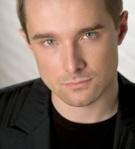 Jakub Ciupiński presented two short guest selections during Muzyka Nowa and was without doubt its star broadcaster. He studied at the Music Academy in Kraków, then at the Birmingham Conservatoire in the UK before moving on to the Juilliard School in New York, where he now lives. He has two compositional personalities. As (Jakub) Żak, he’s composed pop-electronica-world albums, the most recent of which is Dezyderata (2011). As Jakub Ciupiński, he has a wide range of output, from chamber and orchestral to live electronics. His elegant website has audio samples – including
 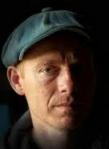 Jacaszek, as he prefers to be known, is the best known, and oldest, of these five Polish composers. I know nothing about his background, except that he was trained as an art restorer and that his first compositional foray was to rip a recording by Jack DeJohnette and Keith Jarrett on the family’s PC in the mid-90s (source: a 2011 interview for the Czech radio station ‘Wave’:
  Mateusz Ryczek is the youngest of this selection of Polish composers. He studied at the Music Academy in Wrocław and has already produced a sizeable body of work, ranging from chamber and orchestral pieces to music for the theatre. His works have been played at the Composers’ Union Youth Circle concerts at the ‘Warsaw Autumn’, from whose 2009 Sound Chronicle his NGC 4414 (2008) was played during Muzyka Nowa. Perusing his website, I came to the conclusion that he is energetic and rather good-humoured – as witnessed by his brief birthday salute to Lutosławski three days ago (
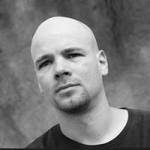 Krzysztof Wołek’s interests embrace chamber, orchestral and electronic mediums; he also works in dance collaborations and with video. He has the most artful and informative of all the websites, including plentiful samples from his wide range of compositions, although I could find only looped excerpts lasting about 2′ each rather than complete works. This was a bit frustrating, as the excerpts whetted the appetite, from the early (A)Symmetrics for orchestra (1999) to Elements (2008), which was played during Muzyka Nowa (admittedly under the misapprehension that his surname was Wolef). Wołek’s complete Mobile Variations for six-channel tape (2005) is, however, on his myspace site and is a fresh take on an electronic soundworld that dates back to the 1950s. Educated initially at the Music Academy in Katowice, Wołek subsequently studied at the University of Chicago and now teaches at the University of Louisville.
 If the photo on the homepage of her website is anything to go by, Agata Zubel is the most exuberant of the five in this selection. She studied both voice and composition at the Music Academy in Wrocław and she continues to combine both activities. As a singer, she performs music from Augustyn to Zubel, taking in classics like Berio’s Sequenza III along the way. As a composer, she works in a wide range of media, including music theatre, electronics and orchestral music (she already has three symphonies to her name). She tends to set modern poetry in her vocal works, particularly Beckett, as in Cascando (2007) which was broadcast during Muzyka Nowa. Her most recent piece What is the word, already dated 2012, is another Beckett setting. Like Wołek, Zubel has put only extracts on her website (they’re even shorter than Wołek’s), but her music has been released on several CDs, including the monographic Cascando (2010), and on DVD. Here she is in action as vocalist in her own Parlando for voice and computer (2000), recorded in Moscow last October.

 On Polish Music