• New ‘Eastern European Studies’ series

The postwoman’s just delivered the first volume in a new series, ‘Eastern European Studies in Musicology’.  It’s a collaboration between the University of Wrocław and the German publisher Peter Lang, under the general editorship of Maciej Gołąb (Wrocław).  I should declare an interest in so far as I am on the Editorial Board, along with colleagues from Brno, Vilnius, Lviv, Moscow and Budapest.  The series promises to bring not only new perspectives on music from this wide geo-cultural area but also the writings of a host of authors to the attention of a broader public.  This new volume sets the benchmark.

Screen Shot 2013-10-22 at 11.11.18

The Musical Culture of Silesia before 1742 contains twenty one essays under the editorship of Paweł Gancarczyk (Warsaw), Lenka Hlávková-Mráčková (Prague) and Remigiusz Pośpiech (Wrocław).  Why the specific date, 1742? This was the year that Silesia came under Prussian rule.  Prior to that, it had been subject to centuries of shifting political and cultural influences (which of course did not stop then).  The wonderfully varied contents of this first volume reflect this history.  Sixteen of the essays are in English, the remaining five in German.  There are plentiful illustrations, an index of people mentioned in the essays, but no author biographies except academic affiliations at the top of their contributions.

The Musical Culture of Silesia before 1742

Elżbieta Witkowska-Zaremba (Warsaw): Early Keyboard Music in Sources from Prague and Silesia
Veronika M. Mráčková (Prague): The Silesian Tradition of Hymns to Czech Saints
Jan Ciglbauer (Prague): Two Alleluia Chants in Nicolaus Cosel’s Manuscript: On the Creation of New Liturgical Music in 15th-Century Central Europe
Paweł Gancarczyk (Warsaw): A New Fragment of 15th-Century Polyphony in Silesia and the Tradition of the Central-European Repertory
Lenka Hlávková-Mráčková (Prague): Die Saganer Stimmbücher (Das Glogauer Liederbuch) und die Traditionen des polyphonen Liedes in Mitteleuropa
Jaap van Benthem (Utrecht): Die Saganer Stimmbücher (Das Glogauer Liederbuch): eine unbeachtete Quelle für Johannes Tourout?
Jacobijn Kiel (Houten – Heřmánkovice): Two Anonymous Salve Settings in Warszawa, Biblioteka Uniwersytecka, RM 5892
Christian Thomas Leitmeir (Bangor): Lutheran Propers for Wrocław/Breslau: The Cantus Choralis (1575) of Johannes Knöfel
Marc Desmet (Saint-Étienne): Jacob Handl’s Compositions Preserved in the Brzeg Manuscript Collection: Presentation and Chronological Clues
Bernhold Schmid (Munich)Nach dir, Herr Christe, thut mein hertz verlangen. Ein unbekanntes Kontrafakt zu Jacob Regnarts Tutto lo giorno aus der Bibliothek des Gymnasiums in Brieg
Thomas Napp (Reichenbach): Transferprozesse zwischen Görlitz und Breslau am Beispiel des Meistergesangs im ausgehenden 16. Jahrhundert
Janka Petőczová (Bratislava): The Role of Silesia in the Development of Musical Culture in the Towns of Spiš/Zips and Šariš/Scharosch
Paulina Halamska (Warsaw): Protestant Elite Milieu in the 17th-Century County of Kłodzko/Glatz as Exemplified by the Family of the Wrocław/Breslau Organist Tobias Zeutschner.  Gloss to the Biography
Tomasz Jeż (Warsaw): Jesuit Melodrama in Baroque Kłodzko/Glatz
Barbara Przybyszewska-Jarmińska (Warsaw): Marcin Mielczewski (d. 1651) and Alberik Mazák (1609–1661): A Silesian Perspective
Grzegorz Joachimiak (Wrocław): A Week in the Blacksmith’s Life: Lutenists from Silesia and Bohemia around Count Losy von Losinthal (1650–1721)
Remigiusz Pośpiech (Wrocław): Ein Schlesier aus Oppeln in Prag: Franz Ludwig Poppe (1671–1730) und seine Werke in tschechischen Sammlungen
Václav Kapsa (Prague): On the Way from Prague to Wrocław: Sacred Music by Early 18th-Century Prague Composers in Silesia
Marc Niubo (Prague): Bernard Artophaeus and Bohuslav Matĕj Černohorský.  Casual Examples of Czech Music in Baroque Silesia or the Last Traces of Music by Minorities in Wrocław?
Dominika Grabiec Warsaw): The Motif of «Deafening with Trumpets» in Central European Passion Iconography, the Religious Renewal Movement «Devotio moderna» and Reform of the Begging Monastic Orders
Martina Šárovcová (Prague): Choral Books from the Observant Franciscan Monastery in Wrocław from the End of the 17th Century.

• WL100/63: Mi-parti, **22 October 1976

Screen Shot 2013-10-22 at 08.47.06

One of the strangest aspects of this centenary year, and indeed of the performance and recording history since Lutosławski’s death almost twenty years ago, is the neglect of some works which during his lifetime were held in high regard.  The most notorious injustice relates to Livre pour orchestre, which I will return to in a later post.  Another example is Mi-parti, which Lutosławski wrote in 1975-76 and whose premiere he conducted with the Concertgebouw Orchestra in Amsterdam 37 years ago today.

During his lifetime, Lutosławski was the person who conducted Mi-parti most frequently.  His domination of its performance history is also true of many of his other orchestral and concertante works, which made for composer-authentic concert experiences but in the long run delayed much of his music’s entry into the repertoire of a broad range of career conductors.

As to professional concert performances over the past ten years, there have been only seven (excluding immediate repeat concerts), including just three in 2013, the third and most recent being by the Berlin Staatskapelle under Daniel Barenboim.  There have been five commercial recordings:

• WOSPR (NOSPR)/Lutosławski (EMI, rec. 1976; LP, reissued several times on CD)
• Prague Radio SO/Jacek Kasprzyk (Supraphon, rec. 1980; LP only)
• BBC PO/Yan Pascal Tortelier (Chandos, rec. 1993; CD)
• WOSPR (NOSPR)/Antoni Wit (Naxos, rec. 1997; CD)
• Warsaw National PO/Antoni Wit (CD Accord, rec. 2002; CD).

Chandos, with its magnificent 5-CD set of Lutosławski’s music, has inexplicably left out both works.  At least the Opera Omnia CD series by the Wrocław PO under Jacek Kaspszyk and Benjamin Shwartz will release both pieces in the near future.  On YouTube, Mi-parti has the thinnest of presences, with Lutosławski’s own recording accompanied by photographic artwork by the uploader: http://www.youtube.com/watch?v=laFCR96RPO4.

I would be very interested to hear what readers have to say about Mi-parti.  For me, it has a magical first section (although Lutosławski sometimes expressed doubts about it) whose essential idea he seems to have had in mind when composing the first section of the Fourth Symphony sixteen years later.  The second section is one of his most pulsating, the climax interrupted by trumpets (echoes of the Cello Concerto).  The coda is especially haunting. Perhaps the trouble is that it isn’t a ‘symphony’ so, like Livre, it is being left on the sidelines in the age of convenience programming.

…….

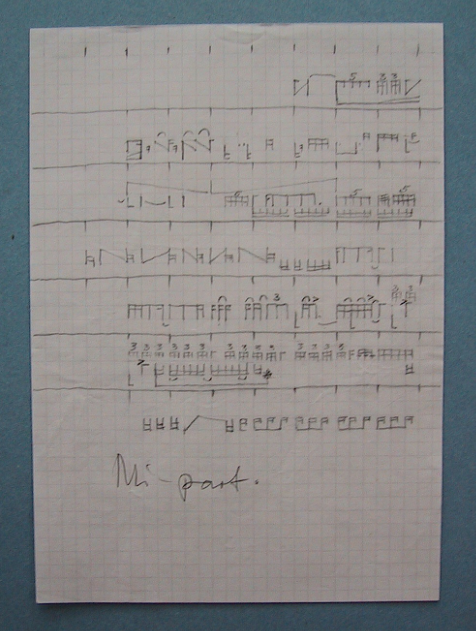
When I was researching in Lutosławski’s house in 2002, I came across many fascinating items: marked-up books, his conducting scores, a folder of folk-tune materials and a particular folder headed “ŚCIĄGACZKI” (Crib Sheets). Inside were separate pieces of MS paper connected with his work on LivreLes espaces du sommeilMi-parti and the Fourth Symphony.  Here are the two relating to Mi-parti.  They come from the second, fast section (apologies for the slightly fuzzy images).

The first is a ‘short-score’ reduction for the first eight bars of fig. 28.  The two lines represent the trumpets and trombones, whose individual purchase on the melodic line is fully worked out in the score (07’59”-08’09” on the accompanying YouTube video).

Screen Shot 2013-10-22 at 08.41.56

The second is more sketchy.  Indeed, it consists only of a (sometimes biforcated) rhythmic line.  It tracks the score from fig. 29 (i.e., two bars after the first ‘crib sheet’ stops short) as far as the third bar of fig. 35.  Although at times the link between sketch and score may seem tenuous, the sketch is consistent with the final product even if Lutosławski does use notational shorthand at times and darts from one instrumental group to another.  Effectively, this ‘crib sheet’ presents the main rhythmic template, an aide-mémoire as he worked the idea up into this extrovert, hocketing passage that leads shortly afterwards to the work’s climax (08’12”-09’09” on the accompanying YouTube video).

Screen Shot 2013-10-22 at 08.41.36

• WL100/62: Notebook, 19 October 1960

Lutosławski on objet sonore

Lutosławski’s affinity with French music and literature is well-known.  But the connection with the pioneer of musique concrète, Pierre Schaeffer, has largely slipped by unnoticed.  In truth, it is not Schaeffer’s tape music as such that caught Lutosławski’s attention but his discourse on the objet sonore.  Lutosławski referenced Schaeffer’s term in talks that he prepared for the Zagreb Biennale (1961) and the Tanglewood Summer School (1962), but his musing on the implications of objet sonore began earlier, in 1960, in his Notebook of Ideas (Zapiski).

There is no evidence that Lutosławski had read Schaeffer’s book À la recherche d’une musique concrète (1952). Almost certainly, he came across the term objet sonore from both fellow Polish composers and Schaeffer himself. Schaeffer came to the third ‘Warsaw Autumn’ festival to introduce a programme of musique concrète (17 September 1959) that included a number of pieces, including his own Étude aux objets (1959).  It is more than likely that Lutosławski attended this concert (ground-breaking in the Polish context) and met Schaeffer during his visit.

Pierre Schaeffer

Just over a year later, on 21 September 1960, the fourth ‘Warsaw Autumn’ presented a lecture by Józef Patkowski, the head of the Experimental Studio at Polish Radio.  During his talk, Patkowski referred to Schaeffer and played Étude aux objets again.  Was it pure coincidence that just two days later Lutosławski made the first of two entries in his Notebook that elaborated on the idea of the objet sonore as it related to his own thinking?  Four weeks later, on 19 October, he returned to this theme.

Although Lutosławski subsequently stressed the prominence of chance procedures in his musical development in the early 1960s, he did not make any entries in his Notebook on alea and aleatorism for another year (the first appears on 20 December 1961).  In other words, it was Schaeffer’s visit in 1959 and the idea of the objet sonore that first drew his attention.  It was six months later that Lutosławski heard Patkowski introduce a recording of John Cage’s Concert for Piano and Orchestra in his ‘Musical Horizons’ programme on Polish Radio (16 March 1960) – the event which Lutosławski subsequently credited as being the critical juncture in his compositional thinking.  Yet we must no overlook Schaeffer in these developments.  In combination, both Schaeffer and Cage gave Lutosławski conceptual support just at the moment when Jeux vénitiens (1960-61) was being conceived.

It seems that rhythm (in the broadest sense, as a division of time in which the action of a musical work takes place) is the hardest element of musical material to destroy.  The idea of the ‘eternity’ of this element is tempting.  Instead of ‘melody, ‘harmony’, there appears a new element (perhaps not entirely new in its essence, but new in application) – objet sonore – the sound object.

Wydaje się, że rytmika (w najszerszym pojęciu – jako podział czasu, w którym rozgrywa się akcja utworu muzycznego) jest najtrudniejszym do zniszczenia elementem tworzywa muzycznego.  Kusi myśl o “wieczności” tego elementu.  Na miejsce “melodyki”, “harmoniki”, zjawia się nowy element (być może niezupełnie nowy w swej istocie, ale nowe w zastosowaniu) – objet sonore – przedmiot dźwiękowy.

Witold Lutosławski, 23 September 1960 [my translation]

In connection with technique based on ‘objects’:
Object = a collection of sounds, between which there is a closer connection than between each of these s[ou]nds and sounds belonging to another object.  This closer connection ensures, above all, connectivity in time.  But it can also be similarity of timbre, rhythm, attack, harm[onic] profile, choice of intervals etc..
Hence 2 rhythmic currents in a piece:
1) local rhythm, ‘small’ – interior of an object
2) general rhythm, ‘large’ – i.e., the rhythm of a sequence of objects.

W związku z techniką opartą na “przedmiotach”:
Przedmiot = zbior dźwięków, między którymi istnieje ściślejszy związek niż między każdym z tych dźw., a dźwiękami należącymi do innego przedmiotu.  Ten ściślejszy związek zapewnia przede wszystkim łączność w czasie.  Ale również może to być podobieństwo barwy, rytmiki, ataku, profilu harm., doboru interwali itd.
Stąd 2 nurty rytmiczne w utworze:
1) rytm lokalny, “mały” – wewnątrz przedmiotu
2) rytm ogólny, “duży” – czyli rytm następstwa przedmiotów.

Witold Lutosławski, 19 October 1960 [my translation]

• WL100/61: Symphonic Variations

75 years ago today, Lutosławski put the finishing touches to his Symphonic Variations, his first surviving orchestral work.  I wrote about the premiere in an earlier post (WL100/43: Variations, **17 June 1939).  Since then, the Symphonic Variations featured in the Lutosławski strand of the 2013 BBC Proms, with same forces – the BBC SO under Edward Gardner – which give such a scintillating performance on Chandos CHSA 5098 (2012).  Here’s a YouTube upload of the Polish Radio broadcast of the Proms performance on 7 August … plus Lutosławski’s own, third-person comment (undated):

This is the work with which the author (then 26) made his debut in 1939 at a musical festival in Kraków.  The style of the work is, maybe, far from being definitively crystallised and yet on the basis of the Symphonic Variations one might speak of the artistic maturity of its then young author, principally thanks to the richly developed orchestral palette as well as the compact and balanced structure.

Są utworem, którym autor (wówczas dwudziestosześcioletni) zadebiutował w 1939 roku na festiwalu muzycznym w Krakowie.  Styl utworu jest, być może, daleki od ostatecznego skrystalizowania i jeśli na podstawie Wariacji symfonicznych można by mimo to mówic o dojrzałości artystycznej ich młodego wówczas autora, to przede wszystkim dzięki bogato rozwiniętej palecie orkiestrowej oraz zwartej i zrównoważonej architekturze.

…….

Today is also the anniversary of the partial premiere of the Second Symphony, whose second movement ‘Direct’ was performed on 15 October 1966, in Hamburg, with the Sinfonie Orchester des Norddeutschen Rundfunks conducted by Pierre Boulez.  For Lutosławski, Boulez’s conducting on this occasion was not entirely satisfactory (WL100/31: Notebook, 9 April 1969), but I have never fully understood Boulez’s subsequent lack of interest in Lutosławski’s music.

• WL100/60: Cello Concerto, **14 October 1970

On this day in 1970, Lutosławski’s Cello Concerto was premiered in London’s Royal Festival Hall by Mstislav Rostropovich and the Bournemouth Symphony Orchestra under Edward Downes.  The work was commissioned by the Royal Philharmonic Society (the first post-war commission to a foreign composer) with funds from the Gulbenkian Foundation.  The work was repeated on the following nights in Bournemouth and Exeter.

The first half of the programme consisted of Balakirev’s symphonic poem Tamara and Lutosławski’s Cello Concerto, followed in the second half by Borodin’s Second Symphony and Tchaikovsky’s Variations on a Rococo Theme. Lutosławski wrote in the RPS’s copy of the programme: ‘with my warmest thanks for this unforgettable experience’. In a letter to his Danish publisher, he wrote: ‘Rostropovich is unique and played it as if it were his own work’.

Homma 1993 4

Lutosławski’s Cello Concerto is now the most recorded post-war cello concerto after the two by Shostakovich.  At the latest count, there have been 16 commercial recordings (11 of them since Lutosławski’s death), with at least two more in the pipeline.  There is also more than a handful of recent concert performances available on YouTube and other platforms.  In this centenary year, it looks as if the Cello Concerto will be his most frequently performed work.  It is a remarkable compliment to Lutosławski’s extraordinary music.

Here are the links to the current uploads of complete professional performances:

• Felix Fan/RTVE SO/Adrian Leaper (2002)
http://www.youtube.com/watch?v=qdoW0q81F24
• Nicolas Altstaedt/Finnish Radio SO/Dmitri Slobodeniuk (2007)
http://www.youtube.com/watch?v=pIxvBjP7ld8
• Silver Ainomäe/Finnish Radio SO/Dmitri Slobodeniuk (2007)
http://www.youtube.com/watch?v=ZVqx2uUls54
• Oren Shevlin/WDR SO/Jukka-Pekka Saraste (2011)
http://www.youtube.com/watch?v=6kliW2KCYq8http://www.youtube.com/watch?v=GdjzGN4dYxw
• Alexander Baillie/Boston PO/Benjamin Zander (2012)
http://vimeo.com/40106492http://vimeo.com/40153844http://vimeo.com/40113484
• Kian Soltani/Helsinki PO/John Storgårds (2013; link broken by mid-December 2013)
http://areena.yle.fi/tv/1907455
• Paul Watkins/BBC SO/Thomas Adès (2013)
http://www.youtube.com/watch?v=Se-S8iEMWI8

• Recollecting Górecki

While I was in Warsaw last week, a new book was launched that goes beyond traditional reminiscences of recently departed artists.  It is almost three years since Henryk Mikołaj Górecki died – he would, like Penderecki, have been 80 this year and no doubt there would have been wider celebrations of his music had he still been alive.  The 2013 ‘Warsaw Autumn’, in a fit of commemoration, put on three concerts devoted to Lutosławski (Piano Concerto with Krystian Zimerman, Third Symphony), Penderecki (St Luke Passion) and Górecki (the three string quartets).  This new volume on Górecki, however, is no mere commemoration.  The contributors to Górecki. Portret w Pamięci (Górecki. Portrait in Memory) – all 42 of them, many of whom knew him extremely well and over many years – bring Górecki’s vivid, complex and sometimes contradictory personality back to life.  Taken together, they don’t miss you and hit the wall, as the saying goes.  There is a tinge of regret at the absence of his closest contemporaries, the composers Zbigniew Bujarski, Wojciech Kilar and Penderecki, and of the dedicatee and conductor of the premiere of Scontri, Jan Krenz.  But the collection is nevertheless rich in telling detail.

The book’s concept and execution were down to my friend Beata Bolesławska-Lewandowska.  She asks intelligent and searching questions and elicits fascinating responses, accessible to a wide range of readers.  Unfortunately, it is only in Polish, so readers and contributors who do not know the language have little chance of enjoying the memories therein.  An English version surely beckons.

Homma 1993 2

The contributions are grouped according to the interviewees’ occupations or relationship with the composer, each section printed on different coloured paper, and each interview prefaced by a photograph of the interviewee, sometimes with Górecki.  Here’s a list of the contributors and a byline on each.

Najbliżsi (Nearest): Jadwiga Górecka (widow), Mikołaj Górecki (son, composer), Anna Górecka (daughter, pianist)
• Uczniowie (Students): Eugeniusz Knapik (composer, pianist, teacher), Rafał Augustyn (composer, critic, Polish philologist), Małgorzata Hussar (composer, teacher)
Okiem muzykologa (In the eyes of the musicologist): Leon Markiewicz (Katowice Music Academy), Mieczysław Tomaszewski (former director of PWM, Kraków Music Academy), Teresa Malecka (Kraków Music Academy), Krzysztof Droba (Kraków Music Academy), Adrian Thomas (quite why I’m here rather than in group six I’m not sure!), Grzegorz Michalski (author, broadcaster, President of the Witold Lutosławski Society)
Kompozytorzy i wykonawcy (Composers and performers): Włodzimierz Kotoński (composer, teacher), Zygmunt Krauze (composer, pianist), Elżbieta Chojnacka (harpsichordist), Antoni Wit (conductor), Zofia Kilanowicz (soprano), Marek Moś (conductor, former leader of the Silesian String Quartet), Father Kazimierz Szymonik (priest, conductor)
• Dania (Denmark): Louise Lerche-Lerchenborg (commissioner of Lerchenmusik), Rosalind Bevan (pianist), Teresa Waśkowska (critic)
• Wielka Brytania (Great Britain): David Atherton (conductor), Paul Crossley (pianist), Janis Susskind (publisher, Boosey & Hawkes)
Stany Zjednoczone (United States): David Zinman (conductor), David Harrington (leader, Kronos Quartet), John Sherba (second violin, Kronos Quartet), Carol Wincenc (flautist)
• Bielsko-Biała (town south of Katowice where Górecki hosted a short festival each October; it still flourishes): Władysław Szczotka (Director, Bielsko-Biała Cultural Centre), Ewa Stojek-Lupin (pianist, portrait painter), Jacek Krywult (politician, President of Bielsko-Biała)
Promotorzy, organizatorzy (Promoters, organisers): Andrzej Kosowski (Director of Institute for Music and Dance, former director of PWM), Joanna Wnuk-Nazarowa (MD of NOSPR – National Symphony Orchestra of Polish Radio, Katowice), Ewa B. Michalska (music manager), Andrzej Wendland (Artistic Director, Tansman Festival, Łódź)
Interpretacje (Interpretations): Andrzej Chłopecki (✝ musicologist, broadcaster, critic), Krzysztof Zanussi (film director), Szymon Bywalec (conductor), Malgorzata and Marcin Gmys (musicologists), Mirosław Jacek Błaszczyk (conductor), Violetta Rotter-Kozera (TV documentary director)

• Polish ‘Awangarda’ CDs

For years, I’ve been bewailing the lack of CD representation of post-war Polish composers other than ‘the big three’. And there are still notable gaps, especially in the coverage of the music of Kazimierz Serocki: Musica concertanteSymphonic Frescoes (played at this year’s ‘Warsaw Autumn’), Forte e PianoPoezjeDramatic Story, Swinging MusicPianophonie.  But over the past couple of years the Polskie Nagranie company, in conjunction variously with the publishers PWM, Ricordi and the Polish Music Information Centre, has begun to issue and reissue archive recordings (from 1959 onwards) of some of the early figures of the Polish avant-garde.

Three CDs have appeared so far in the ‘Awantgarda’ series: Krzysztof Penderecki conducted by Andrzej Markowski (2011) – and it’s the Markowski connection that makes this CD interesting (Penderecki does not want for coverage!), Serocki (2012) and Włodzimierz Kotoński (2013).  A similar project, but outside the ‘Awantgarda’ sequence, was that of the music of Tadeusz Baird, in a double CD package (2011).  For anyone wanting to hear their music, these CDs are a great place to start, not least because there are some recordings never released on CD before and others never heard beyond the confines of the ‘Warsaw Autumn’ Chronicle recordings whose circulation was extremely limited.  There are one or two never released on any format before.  Any performance dates in the second half of September are from the ‘Warsaw Autumn’ festival.  ** = first performance, * = Polish premiere.

Tadeusz Baird. Selected Works (PNCD 1399, two CDs)

This double CD was first issued in 2003 (PNCD 525A/B).

Baird.m3404 Love Sonnets (second version, 1969): Andrzej Hiolski/Kraków PRO/Jan Krenz (July 1978)
Colas Breugnon (1951): WOSPR/Krenz (May 1955)
Trouvère Songs (1963): Krystyna Szostek-Radkowa/National PO, Warsaw/Witold Rowicki (24 June 1968)
• 5 Songs (1968): Szostek-Radkowa/Wrocław PO/Andrzej Markowski (June 1974)
Psychodrama (1972): WOSPR/Wojciech Michniewski (1 February 1979)
…….
Erotyki (1961): Stefania Woytowicz/National PO/Rowicki (21 April 1963)
• Symphony 3 (1969): National PO/Krenz (10-11 June 1969)
Elegeia (1973): WOSPR/Michniewski (1 February 1979)
Concerto Lugubre (1975): Stefan Kamasa/Kraków PRO/Jacek Kaspszyk (10 April 1977)
Voices from Afar (1981): Jerzy Artysz/National PO/Rowicki (**, 22 January 1982)

Krzysztof Penderecki conducted by Andrzej Markowski (PNCD 1373)

Markowski was an extraordinary champion of new Polish music, and especially of Penderecki’s ground-breaking early scores.  This selection spans 1958-61, and only Emanations, the First String Quartet and Fonogrammi are missing from these years.

AWANGARDA_M.m340Psalms of David (1958): National PO (8 January 1966)
Strophes (1959): Silesian Philharmonic CO (**, 17 September 1959)
Anaklasis (1959-60): National PO (8 January 1966)
Dimensions of Time and Silence (1960): National PO and Choir (24 June 1972)
Threnody (1961): Kraków PO (22 September 1961)
Fluorescences (1962): National PO (8 January 1966)
Polymorphia (1961): Kraków PO (*, 26 September 1963)

Kazimierz Serocki (PNCD 1441)

It is terrific to have two early pieces on this CD, formative for both Serocki and Polish music around 1960, as well as the three ‘Warsaw Autumn’ performances.

Serocki_awangarda.m340Episodes (1958-59): WOSPR/Krenz (24 March 1965)
Segmenti (1960-61): WOSPR/Krenz (24 March 1965)
Continuum (1965-66): Warsaw Percussion Group (28 February 1980)
Fantasmagoria (1970-71): Roger Woodward/Hubert Rutkowski (23 September 1976)
Fantasia elegiaca (1971-72): Karl-Erik Welin, Hesse RSO/Markowski (*, 28 September 1973)
Arrangements for four recorders (1975-76): (20 September 1978)

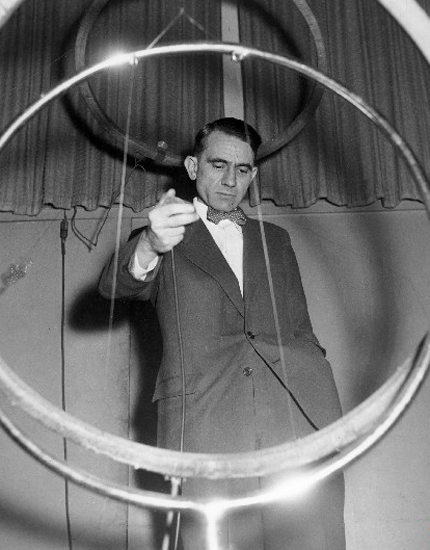
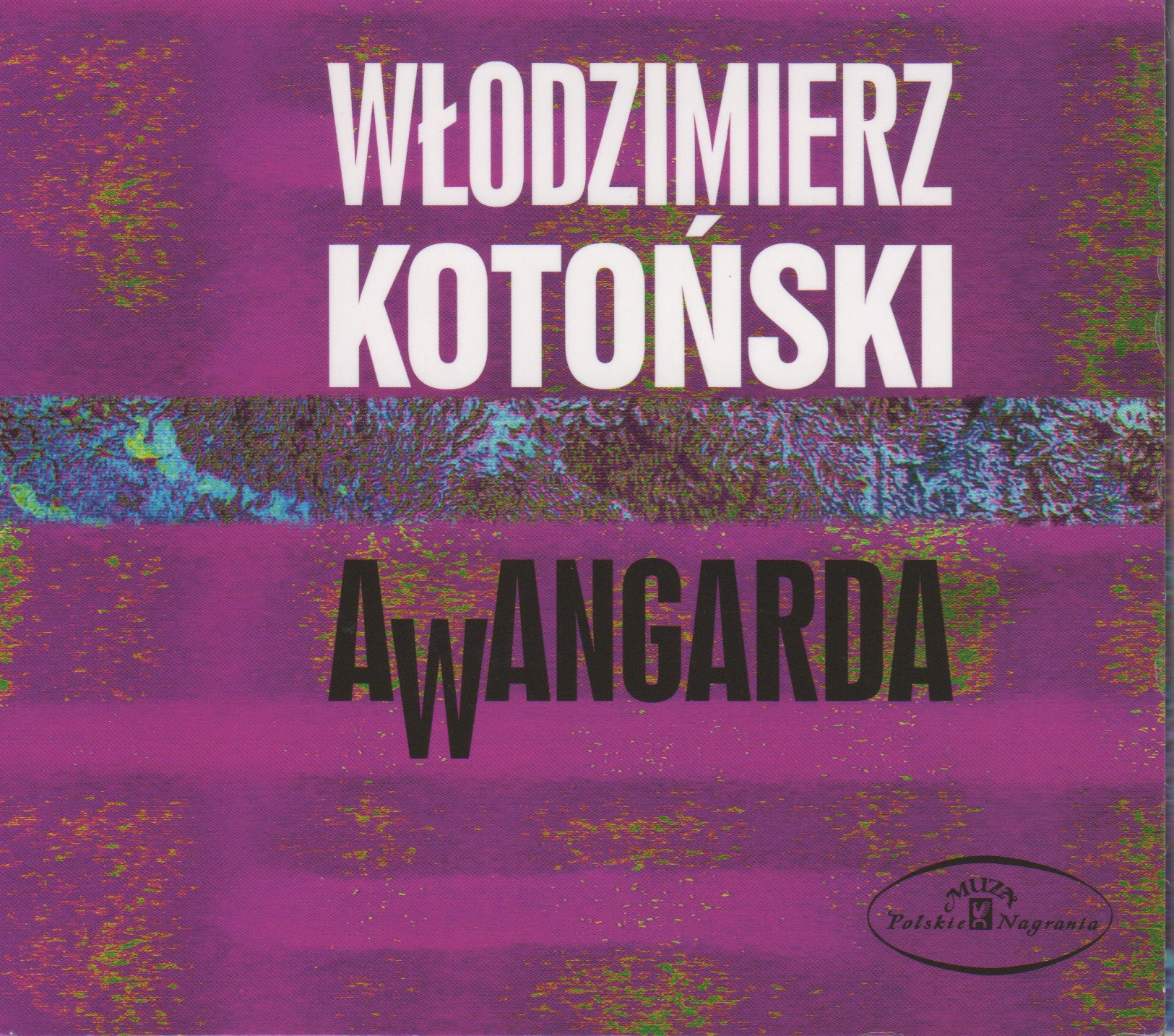
Włodzimierz Kotoński (PNCD 1521/polmic 099)

Kotónski, now 88, has languished in the shadows of his contemporaries.  His early tape pieces especially were key to the development of the Polish avant-garde.  Less than a handful of his works had been commercially released on any format prior to this CD.  (There’s no Kotoński web-page yet on the Polskie Nagrania site.)

Homma 1993Study on One Cymbal Stroke (1959): (Polish Radio Experimental Studio, 1960)
Microstructures (1963): (PRES, 1963)
Aela (1970): (PRES, 1977)
Les ailes (1975): (Bourges, 1977)
Aeolian Harp (1974): Rozwitha Trexler and four instrumentalists (*, 21 September 1975)
Musique en relief (1959): National PO/Stanisław Wisłocki (*, 25 September 1960)
Musica per fiati e timpani (1964): National PO/Rowicki (1966)
Music for 16 Cymbals and Strings (1966): WOSPR/Jerzy Maksymiuk (1977)

• WL100/58: ‘old’ Derwid CDs

It’s all happening at once for Derwid, or so it seems.  Polskie Nagrania has announced a new CD of original recordings of Lutosławski’s pseudonymous popular songs from 1957-63, just as Agata Zubel’s CD of modern interpretations has arrived in the shops (see yesterday’s post WL100/57).  Yet PN’s new CD is, apart from two of its 14 tracks, a reissue of another CD that was produced in 2010 and which can be listened to online for free. Confused?  Here’s a run-down of the Derwid discography so far.

ap01342005: Derwid. Lutosławski’s Concealed Portrait (Acte Prealable, APO134).  New arrangements of twelve songs, sung by Mariusz Klimek and an instrumental quartet (keyboards, tenor sax, bass guitar, percussion).

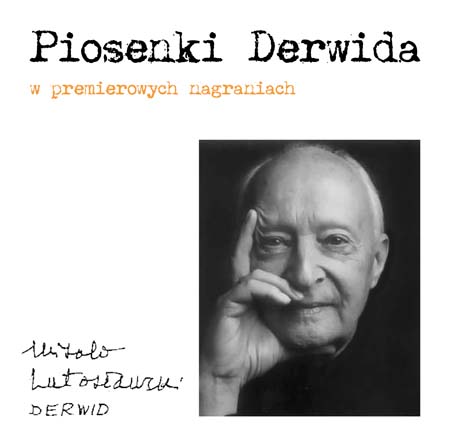
Derwid_L2010: Piosenki Derwida (Studio MTS).  Remastering of twelve recordings published in the 1950s and 1960s on the Muza and Pronit labels.  It somewhat bizarrely includes a bonus track, Le fiacre de Varsovie, a French-language version of Warszawski dorożkarz, sung by the Greek singer Yovanna at the 1962 Sopot Festival in northern Poland.

image_gallery-1

2013 (PNCD): Piosenki Derwida / Witolda Lutosławskiego. Warszawski Dorożkarz (Polskie Nagrania, PNCD 1503).  A reissue of Studio MTS’s remastering (2010), plus two other period tracks.

Derwid-obwoluta

2013 (ACD): el Derwid (CD Accord, ACD 192).  New arrangements of eleven songs, sung by Agata Zubel, with Andrzej Bauer (cello) and Cezary Duchnowski (keyboards, computer).

According to the Studio MTS website, its set of twelve period recordings was issued, though I can find no record of its CD number.  In fact, it was never issued commercially, but was available for educational purposes only.  So it is very good that it has now resurfaced – in a different track order – under the PN label.  At the time of writing, the Studio MTS recordings are still available to listen for free online: http://studiomts.pl/NewFiles/Opisy_plyt/Derwid.html.

Here’s an alphabetical list of which tracks you can find on which CDs.  These 20 songs represent just over half of Derwid’s output and there remain some gems yet to be recorded (for a full list of songs and English translations of the titles, see WL100/42: 33 ‘Derwid’ songs published).  I know that in the mid-1990s there still were tapes in Polish Radio of period broadcasts of many of these songs, some in different versions, and also of others not in this list, so perhaps some day they too will be aired again.

Cyrk jedzie: 2005, 2010 + 2013 (PNCD), 2013 (ACD)
Czarownica: 2005, 2010 + 2013 (PNCD), 2013 (ACD)
Daleka podróż: 2010 + 2013 (PNCD), 2013 (ACD)
Filipince nudno: 2013 (PNCD)
Jak zdobywać serduszka: 2010 + 2013 (PNCD
Jeden przystanek dalej: 2005, 2013 (ACD)
Kapitańska ballada: 2013 (PNCD)
Milczące serce: 2005 (twice), 2010 + 2013 (PNCD)
Miłość i świat: 2005, 2013 (ACD)
Nie oczekuję dziś nikogo: 2005, 2010 + 2013 (PNCD), 2013 (ACD)
Plamy na słońcu: 2010 + 2013 (PNCD), 2013 (ACD)
Po co śpiewać piosenki: 2005
Tabu: 2010 + 2013 (PNCD)
Tylko to słowo: 2010 + 2013 (PNCD)
W lunaparku: 2005, 2013 (ACD)
W naszym pustym pokoju hula wiatr: 2010 + 2013 (PNCD)
Warszawski dorożkarz: 2005, 2010 + 2013 (PNCD)
(Le fiacre de Varsovie): 2010 + 2013 (PNCD)
Z lat dziecinnych: 2005, 2013 (ACD)
Złote pantofelki: 2013 (ACD)
Znajdziesz mnie wszędzie: 2005, 2013 (ACD)

• WL100/57: ‘el Derwid’ CD

It’s out!  Here’s something special for the Lutosławski centenary: a CD of eleven of his popular songs written under the pseudonym ‘Derwid’ in 1957-63.  Expect to be intrigued (the ‘el’ dimension) and blown away!  It’s just been released on CD Accord (ACD1922).  Here’s the track list, plus a little background in earlier posts: Zubel Zings! and WL100/42: 33 ‘Derwid’ songs published.

Derwid-obwoluta

• WL100/56: Los Angeles (1985)

First posted on 2 September 2011.

Two years ago today, there appeared on YouTube four uploads that together formed a 33’ documentary film on Witold Lutosławski.  I was alerted to the uploads last year and thought it might be useful to repost them, with a brief commentary and selected timelines for anyone unfamiliar with the music.

Open Rehearsals with Witold Lutosławski records the composer’s visit to the University of Southern California in Los Angeles, 21-29 January 1985, during which time he celebrated his 72nd birthday (25 January), although that event is not mentioned in the film.  For some reason, the uploads have been dated 1984.  The film was made by the Polish documentary and feature director, Paweł Kuczyński (left), and it appears to have been his first film (he uploaded it himself).  Further details on Kuczyński may be found on his website <http://www.directing.com/index.html> and blog <http://deafearsmadness.blogspot.com>.

The occasion for the visit of Lutosławski and his wife Danuta was the official opening on 23 January of what was then known as the Polish Music Reference Center (PMRC) and is now known as the Polish Music Center (PMC).  The PMRC had been the brainchild and passion of a Polish-American couple, Stefan and Wanda Wilk, whom I had the privilege and joy to get to know during a year’s research leave I had at the University of California, San Diego, in 1983-84.  I spent many happy days in their company (and that of their dog) at their home in Los Angeles (the domestic interior, garden and dog are seen in the film) and it was thanks to their enthusiasm that I wrote a small monograph Grażyna Bacewicz: Chamber and Orchestral Music that was published by PMRC in 1985.

Wanda Wilk was the practical and tenacious driving force behind the PMRC project and had the bold idea at an early stage of asking Polish composers if they would be willing to donate manuscript scores to the library.  Penderecki declined, but Lutosławski could see the huge potential of the Center and made an astonishing offer.  He was prepared to donate not one but five music manuscripts.  And these included some of his most significant scores from the preceding 20 years.  It’s worth highlighting them here, because in the film all that is shown is a large black portfolio holding the manuscripts:

• Paroles tissées (1965)
• Preludes and Fugue (1972)
• Mi-parti (1976)
• Novelette (1979)
• Mini-Overture (1982)

No donation since has matched Lutosławski’s generosity.

Lutosławski had just flown in from St Paul, Minnesota, where he’d attended the world premiere on 18 January of Partita for violin and piano (1984), given by Pinchas Zukerman and Marc Neikrug.  An important element of his visit to Los Angeles was spending several days observing and conducting rehearsals of his music by students and staff at the School of Music at USC, as well as looking over student scores, giving interviews and attending concerts of his music.  He also conducted the West Coast premiere of Chain 1 (1983).  Kronos Quartet played the String Quartet (1964) and the British composer John Casken contributed a talk on Lutosławski.  This was evidently a major Lutosławski residency and one to be treasured by those fortunate enough to have been present.  Its success led 12 years later to a similar profiling of his younger compatriot, Henryk Mikołaj Górecki (‘Górecki Autumn’, 1-5 October, 1997).

Kuczyński intercuts and overlays film of Lutosławski at different rehearsals with the composer speaking about his musical aesthetics.  If you are familiar with how Lutosławski discussed music in printed interviews you will find many typical tropes here, but they are no less interesting for actually seeing him speak about music and its contexts.  There are occasional surprises, too.  It would be fascinating to see the footage that was not included in the film.

It is particularly interesting to witness Lutosławski rehearsing with students, primarily on Mi-parti (which the students were preparing for a concert a few weeks later) and on Chain 1.  There is also a delightful vignette of him conducting a student choir on the word ‘Fouille‘ from the second movement of Trois poèmes d’Henri Michaux (1963).  The works heard in the film, in order of first appearance, are:

Part I: Mi-partiTrois poèmes
Part II: Trois poèmesGrave for cello and piano (1981), Chain 1, String Quartet
Part III: Mi-partiChain 1, String Quartet, Melodie Ludowe/1 (1945), Paganini Variations for two pianos (1941)
Part IV: Chain 1Mi-parti.

In the following commentaries, I’ve posted the four YouTube sections of the film as well as their urls if you want to have them in a separate window while reading the commentary.  My observations are not comprehensive and the timings are approximate, but I hope that they add something to your enjoyment of Kuczyński’s valuable film.

Part I            http://www.youtube.com/watch?v=GVlq6zihyjg    9’27”

0’00”    [over] Mi-parti (3 before Fig.41)
Witold and Danuta Lutosławscy arrive at Los Angeles airport.  On the walk out, Danuta is centre front row, with Wanda Wilk on the right.  Witold is in the second row, with Stefan Wilk on the right.
1’00”    First rehearsal with students on Mi-parti
[intercut with]
1’30”    John Casken
4’56”    Ceremonial donation of scores to PMRC
6’16”    Wanda Wilk on Lutosławski
6’39”    [home interview] Lutosławski on the Wilks; he later comments that life is still very difficult in Poland (he was speaking barely three years after martial law had been imposed in December 1981) and refers to ‘the Festival’, meaning the ‘Warsaw Autumn’ International Festival of Contemporary Music.
7’39”    Open interview
8’16”    Rehearsing ‘Fouille’, from Trois poèmes
8’47”    on audiences

Part II           http://www.youtube.com/watch?v=NTUUt9NzTLM    7’21”

0’00”    on audiences and listeners
0’35”    Meeting with student composers including a somewhat unexpected and frank statement on Berg: “I’m always very impressed by some works of Alban Berg in spite of the very fact that I hate his sound language … his works had a tremendous impact on me”.
1’10”    Rehearsing Trois poèmes/II
1’30”    [garden interview] on themes, literary programmes: “Music is music for me.  It’s just the free expression of human soul by means of acoustical phenomena”.
2’08”    Rehearsal of Grave
3’55”    Lutosławski suggestion to the cellist: “If you make the fortes attacking, aggressive, and the pianos without tension, like that – ‘pierced balloon’!” (laughs).
4’42”    Rehearsal of Chain 1
5’16”    [garden interview] on ‘key ideas’ and form in composing
[intercut with]
6’07”    Kronos playing through the String Quartet.  At that point – 26 years ago already! – Joan Jeanrenaud was the cellist in Kronos.

Part III         http://www.youtube.com/watch?v=KzRVtKYO0vU    9’12”

0’00”    Kronos playing through the String Quartet
0’53”    [open inteview] “Constant revolution – I think it’s over.”
1’25”    Rehearsal of Mi-parti
1’58”    Rehearsal of Chain 1
2’41”    Lutosławski playing bb. 9-15 of ‘Ach, mój Jasieńko’, the first of Melodie ludowe, at the Wilks’s piano during photo shoot.
3’10”    Mi-parti
3’45”    [open interview] “I think there is a strong need of substance in music.”
3’55”    Kronos playing the ‘Funèbre’ section of the String Quartet.  Lutosławski looks particularly focused.
[over]
4’35”    visual recap of handing-over ceremony
5’21”    on the circumstances of the survival in 1944 of the score of the Paganini Variations, talking to the pianists Jean Barr and Armen Guzelimian; he does not mention his piano-duo partner, the composer Andrzej Panufnik, by name (their relationship was frosty after Panufnik left Poland in 1954 – I witnessed this personal distance first-hand at a rehearsal in Dublin in 1979).
6’02”    Edited play-through of Paganini Variations (Theme, Vars 1, 9 and start of 10)
6’58”    Seminar on his music: “Some irrational moments should be in music.”
7’25”    [home interview]: on chance, but not in the way “my personal friend John Cage represents” and on rhythm.
8’51”    Mi-parti

Part IV          http://www.youtube.com/watch?v=YOB3gvB6bcA    7’07”

0’00”    Rehearsal of Mi-parti
[intercut with]
[home interview] on the limits of chance procedures
1’34”    Seminar on his music: about Chain 1, Fig. 47, percussion: “a little as if it were a person, a character in a play, you know, interrupting something, saying, “Shut up!” “.
2’18”    Rehearsal of Chain 1
2’38”    Seminar on his music
2’59”    [garden interview] on not teaching, on focussing on his own techniques
[over and leading into]
3’50”    Meeting with student composers; a rare recorded example of Lutosławski giving compositional advice!
4’50”    [garden interview] on creative integrity [over visuals of rehearsal for Chain 1]
5’52”    End of Mi-parti rehearsal