• Król Roger: Live Transmission 16.05.15

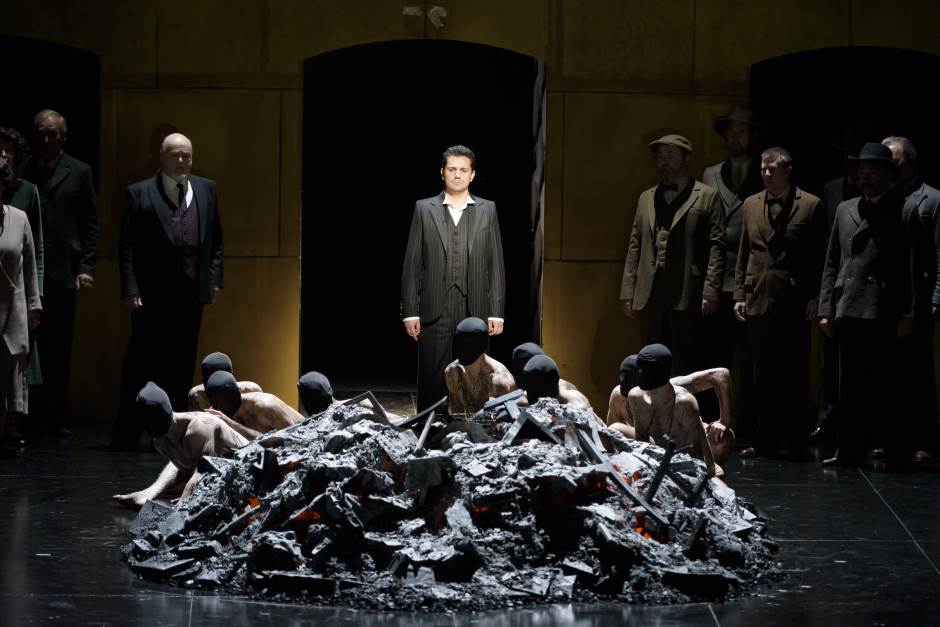
060392-001_1814634_32_202It’s here, tonight: http://www.theoperaplatform.eu/en/opera/szymanowski-krol-roger and the Royal Opera House YouTube Channel.  As part of The Opera Platform venture, the Royal Opera House’s new production of Szymanowski’s Król Roger is being streamed live on 16 May 2015 from 18.40 (BST) = 19.40 (CET).  The opera itself starts 20′ later.  It will also be available online for the next six months.

In this production, Act 2 follows Act 1 without a break.  Before Act 3 there is a 30′ interval sequence presented by BBC Radio 3’s Clemency Burton-Hill.  The sequence includes Antonio Pappano’s guide to the music and, before that, roughly 8′ in, a live interview with me about Szymanowski and Król Roger.  That’s when you can go and brew yourself a cuppa or crack open a bottle of Sicilian wine.

If you fancy a bit of background reading, here is a link to my article on Szymanowski and Król Roger ‘An Enigmatic Figure’ – from the ROH programme book.

• BBC R3: Bacewicz is COTW (25-29.05)

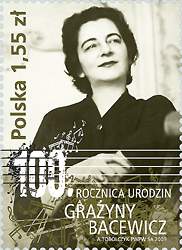
n1877p01At last!  In two weeks’ time, Grażyna Bacewicz (1909-69) will be BBC Radio 3’s Composer of the Week.  Five programmes, each lasting an hour, will be broadcast 25-29 May, at 12 noon and again at 18.30.  Donald Macleod presents, as usual, and I’ll be chipping in with a few comments towards the end of each programme.  I’ve not been involved in the selection of the repertoire.

…….

I’ve just been looking back at coverage of Polish composers on COTW.  Sadly, the BBC webpages (once you’ve learned how to navigate them) are reliable only for the past ten years.  Before that, specific years and dates then become very patchy and there is nothing concrete before 2001 except an alphabetical list of names since the series’ inception in 1943.

Chopin has been well represented over the years, but what of 20th-century Polish composers?  Is it not strange that neither Górecki nor Penderecki has been featured?  (I was asked to contribute to a Górecki week last year, but when I was unavailable for recording the proposal was postponed and I’ve heard nothing since; I hope it will resurface soon.)  If COTW can cover Henze (2005), Ligeti (2009) and Schnittke (2010), why not their near-contemporaries in Poland?  Panufnik was featured in his centenary year (2014), but Lutosławski was passed by in his (2013).  Szymanowski, on the other hand, has been almost over-exposed.  Here is my list, extracted from the COTW webpages (the 2006 slot may be a repeat):

• 2014: Andrzej Panufnik
• 2011: Karol Szymanowski
• 2010: Fryderyk Chopin
• 2008: Fryderyk Chopin
• 2006: Karol Szymanowski
• 2004: Karol Szymanowski

Before Donald Macleod became the voice of COTW, other presenters participated, including myself.  In the 1990s I presented a few weeks and Roxana Panufnik presented one on her father:

• 1998: Karol Szymanowski
• 1993: Andrzej Panufnik (as part of R3’s Polska! festival)
• 1993: Polish Romantics (“) – Karłowicz, Moniuszko, Noskowski, Paderewski, Wieniawski, Zarębski
• 1993: Witold Lutosławski

It seems to me that there is an unanswerable case for Górecki, Penderecki and Lutosławski to be included in future plans for COTW.  They are more than equal to quite a few composers who have been featured in the series over the past ten years.  There are other Polish names too, who might be grouped together if there was insufficient recorded material for them to be treated singly: Kazimierz Serocki, Tadeusz Baird, Wojciech Kilar and Zygmunt Krauze come to mind, or even composers of younger generations.  And there is now much more available on 19th-century Polish music, not to mention the Polish Renaissance and Baroque.  But back, for now, to Bacewicz.

…….

Part of the challenge for a representative coverage of Bacewicz’s music is the lack of recordings of certain periods, although there was a surge of CDs around the centenary of her birth.  This is particularly obvious of the mid-1960s, where works such as Musica sinfonica (1965), Contradizione (1965), In una parte (1967) and the Viola Concerto (1968) have never been issued on CD.  There is, for example, only one recording of the key work Music for Strings, Trumpets and Percussion (1958).  That was made for the Chandos label in 2009, her centenary year.  Once again, when it comes to the recording of Polish music, it is a British company that has taken the lead.  Given the available recorded repertoire, the choice made by COTW presents a good, more-or-less chronological sample of Bacewicz’s music.  I hope it will garner new enthusiasts for her music, especially among performers and promoters.  Here’s the day-by-day list of works that have been selected (movement details tbc):

Monday 25 May
• Sonatina for piano, first movement (1933)
• Violin Sonata no.3 (1948)
Children’s Suite for piano, movements 1-5 (1933)
• Sinfonietta for strings (1936)
• Violin Concerto no.1 (1937)

Tuesday 26 May
• Three Songs (1938)
Three Grotesques for piano (1935)
• Violin Sonata no.1 ‘Sonata da camera’ (1945)
• Violin Concerto no.2, movements 2 and 3 (1945)
• Overture (1943)

Wednesday 27 May
• String Quartet no.3 (1947)
• Violin Sonata no.4 (1949)
• Concerto for String Orchestra (1948)

Thursday 28 May
• String Quartet no.4, first movement (1951)
• Partita for violin and piano (1955)
• Ten Concert Studies for piano, nos 1-3 (1956)
Music for Strings, Trumpets and Percussion (1958)

Friday 29 May
Pensieri notturni for orchestra (1961)
• Piano Quintet no.2, movements 1 and 2 (1965)
• Violin Concerto no.7 (1965)
• Divertimento for strings (1965)
• 6th Festival of Premieres, Katowice

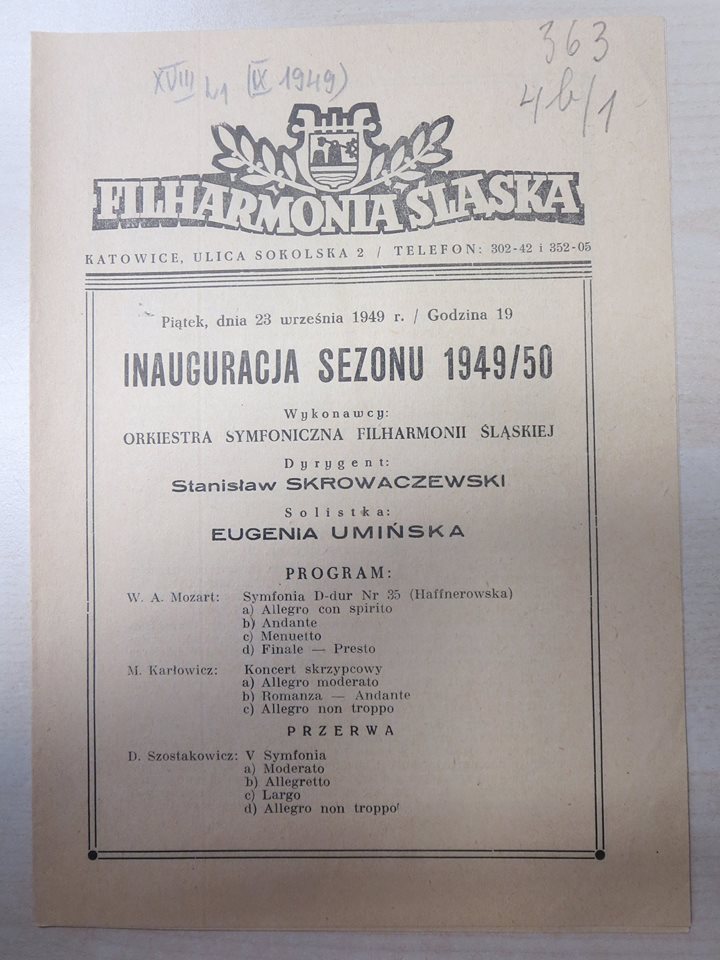
Last November, the 21st to be exact, I visited the new and magnificent home in Katowice of NOSPR, the Polish Radio National Symphony Orchestra.  The occasion was a performance of Shostakovich’s Fifth Symphony under the baton of the 91-year-old Stanisław Skrowaczewski.

1510969_530640500404789_5062398667736756849_nIt was a searing account, made all the more special because that very morning I had come across a programme from 1949 when Skrowaczewski had conducted the same work with the other Katowice orchestra, the Silesian Philharmonic.  65 years on, and still going strong.

1966896_530637837071722_1945099977618804650_n

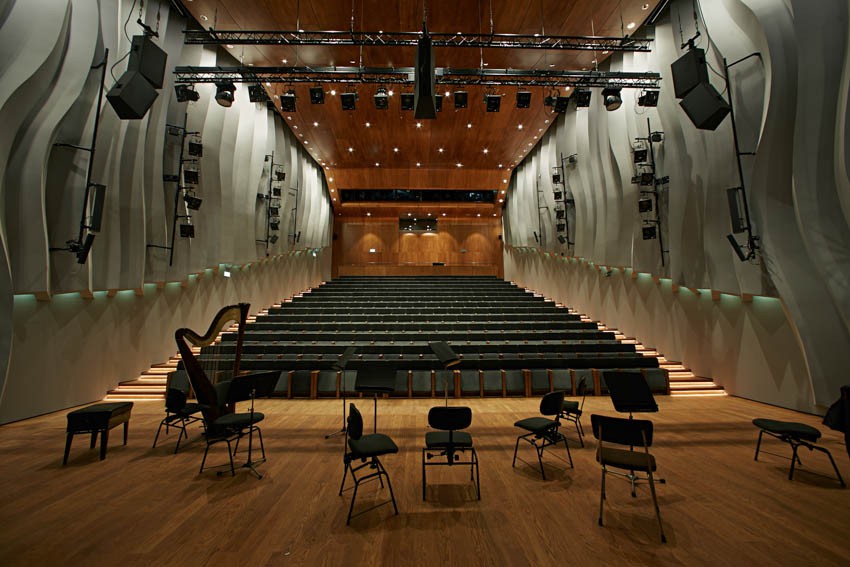
I hope that in 2080 someone will come across the programme of NOSPR’s 6th Festiwal Prawykonań (Festival of Premieres, 17-19 April 2015) and make a similar connection with a performer or composer being featured in this edition.  The big change is that all the concerts will take place in the orchestra’s new home, barely ten minutes’ walk from Henryk Mikołaj Gorecki’s home.  The siedziba, as it’s called in Polish, not only includes the main symphony hall but the equally fine acoustics of the chamber hall.

232fbae8-444a-4337-a777-eeca211c69be

bartekbarczyk.com-7_hp_item

Back in 2013, I listed the repertoire of the 5th Festival.  This year, such is the diversity and extent of Polish composition that 75% of the names are different.  This biennial event is a great initiative, arguably the most important showcase for new Polish concert music.  It demonstrates the cultural significance of publicly-funded bodies like radio orchestras (Radio France take note).  I do not know the schedule of live or deferred broadcasts planned by Polish Radio Dwójka (PR2).

6-festiwal-prawykonanThe ensembles featured include Camerata Silesia, conducted by Anna Szostak, Orchestra Muzyki Nowej (New Music Orchestra), conducted by Szymon Bywalec, NOSPR conducted by Alexander Humala, Szymon Bywalec and José Maria Florêncio, Kwartludium, Kwartet Śląski (Silesian Quartet) and the AUKSO Chamber Orchestra, conducted by Marek Moś.

Here’s this year’s repertoire, in alphabetical order by composer:

** World premiere   * Polish premiere
• Rafał Augustyn: String Quartet no.3 ‘Monadologia’**
• Zbigniew Bagiński: String Quartet no.5**
• Zbigniew BargielskiHierofania 2 for orchestra**
• Marcin BłażewiczVisions for soprano, violin and piano**
• Marcin Bortnowskiku dźwiękom nocy for string quartet and accordion**
• Stanisław BromboszczAir for instrumental ensemble and electronic media**
• Roman Czura: Piano Concerto ‘Kraftfelder’**
• Jacek DomagałaElegia for voice and ensemble**
• Zofia DowgiałłoKompozycja z ruchomym tłem for orchestra**
• Cezary DuchnowskiSymfonia zbiorów for instrumental groups and electronics**
• Grzegorz DuchnowskiW malinowym chruśniaku for soprano and piano**
• Jan DuszyńskiSfex for accordion and cello**
• Mikołaj GóreckiElegia for cello and string orchestra**
• Marek GruckaRetaeh for piano, strings and percussion**
• Maciej Jabłoński: Symphony no.6 ‘Oneirophrenia’ for orchestra, electronics and multimedia**
• Zaid Jabri (Syrian composer living in Kraków): Beati Pacifici for soprano and piano*
• Justyna Kowalska-Łasoń która wszystko tworzy, wszystko ochrania for mixed choir of soloists, chamber orchestra and live electronics**
• Hanna Kulenty: Trumpet Concerto no.3**
• Sławomir Kupczak: white over red for mixed choir**
• Andrzej Kwiecińskierschallen for double bass and orchestra**
• Krzysztof MeyerMuzyka świata i półcienia for orchestra*
• Piotr Mossgo where never before for choir and instrumental ensemble*
PRASQUAL (aka Tomasz Prasqual): Muqarnyas for accordion and two orchestras in six spatial groups**
• Zbigniew SłowikThe Motor Poem (Quo vadis homine) for orchestra**
• Joanna Szymała: Clarinet Quintet**
• Sławomir Wojciechowski…play them back for ansambl and electronics**
• Emil Bernard WojtackiZefiro torna for soprano and orchestra**
• Artur ZagajewskiMechanofaktura**

• Panufnik Revised: 2. Nocturne & Lullaby

For the second of five articles on Panufnik’s revisions made after he had fled to England in 1954, I have combined two works from 1947: Nocturne and Lullaby.  They remain two of his most enduring compositions, and Lullaby in particular has recently won a new following.  Nocturne is also a special piece and was subsequently held up by commentators as a pre-echo of the sonoristic developments in Polish music in the 1960s.  Curiously, Panufnik chose in his revisions of both pieces to cut out textural features that might have cemented this link to younger composers back in his native Poland.

Click here for the link to the article on Nocturne & Lullaby.

P.S.  I have not yet discovered why Nocturne was first published as Notturno.  Does anyone out there know?

• Panufnik Revised: 1. Tragic Overture

With last year’s Panufnik centenary and this year’s imminent publications – an expanded reissue of his autobiography (Toccata Press) and the English-language translation of Beata Bolesławska’s 2001 monograph (Ashgate) – it seems a good time to share a series of articles that I hope will shed new light on Panufnik’s music from his Polish period.

Panufnik was an inveterate reviser, but the post-war decade was also conditioned by his situation in communist Poland, especially by his decision to leave in 1954 and settle in England.  (Last October I put up a couple of posts and related articles on this latter topic: Panufnik’s Escape (1) ☛ article: Berne Legation Memo // Panufnik’s Escape (2)article: Scarlett’s Memoir.)

While I was preparing a conference paper for a Panufnik conference in Warsaw last September (‘Rustic – Heroic – Elegiac.  Panufnik and his Revisions’), I became aware of undiscussed processes of revision lying behind the compositions that were published first by PWM in Kraków and subsequently by Boosey & Hawkes in London.  I followed this up by examining autograph scores in Kraków.

Screen Shot 2015-03-06 at 11.44.12

This little series will include just the orchestral pieces, which will be covered in chronological order over the coming weeks.  (Last December I also wrote about his first mass songs from 1948: Panufnik: One Song or Three? ☛ article: Panufnik’s 3 Songs for the PZPR.)  Future posts and articles will be on Nocturne, Lullaby, Sinfonia rustica, Symphony of Peace/Sinfonia elegiaca and Heroic Overture.  The first article is on Tragic Overture, his earliest surviving orchestral composition and one which is particularly interesting for his attention to graphic detail as it was prepared for publication.

• New CD Note (Szymański & Mykietyn/Hyperion)

034571280851This is the third CD by the Royal String Quartet for which I have had the pleasure and privilege of writing the booklet note.  Following on from the RSQ’s recordings of string quartets by Górecki and Penderecki and Lutosławski, Hyperion is now – with great initiative – drawing attention to music by younger Polish composers who are far less well-known outside Poland.  Paweł Szymański and Paweł Mykietyn are fascinating composers, and this CD is a terrific introduction to their chamber music.  These four works, dating from 1982 to 2013, are given performances with the clarity, insight and verve that are the hallmark of the RSQ.

Here’s the link to my booklet note for the Szymański and Mykietyn String Quartets, or you can scroll the CD NOTES tab above.

• Wartime Warsaw Recollections

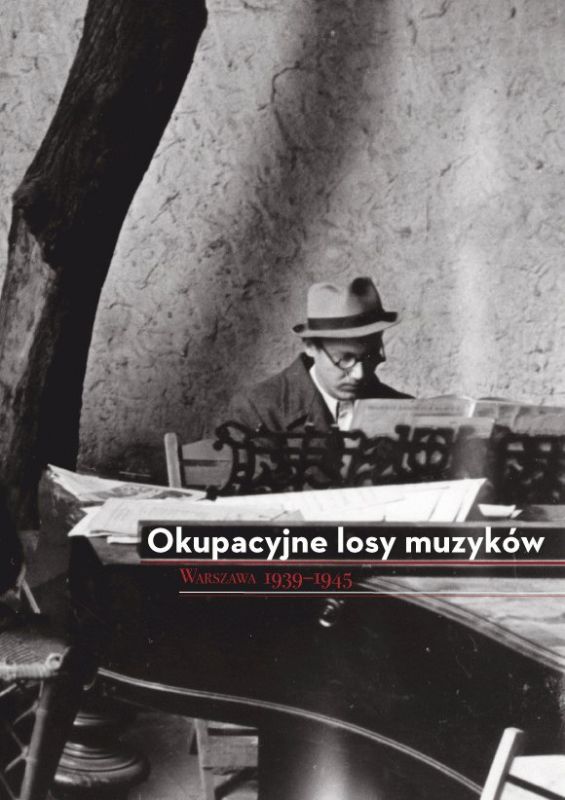
Back in October 2014, I reported briefly on a new 4-CD boxed set of recordings of Polish music composed, for the most part, during World War II.  Now a book of recollections has been published by the Witold Lutosławski Society in Warsaw to commemorate the composers and performers who went through and, in some cases, died during the Nazi occupation.  It has been put together by Elżbieta Markowska, formerly Head of Music at Polish Radio 2, and Katarzyna Naliwajek-Mazurek, who is the foremost specialist on Polish musical life in 1939-45 and contributes a 30-page essay to introduce Okupacyjne losy muzyków (The Fates of Musicians during the Occupation).

00172

Sadly, for non-Polish readers, it exists only in Polish.  But its photographic documentation more than makes up for any linguistic barrier.  There are photographs of daily life in Warsaw and of musical venues – the Warsaw Philharmonic, Grand Theatre and cafés – damaged during the war.  There are private photographs of the featured musicians, of their documents, letters and postcards (also transcribed alongside), posters, pages from scores and concert programmes, the vast majority of which have not been published previously.

The roster of composers, performers and writers is the most comprehensive yet assembled, although there are absences, possibly because of the lack of personal documentation.  The sources are varied and expertly marshalled, not least in the visual design of the volume, which runs to some 300 pages.  It is an intriguing and insightful compilation, and I hope it will sometime be published in English.  Here is the list of contributors in the order in which they appear:

Andrzej Panufnik (1914-91), composer, pianist and conductor: excerpts from his autobiography (already published in English and Polish), photos of rehearsals for the premiere of Tragic Overture (March 1944) and concert programmes, including one for the Lutosławski-Panufnik duo on 22 March 1942, when the repertoire of Mozart, Brahms, Schubert, Ravel and Albeniz was interlaced with Lutosławski’s Paganini Variations, a slow-fox by Cole Porter, paraphrases of Bizet and Johann Strauss and a jazzowa parafraza on Liszt’s Liebestraum no.3.
Witold Lutosławski (1913-1994), composer and pianist: mostly identity documents and family letters that mention Lutosławski; less extensive than Panufnik’s entry.
• Bolesław Woytowicz (1899-1980), composer (but not during occupation), pianist and initiator of one of Warsaw’s main musical cafés: various sources, including the diary begun while he was in Pawiak prison, plus recital schedules (he gave three complete cycles of the Beethoven sonatas).
Grażyna Bacewicz (1909-69), composer and violinist: mainly letters to her brothers.
• Halina Kowalska (1913-98), cellist, and her husband Henryk Trzonek (1912-43), viola player: Kowalska’s interview for Polish Radio in 1960, recollections by Włodzimierz Kusik of the street arrest and execution of Trzomek, plus reproduction of a poster naming the 100 victims of this police operation in December 1943.
• Jarosław Iwaszkiewicz (1894-1980), writer (cousin of Szymanowski): excerpts from published diary.
• Roman Padlewski (1915-44), composer and underground fighter: letters, accounts and documents; the most extensive entry in the volume.
• Eugenia Umińska (1910-80), violinist: documentation, recollections by Kazimierz Wikormirski (cellist) Stanisław Wiechowicz (composer), transcript (English) of brief interview for BBC radio in 1948.
• Grzegorz Fitelberg (1879-1953), conductor: letters to Stefan Spiess (1945).
• Edmind Rudnicki (1892-1957), pianist and underground organiser: recollections by others.
• Zofia Nałkowska (1884-1954), writer: excerpts from published diary.
 Roman Palester (1907-89), composer: fragments from typewritten memoirs.
• Zbigniew Drzewiecki (1890-1971), pianist: recollections.
Jan Krenz (b.1926), conductor and composer: recollections.
Marian Filar (1917-2012), pianist: recollections.
Andrzej Markowski (1924-1986), pianist and composer (later conductor) and underground fighter: documentation, Polish Radio archive; contributions from his wife Bogusława.  *The cover photo of Okupacyjne losy muzyków shows Andrzej Markowski playing at the Actors’ Café in Autumn 1944, during the Warsaw Uprising.
Jan Krzysztof Markowski (1913-80), composer (especially of underground songs) and pianist, brother of Andrzej: documentation and reproduction of two songs.
• Jerzy Waldorff (1910-99), writer and critic: excerpts from published diary.
• Władysław Szpilman (1911-2000), pianist and composer (subject of the film ‘The Pianist’): Polish Radio archive.


• ‘Warsaw Autumn’ Chronicle 2014

Screen Shot 2015-02-26 at 15.46.52The days are long gone when the ‘Warsaw Autumn’ Sound Chronicle contained only Polish repertoire.  The seven CDs of recordings from last year’s 57th festival have just been delivered by my postie and I can’t wait to delve into them, not least because of their mix of Polish and non-Polish pieces.  The boxed set is not available commercially but is made available to libraries, broadcasters and researchers on request to the Polish Music Information Centre.

Among the 2014 highlights are a blistering account of Serocki’s Pianophonie, intriguing sounds from Blecharz (although the work’s visual impact is missing), and a group of young composers from Kraków.  There are a few Polish absences from the festival programme, such as Hanna Kulenty’s Van… for piano four hands (2014)** and Andrzej Kwieciński’s Concerto. Re maggiore for harpsichord and orchestra (new version, 2013)**.  Here is the list of contents (Polish repertoire in bold).

CD1
Kazimierz Serocki: Pianophonie for piano, orchestra and electronic sound transformation (1978)  28’38”  with new computerised sound synthesis
• Jonathan Harvey: Body Mandala  14’33”
Marcin Stańczyk: Sighs for chamber orchestra (2008/2010-12)*  15’05”
• Simon Steen-Andersen: Ouvertures  17’06”

CD2
Jakub Sarwas:  Crépuscule du soir mystique for soprano and ensemble (2000-14)**  12’49”
Wojtek Blecharz: [one][year][later] for countertenor, flute, erhu, pipa, guzheng, yang qin and percussion (2014)**  23’30”
• Zygmunt Krauze: Rivière souterraine 2 for orchestra and electronics (2013)  19’09”
• Tansy Davies: Spiral House  22’49”

CD3
• Artur Zagajewski: brut for cello and ensemble (2014)  14’23”
• Philippe Leroux: Le cri de la pierre  8’44”
• Benjamin de la Fuente: Frôle  14’51”
• Ernesto Molinari & Theo Nabicht: 29,4 : 174,61  7’54”
• Leopold Hurt: Gatter  15’51”
• Raphaël Cendo: Action Painting  14’09”

CD4
• Wenchen Qin: Listen to the Valleys  11’31”
• Wenjing Guo: Late Spring  5’37”
• Guohui Ye: 964•Heterophony  9’49”
• Tato Taborda: Estratos  18’44”
• Canela Palacios: La permanencia  10’46”
• Cergio Prudencio: Cantos ofertorios  21’03”

CD5
• Mr Pebblestone in the World of Sounds**  22’05”  part of ‘Little Warsaw Autumn’: 12 minatures on earth, water, fire and air by twelve composers from the Kraków Academy of Music: Natalia Wojnakowska, Szymon Stanisław Strzelec, Renāte Stivriņa, Błażej Wincenty Kozłowski, Nadim Husni, Piotr Peszat, Piotr Roemer, Monika Szpyrka, Franciszek Araszkiewicz, Paulina Łuciuk, Martyna Kosecka and Kamil Kruk
• Cezary Duchnowski: Parallels for piano, MIDI keyboard, percussion and cello (2014)**  9’11”
• Wojciech Zimowit Zych: Roundflow/Throughflow/Outflow for eight spatially amplified cellos (2014)**  9’16”
• Szymon Stanisław Strzelec: The Hâsbeiya Fountain for spatially arranged ensemble (2012-13)  11’19”
Piotr Roemer: Re-Sublimations for strings and percussion (2012)  11’04”
Piotr Peszat: Interiør in Strandgarde for orchestra (2014)*  9’06”
Kamil Kruk: Parhelion for orchestra (2014)  3’52”

CD6
• Yuval Avital: REKA  72’23”

CD7
• Ewa Fabiańska-Jelińska: Allegro ma non troppo for vocal ensemble (2014)  3’51”
• Artur Żuchowski: Onion for a cappella choir (2014)  2’24”
• Kalina Świątnicka: Il rumore del silenzio for tape (2014)  7’20”
• Michał Dobrzyński: Elegy no.2. A Dialogue? for violin and live electronics (2007)  4’34”
• Tymoteusz Witczak: Signal/Noise for unspecified ensemble (graphic score, 2014)  4’05”
• Nikolet Burzyńska: Solarisss for tape (2014)  4’30”
• Marcin Piotr Łopacki: Folio no.2 for any solo string instrument (graphic score, 2006)  3’56”
• Andrzej Karałow: Shipyard Chant for bass clarinet and tape (2014)  3’53”
• Jarosław Drozd: X=Y for unspecified ensemble (graphic score, 2014)  6’30”

• Total Immersion: Henryk Górecki

News_Image_BBC_SOThe Barbican Centre, London, has just announced its programme for 2015-16.  Among the events are three BBC Symphony Orchestra ‘Total Immersion’ days devoted to Henryk Mikołaj Górecki (3 October 2015), Louis Andriessen (13 February 2016) and Henri Dutilleux (30 April 2016).

The programme for the Górecki day covers chamber, choral and orchestral music.  I am particularly pleased to see the programme for the final event, when the BBC SO will be conducted – for the first time – by Antoni Wit, with a line-up of exciting soloists.  The programme is terrific: the UK premiere of Kyrie and the effervescent Harpsichord Concerto, framed by two rarely performed but characteristically gritty and luminous works from Górecki’s late 30s.  It will be quite a day.

• 11.00  Talk: ‘Henryk Górecki, Polish Pioneer’; given by me…
• 13.00  String Quartets nos 1 (1988) and 2 (1991); Silesian String Quartet
• 15.00  Film: Please Find Henryk Mikołaj Górecki (2012, dir. Violetta Rotter-Kozera); introduced by me…
• 17.30  Totus Tuus (1987), Four Preludes (1955), Marian Songs (1985), Church Songs (1986, selection); BBC Singers, conducted by James Morgan, pianist tba
• 19.00  Learning Project culmination
• 19.30  Old Polish Music (1969), Kyrie* (2005), Harpsichord Concerto (1980), Second Symphony ‘Copernican’ (1972); Mahan Esfahani, Marie Arnet and Neal Davies, BBC Symphony Chorus, BBC SO, conducted by Antoni Wit; BBC recording co-presented by me…

[October 2015: the full programme notes are available here]

• WL100/1-81: The Complete List

 cropped-wl_photo_03
2015

January
• 2.01.15  WL100/1-81: The Complete List
• 1.01.15  WL100/81: Roussel 3, Lutosławski 3

2014

December
• 31.12.14  WL100/80: Lutosławski’s Chair
• 30.12.14  WL100/79: Jeux vénitiens conducting score
• 29.12.14  WL100/78: Jeux vénitiens pitch designs
• 28.12.14  WL100/77: Lutosławski’s French Bookmarks
• 27.12.14  WL100/76: Lutosławski Learns To Drive
• 26.12.14  WL100/75: Lutosławski’s Bookshelves
• 25.12.14  WL100/74: Lutosławski Rules!
• 24.12.14  WL100/73: Lutosławski’s Batons
• 23.12.14  WL100/72: Lutosławski’s Desk

2013

November
• 27.11.13  WL100/71: Lissa on Concerto for Orchestra
• 26.11.13  WL100/70: Concerto for Orchestra, **26.11.54
• 18.11.13  WL100/69: Livre, **18 November 1968
• 15.11.13  WL100/68: Nie oczekuję dziś nikogo
• 11.11.13  WL100/67: Notebook, 11 November 1961  on conducting
• 9.11.13  WL100/66: Overture, **9 November 1949

October
• 26.10.13  WL100/65: Mr and Mrs  Lutosławscy in Prague
• 24.10.13  WL100/64: Notebook, 24 October 1959  Webern
• 22.10.13  WL100/63: Mi-parti, **22 October 1976
• 19.10.13  WL100/62: Notebook, 19 October 1960  Pierre Schaeffer and objet sonore
• 15.10.13  WL100/61: Symphonic Variations
• 14.10.13  WL100/60: Cello Concerto, **14 October 1970
• 6.10.13  WL100/59: Lutosławski in Moscow (1951)

September
• 16.09.13  WL100/58: ‘old’ Derwid CDs
• 15.09.13  WL100/57: ‘el Derwid’ CD
• 6.09.13  WL100/56: Los Angeles (1985)  reposting of Lutosławski in Los Angeles (1985) (2.09.11)
• 5.09.13  WL100/55: Death of Lutosławski’s Father
• 3.09.13  WL100/54: Lutosławski and Panufnik (1945)
• 2.09.13  WL100/53: Trio, **2 September 1945

August
• 27.08.13  WL100/52: His Last BBC Prom
• 26.08.13  WL100/51: July Garland (1949) – the music
• 21.08.13  WL100/50: Volcano in Łowicz (1949)  Gałczyński
• 20.08.13  WL100/49: 22 July 1949 and a letter  July Garland
• 19.08.13  WL100/48: 22 July 1944 and after  Lutosławski’s medals
• 18.08.13  WL100/47: Folk Melodies, **22 July 1946
• 17.08.13  WL100/46: Notebook June-July

June
• 25.06.13  WL100/45: Trois poèmes, UK*25 June 1969
• 20.06.13  WL100/44: Paroles tissées, **20 June 1965
• 17.06.13  WL100/43: Variations, **17 June 1939
• 12.06.13  WL100/42: 33 ‘Derwid’ songs published

May
• 23.05.13  WL100/41: Symphony 4 (Polish premiere)
• 22.05.13  WL100/40: London Sinfonietta, 22 May 1993
• 18.05.13  WL100/39: Polar Music Prize, 18 May 1993
• 9.05.13  WL100/38: Les dessins de Michaux
• 9.05.13  WL100/37: Trois poèmes, **9 May 1963
• 8.05.13  WL100/36: Le songe de Desnos (1938)
• 4.05.13  WL100/35: Lutosławski in Riga

April
• 24.04.13  WL100/34: Jeux vénitiens, **24 April 1961
• 13.04.13  
WL100/33: Zanussi documentary (complete)
• 12.04.13  
WL100/32: Les espaces, **12 April 1978
• 9.04.13  
WL100/31: Notebook, 9 April 1969  on conducting (and Boulez)
• 7.04.13  
WL100/30: Notebook, 7 April 1960  on Cage
• 6.04.13  
WL100/29: Notebook, 6 April 1961  on ‘poor caricatures’
• 3.04.13  
WL100/28: Jazz Conversations (Lutosphere)

March
• 19.03.13  
WL100/27: Notebook, 19 March 1961  on rain and Jeux vénitiens
• 13.03.13  
WL100/26: Notebook, 13 March 1961 (2)  on electronic music
• 13.03.13  
WL100/25: Notebook, 13 March 1961 (1)  on feeling in music
• 11.03.13  
WL100/24: Notebook, 11 March 1961  on new instruments (and Jeux vénitiens)
• 9.03.13  
WL100/23: 9-10 March 1957  speech to Polish Composers’ Union
• 9.03.13  
WL100/22: Chain 1, figs 40-41

February
• 16.02.13  WL100/21: Funeral and Homily, 16.02.94
• 15.02.13  WL100/20: Dance Preludes, **15 February 1955
• 12.02.13  WL100/19: ‘Lutosławski live’, 12-19.02.93
• 12.02.13 WL100/18: Notebook, 12 February 1961  on his current music
• 6.02.13  WL100/17: Notebook, 6 February 1959  as a parachutist
• 2.02.13  WL100/16: Philharmonia Festival, 2-12.02.89

January
• 26.01.13  WL100/15: Thank-you note, 26 January 1993
• 22.01.13  WL100/14: Lutosławski at Polish Radio  new archival website
• 19.01.13  WL100/13: In Conversation with Zanussi
• 17.01.13  WL100/12: ‘Breaking Chains’, BBC 1997
• 16.01.13  WL100/11: ‘The Hidden Composer’  Witold Lutosławski and Polish Radio
• 13.01.13  WL100/10: ‘Breaking Chains’, GSMD 1997
• 12.01.13  WL100/9: Lutosławski’s Carpet
• 10.01.13  WL100/8: Musique funèbre, 10 January 1958
• 5.01.13  WL100/7: Lutosławski info online
• 3.01.13  WL100/6: Epitaph, **3 January 1980
• 2.01.13  WL100/5: Notebook, 2 January 1963  on Cymer the carpenter

2012

December
• 31.12.12  WL100/4: Lutosławski Likenesses
• 20.12.12  WL100/3: Lutosławski in Belfast (gallery)
• 18.12.12  WL100/2: Lutosławski in Belfast (DMus)
• 17.12.12  WL100/1: Lutosławski in Belfast
• 17.12.12  WL100