• More Szymanowski from Doctor Hughes

William Hughes has been busy translating more Polish accounts of Szymanowski to extend the list that I linked to on 28 March (The Chronicles of Dr Hughes). The thirteen new translations include accounts of the Paris premiere in 1935 of the ballet Harnasie (Mountain Robbers) by Szymanowski’s secretary Leonia Gradstein and his young friend, the composer Zygmunt Mycielski.  There are three further articles by Mycielski and contributions from the writer Jarosław Iwaszkiewicz.  Iwaszkiewicz was Szymanowski’s cousin and the co-author with the composer of the libretto for Szymanowski’s opera King Roger.  Iwaszkiewicz’s three articles about King Roger are particularly interesting.  The highlight of William Hughes’s new translations is the account of Szymanowski’s sister Stanisława of the composer’s last days.  She is remarkably frank and detailed, and her emotional description is still moving today, 75 years after his death.

I’m posting links to these new translations below, starting with the most recent. Further down the page I’ve reprinted the list from 28 March, so that they can be viewed together.

You can find The Chronicles of Doctor Hughes at http://drwilliamhughes.blogspot.co.uk/.

• 12.05.12  Jarosław Iwaszkiewicz – ‘Szymanowski’s ‘King Roger” (‘Wiadomość Literackie’ 1926, nr 26)
• 11.05.12  Jarosław Iwaszkiewicz – ‘Ahead of the premiere of King Roger’ (‘Wiadomość Literackie’ 1926, nr 25)
• 10.05.12  Jarosław Iwaszkiewicz – ‘The History of ‘King Roger” (‘Muzyka’ 1926, nr 6)
• 8.05.12  Jarosław Iwaszkiewicz – ‘My composition lessons with Szymanowski’ (‘Muzyka Polska’ 1939, nr 3)
• 5.05.12  Stanisława Korwin-Szymanowska – ‘The Last Days of Karol Szymanowski’ (‘Muzyka Polska’ 1937, nr 4) [part III]
• 1.05.12  Stanisława Korwin-Szymanowska – ‘The Last Days of Karol Szymanowski’ (‘Muzyka Polska’ 1937, nr 4 [part II]
• 26.04.12  Stanisława Korwin-Szymanowska – ‘The Last Days of Karol Szymanowski’ (‘Muzyka Polska’ 1937, nr 4 [part I]
• 22.04.12  Zygmunt Mycielski – ‘Szymanowski’s Horizon’ (‘Nowiny Literackie’ 1947, nr 3-4)
• 16.04.12  Zygmunt Mycielski – ‘Szymanowski – the Romantic?’ (‘Odrodzenie’ 1947)
• 11.04.12  Mycielski reminisces… (‘Muzyka Polska’ 1937, no.4)
• 8.04.12  Zygmunt Mycielski – ‘Harnasie in Paris’ (‘Prosto z mostu’ 1936, nr 19)
• 4.04.12  Leonia Gradstein – ‘Harnasie in Paris’ (‘Ruch Muzyczny’ 1948, nr 3) [Part II]
• 1.04.12  Leonia Gradstein – ‘Harnasie in Paris’ (‘Ruch Muzyczny’ 1948, nr 3) [Part I]

• 28.03.12  Szymanowski’s Piano Concerto [Part II] (1950)
• 28.03.12  In memoriam Karol Szymanowski (28/03/1937)
• 24.03.12  Szymanowski’s Piano Concerto [Part I] (1950)
• 19.03.12  Tadeusz Baird – ‘Szymanowski’s music has always meant so much to me’ (1979)
• 17.03.12  Stefan Kisielewski – ‘Karol Szymanowski’s Final Journey’ [Part Three] (1937)
• 15.03.12  Stefan Kisielewski – ‘Karol Szymanowski’s Final Journey’ [Part Two] (1937)
• 10.03.12  Stefan Kisielewski – ‘Karol Szymanowski’s Final Journey’ [Part One] (1937) 
• 4.03.12  ‘The Myth of Karol Szymanowski’ – Stefania Łobaczewska (‘Muzyka’ 1937, nr 4-5)
• 28.02.12  Paying Homage (Part IV): Roman Maciejewski (‘Muzyka’ 1937, nr 4-5)
• 24.02.12  Paying Homage (Part III): Zygmunt Mycielski (‘Muzyka’ 1937, nr 4-5)
• 22.02.12  Paying Homage (Part II): Piotr Perkowski (‘Muzyka’ 1937, nr 4-5)
• 21.02.12  Paying Homage (Part I): Jan Maklakiewicz (‘Muzyka’ 1937, nr 4-5)
• 17.02.12  ‘The Breath of Greatness’: Lutosławski on Szymanowski (‘Muzyka Polska’, 1937, No 4)
• 13.02.12  Andrzej Dobrowolski analyses Szymanowski’s ‘Preludium and Fugue’ (‘Ruch Muzyczny’, 1948 nr.20)
• Polish Radio Choir axed

News came through last night that Polish Radio, as feared, has confirmed the announced disbanding of its world-renowned Choir. Despite widespread protests from within and outside Poland, including a belated online petition, the choir, numbering over 30 members, will cease to exist in a few months’ time.*

To say that this is regrettable is an understatement. The Polish Radio Choir has a distinguished history stretching back over 60 years, notably of giving premieres of music by Polish composers, including that by Gorecki and Penderecki. The choir has been one of Poland’s most effective cultural ambassadors and it will be sorely missed.

There is, apparently, an outside chance that it might survive if the Ministry of Culture, Polish Radio and the regional government in Krakow can agree some sort of rescue package for the choir outside its current ‘home’ at Polish Radio. But the last of these three bodies has already turned down this proposal once, so this cobbled-together idea seems most unlikely. A sad day.

* I wrote a couple of weeks ago in more detail about the likelihood of this happening.  See my post of 1 March 2012.

Serocki: A Severe Case of Neglect

If by its deeds a country disposes of or ignores its heritage, it can hardly expect that heritage to be known or appreciated abroad.  And when composers die, it’s a truism that their music often slips from the concert hall or the airwaves.  Some buck the trend: Lutosławski hasn’t done too badly since he died in 1994, and it’ll be interesting to see how much is made both in Poland and, more particularly, abroad, during the centenary of his birth in 2013.  Not that I’m that fixated on anniversaries, but they are a useful tool for the celebration, or to remind us, of somebody or something which has fallen by the wayside and been forgotten.  Such is the case with Kazimierz Serocki (1922-81).

Today – 3 March 2012 – is the 90th anniversary of Serocki’s birth.  Any sign of a commemoration in Poland?  None that I can see.*  Anywhere else?  Nope.  On the other hand, Witold Szalonek, who was born on 2 March, was accorded an 85th-anniversary concert in Katowice last night, and thoroughly deserved it was too.  But nothing for Serocki, it seems.  Even the author of the one major  book on him, Tadeusz A. Zieliński, has now gone – he died a week ago.  Symptomatic of Serocki’s disappearance from view was the total absence of his music from a large-scale American public radio festival of Polish music in January (see my post of 25.01.12).  For someone who had been at the epicentre of Polish musical life for over 30 extraordinary years, this was cruel.

* The only immediately forthcoming performance that I have been able to locate is of the orchestral Dramatic Story (1970), one of his most persuasive and inventive pieces.  It’s being played in three weeks’ time,  on 23 March 2012, in the inaugural concert of the ‘Poznań Spring’ Festival of Contemporary Music.

Serocki’s imaginative, experimental, avant-garde and often witty output from the late 1950s onwards has also been largely ignored by the record industry, even before the advent of CDs.  The pat answer for this neglect might be that he died prematurely, aged 58. Had he lived into the digital age, I am convinced that he would now be better known. A more complex response would revolve around the nature of his output, which remained wedded to the experimental ethos of the 1960s, even at the end of his life when other composers around him were moving with the times and rounding off the edges of their radicality.

Commercial CDs

• 1951: Piano Concerto, DUX 0651 (rec.1999)
• 1952: Suite of Preludes for piano, nos 2-4, OCD 316 (1973)
• 1953: Suite for four trombones, BIS CD-694 (1994)
• 1953: Trombone Concerto, BIS CD-538 (1991)
• 1954: Sonatina for trombone and piano, Crystal CD 380 (1978), BIS CD-318 (1985)
• 1956: Sinfonietta for two string orchestras PNCD 474 (1959) – the last of Serocki’s neoclassical pieces

• 1963: A piacere for piano, AP 0016 (1999) – an open-form piece
• 1966: Continuum for six percussionists, OCD 324 (1982) – a spatial anticipation of Xenakis’s Persephassa

…….

Rather than launch into a detailed account of his music, here are some links which will give you some idea of his life and music.  You can judge for yourself.  By following them, you will be contributing to the dissemination of Serocki’s dynamic and distinctive music, so thank you!

YouTube

A larger number of works both pre-1956 and afterwards has been uploaded than is available on commercial CD. (There is a choice of amateur and professional performers of the early, neoclassical-based repertoire.)  The list of uploaded music from 1956 onwards is still meagre (only one of the seven pieces below is a true video file).

• 1956: Sinfonietta http://www.youtube.com/watch?v=BIkH6Dp7m5c (see CD recording above)
• 1959: Episodes for strings and three percussion ensembles http://www.youtube.com/watch?v=UHy7sTSsI_c (unknown source, possibly LP: XL 0267) – a key work in the development of spatial music in the 1950s and 60s
• 1961: Segmenti for ensemble http://www.youtube.com/watch?v=9XhpblSJmew (unknown source, possibly LP: XL 0267)
• 1964: Symphonic Frescoes http://www.youtube.com/watch?v=u14yrb6BDGI (from LP: XL 0267) – one of his most extrovert pieces
• 1966: Continuum http://www.youtube.com/watch?v=86BE0zrQ1B4 (see CD recording above)
• 1970: Swinging Music for clarinet, trombone, cello and piano http://www.youtube.com/watch?v=4-hS4nkg-dE (this is the only video in this list: the performers are the miXte Ensemble, and it was uploaded just five weeks ago) – probably his best-known and most frequently performed piece, a send-up of the extended instrumental techniques of the time, but in a foreign idiom. I’ve performed this myself (piano), and it’s good fun.
• 1978: Pianophonie for piano, electronics and orchestra [in three uploads:] http://www.youtube.com/watch?v=t_QPPkB7lkUhttp://www.youtube.com/watch?v=RuPFPh45yx0http://www.youtube.com/watch?v=w5FF5WxoQLc, [or in a single upload:] http://www.youtube.com/watch?v=eJt5zotNk10 (from LP: SX 1850) – with electronic manipulation of the solo piano part

Online Information

• http://www.usc.edu/dept/polish_music/composer/serocki.html
• http://www.unsungcomposers.com/forum/index.php?topic=1999.0
• http://www.pytheasmusic.org/serocki.html
• http://www.culture.pl/web/english/resources-music-full-page/-/eo_event_asset_publisher/eAN5/content/kazimierz-serocki

• Polish Radio Choir to be liquidated?

Chór Polskiego Radia (1948-2012?)

Last November, I joined the Polish Radio Choir in Durham for the start of its UK tour.  Yesterday, I learned that, unless Polish Radio relents, the choir is to be liquidated.  It’s a strong term, ‘liquidation’, reserved for businesses or the horrors of ethnic cleansing.  But it’s the one chosen by Polish Radio to describe its decision about the Kraków-based Radio Choir.  Coming on the eve of the 75th anniversary (today) of Polish Radio’s cultural channel PR2 (the equivalent of BBC R3 in the UK), this news could hardly have been more pointed.

There is still an outside chance that the choir will be saved, but it looks like a forlorn hope.  The Minister of Culture yesterday reiterated his offer of an annual subsidy of 800,000 zł.  It was there on the table before the Polish Radio Management Board took its executive decision last week, but it had no effect.  800,000 zł is a sizeable offer – the equivalent of c.£162,630 – and represents almost 50% of the total annual cost of the choir, £1.7m zł (= c.£345,589). In the larger scheme of things, it’s not a huge sum of money to pay each year for such a world-class ensemble (individual annual salaries must average around £10K). Whether Polish Radio reverses its decision at the meeting of its Supervisory Board on 15 March is anybody’s guess, but the omens do not look good.

Whatever public hand-wringing goes on, whatever platitudes are uttered about painful decisions and whatever regrets expressed (and how hollow such sentiments ring), the fact is simple.  Like any organisation that finds itself in financial straits, priorities are made and if an individual or group is not deemed central to future operations, then that’s it.  Polish Radio evidently thinks that this outstanding choir is no longer essential, even though it has been a key part of its cultural strategy since the choir was founded in 1948.  It has been one of its most distinguished – and economically effective – cultural ambassadors.  If Polish Radio had wanted to keep the choir, it could and would have, and some other sector of the organisation would have suffered instead.  I’m not in a position to know what elements in Polish Radio’s current programming policy are more central, more essential or more worth saving, but you can bet your bottom złoty that they ain’t going to add quality to its cultural programming.

One of the key elements in any public broadcasting strategy is to provide programming initiatives that are distinctive. In music, that requires ‘house’ orchestras and other ensembles, like specialist choirs.  With far fewer commercial pressures than independent orchestras and choirs, these performing bodies are in a position to put on concerts whose repertoire can often, indeed should be more adventurous and wide-ranging.  The BBC Singers, whose history dates back almost 90 years to the mid-1920s, are, at 24 singers, fewer in number than their Polish counterparts but fulfil a similar function, with challenging and less frequently performed repertoire at their core. Fortunately, the BBC Singers seem secure in the BBC’s cultural strategy, but if they were ever to come under threat the outcry would be enormous.

Polish Radio, however, has ridden roughshod over the national outcry at its decision.  All the major cultural institutions in Poland – including the Ministry of Culture and its generous offer of recurrent subsidy – plus numerous individuals, including senior composers such as Krzysztof Penderecki and Wojciech Kilar, have argued cogently against it, but to no avail.  If nothing changes a fortnight today, the choir will be disbanded this summer.

I have a personal reason to be dismayed by this, as I took part (giving pre-concert talks) in the choir’s UK tour last November.  They sang at Durham Cathedral, King’s Place in London, St George’s in Bristol and St George’s Hall in Liverpool.  They gave wonderfully attuned performances of a cappella pieces by their compatriot Henryk Mikołaj Górecki, who had died just a year earlier.  Audiences were mesmerised not just by the music but by the exceptional quality of the choir’s sound.  Enthusiastic applause and standing ovations were instinctive responses.

This is a lamentable turn of events, and an unwarranted farewell is on the cards.  One last, unexpected memory for me was from the choir’s first night, in Durham Cathedral.  They had hardly begun the concert, with Górecki’s peaceful Totus Tuus, when the building seemed to be assaulted by a barrage of explosions as if we were under siege.  Not a single singer blinked, no-one looked askance, no voice wavered.  They didn’t know it, but it was Bonfire Night.  I am sure that they will bear the next few months with similar dignity and sense of musical purpose if the worst comes to the worst.

If you want to write a letter of protest, you can do so by contacting the President of the Polish Radio Supervisory Board, Mr. Stanisław Jędrzejewski (who will chair the board meeting on 15 March), at <marta.rybak@polskieradio.pl>.

• Early Music Show: Polish playlist

Tomorrow and on Sunday, at 13.00-14.00, BBC Radio 3’s Early Music Show is devoting its attention to Renaissance and Baroque music from Poland.  Saturday’s programme is a CD compilation; Sunday’s is a broadcast of music from a concert given by the Retrospect Ensemble at last year’s Lufthansa Festival in London (I posted on this two weeks ago under Baroque Rocks).  Now that the programme details of the Saturday broadcast are available, I thought I’d pop them up alongside those for Sunday’s.  Both programmes are presented by Lucie Skeaping, with me chipping in with the odd Polish word on the Sunday.

Saturday, 25 February 2012, 13.00-14.00

Johann Adolf Hasse (1699-1783): March of the King of Poland
Wacław z Szamotuł (c.1524-c.1560): Six Polish Songs
Giovanni Anerio (c.1567-1630): Jubilemus in arca Domini Dei
Mikołaj Zieleński (c.1550-c.1616?): Magnificat
Balint Bakfark (1507-76): Czarna krowa (Black Cow)
Matthäus Waissel (c.1540-1602): Polish Dance
Wojciech Długoraj (c.1557/8-after 1619): Fantasia and Chorea polonica
Bartłomiej Pękiel (?-c.1670): ‘O vita ista misera’ from the dialogue Audite mortales 
Franciszek Lilius (c.1600-57): Tua Jesu dilectio
Johann Adolf Hasse: Dance of the King of Poland

The eagle-eyed will have noticed that there are some non-Polish composers here.  Foreign musicians played an important part in Polish culture in the Renaissance and Baroque periods, among them the Italians Luca Marenzio and Marco Scacchi.  Anerio was another.  He spent the last six years of his life as choirmaster to King Sigismund III in Poland.  The Hungarian Bakfark also had strong Polish connections.  Hasse, though German, was musically an Italian and seems to have been almost entirely successful in avoiding Poland and Warsaw when his employer’s court moved there from Dresden.  Waissel, the earliest composer in the programme, was German through and through, with no connection to Poland of which I am aware, so his Polish Dance must have been one of the genre of ‘characteristic national’ pieces that found their way into many lute tablatures in the Renaissance and early Baroque.

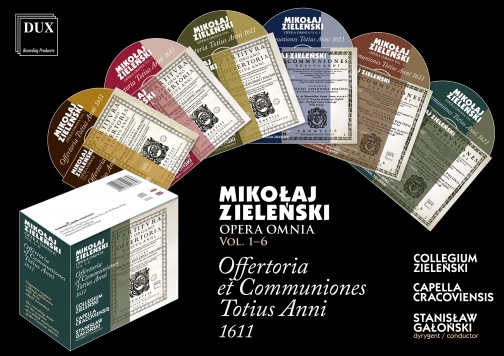
The Polish composers – z Szamotuł, Zieleński, Długoraj, Pękiel and Lilius – were key participants in their country’s musical development.  The ‘Six [Religious] Polish Songs’ by z Szamotuł were not envisaged as a collection, but individually are among the most beautiful choral songs of the 16th century.  My favourite is Modlitwa: Już się zmierzcha (Prayer: Dusk Is Falling), which was also one of Górecki’s ‘found’ treasures – he used it in three of his pieces.*  Zieleński’s Magnificat is his crowning glory.  Compared with the little that has survived of the music by other Polish Renaissance and Baroque composers, Zieleński’s surviving output is enormous and the DUX label in Poland has just issued a 6-CD set of his Offertoria et Communiones Totius Anni 1611 (DUX 0864).  The second programme in this Early Music Show Polish weekend has more music by Zieleński.

The music by Długoraj (as well as by Bakfark and Waissel) is for lute.  All three were noted players of their day.  The music of Pękiel is too little known outside Poland, and this programme includes his Advent ‘dialogue’ Audite mortales, based on a paraphrase of the biblical account of the Last Judgment.  Lilius was Pękiel’s predecessor at Wawel Cathedral in Kraków.  He was the son of an Italian musician and his music embodies many of the different styles that came to characterise this era in Polish music.

* In the event, only three of the six songs by z Szamotuł were played (and they didn’t include Modlitwa!).

Sunday, 26 February 2012, 13.00-14.00 (see Baroque Rocks)

Adam Jarzębski (before 1590-after 1648): Canzon quinta
Mikołaj Zieleński (c.1550-c.1616?): Domus mea
Stanisław Sylwester Szarzyński (fl.1692-1713): Iesu spes mea
Adam Jarzębski: Chromatica
Damian Stachowicz (1658-99): Veni consolator
Grzegorz Gerwazy Gorczycki (1665(7?)-1734): Completorium

• New Concert Hall for Katowice

Not before time, and after several years of planning, the building contract was signed today for a new concert hall in Katowice, Poland.  Its ambitious completion date is by the end of next year.  It will be the home of the Polish Radio National Symphony Orchestra (NOSPR) and will also include a chamber-sized hall.

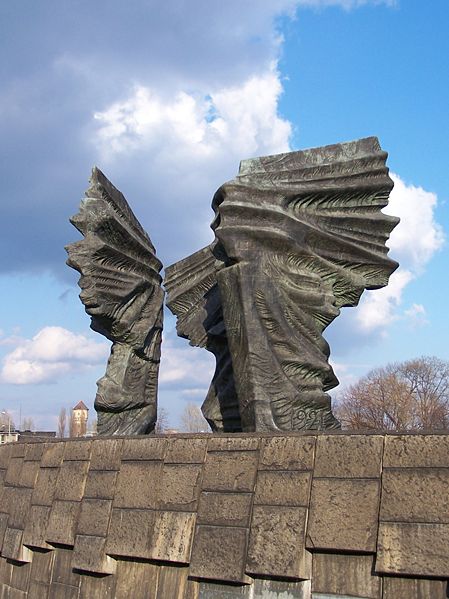
The new hall will be situated to the north of the city centre, not far from where the composers Henryk Mikołaj Górecki and Witold Szalonek lived, as well as the conductor Jan Krenz.  Its near neighbours will be the monument to the three Silesian Uprisings of 1919-21

and the Flying Saucer arena (Spodek), below.  I remember being taken aback by both the monument (1967) and this space-age construction (1971) as I walked to my first meeting with Górecki in Spring 1972.

The new concert hall will seat 1800, the chamber hall 300.  Here’s a promotional and rather stylish virtual tour of the new building, with both the monument and the arena appearing in the final image. The building’s columnar exterior seems to be a reference to the architecture of the brown-brick miners’ community built outside Katowice at Nikiszowiec at the start of the 20th century.  It is well worth a visit.

Although the video’s sound-track uses Brahms, I’m told that the huge music relief on the curved wall in the atrium will be from the manuscript of Beethoven’s Ninth Symphony.

• Baroque Rocks

I’ve just returned from recording another interview for BBC Radio 3, this time for The Early Music Show.  I almost didn’t make it, as I thought it began an hour later than it did and it took a wild cross-country dash to Radio Devon in Plymouth to get me into the studio only 15 minutes late.  Not 20th-century Polish music this time, but a recording of Polish gems from the Baroque period. I was probably brought in only because I can pronounce the composers’ names …!  It was fun talking with Lucie Skeaping and no doubt the producer Chris Wines will make sense of my bzdura (gobbledegook).

I am constantly amazed by the richnesses of Polish music before 1750.  The great misfortune is that most of us never hear it.  Why?  Well, so little has survived multiple acts of war (notably World War II), so little was printed at the time, and very few CDs and scores make it outside Polish borders today.  When a rare concert of early Polish music takes place, do go, as you will be astonished by its beauty and vitality.  Happily, Radio 3 picked up a concert given by the Retrospect Ensemble at last year’s Lufthansa Festival in London and is broadcasting most of it on The Early Music Show – alongside another concert of early Polish music – on Saturday 25 and Sunday 26 February, 13.00-14.00:

Adam Jarzębski (before 1590 – after 1648): Canzon quinta
Mikołaj Zieleński (c.1550 – c.1616?): Domus mea
Stanisław Sylwester Szarzyński (fl.1692 -1713): Iesu spes mea
Adam Jarzębski: Chromatica
Damian Stachowicz (1658-99): Veni consolator
Grzegorz Gerwazy Gorczycki (1665(7?)-1734): Completorium

Jarzębski has left only 27 compositions, all instrumental.  He was a talented man: composer, violinist, poet, author of the first ever guide to Warsaw, and architect to the king.  The title of his Chromatica reveals its unexpectedly dark heart, which seems to have sprung from a madrigal [the automatic spell-checker ‘corrected’ this to ‘marital’] by Monteverdi or Gesualdo.  All that’s missing is an Ohime! or two.  Here’s a video which aptly counterpoints the music with pictures of the Ujazdowski Palace just outside Warsaw’s city centre.  In Jarzębski’s time, it would have been in the country.  Its appearance today is rather more developed than it was when Jarzębski was its Intendant of Works.

The vocal pieces in the broadcast are very varied, ending with one of the glories of the Polish Baroque, Gorczycki’s Completorium, with its inspired mix of stile antico and stile moderno.  For now, here’s one of the other great beauties of this period, Iesu spes mea by Szarzyński.  This Cistercian monk left barely a dozen pieces, but this is a real jewel.

It’s particularly interesting because it is based on a Polish hymn for the dead and does interesting things with the tune.  Here’s the original hymn – Przez czyśćcowe upalenia – and translation of the first verse:

Through purgatorial fires (Przez czyśćcowe upalenia)
Which take away the sins (Którzy gładzą przewinienia)
Shedding tears without consolation (Łzy lejąc bez pocieszenia)
They beg Your mercy (Żebrzą Twego użalenia)
O Mary! (O Maryja!)

Szarzyński takes this, puts it into 3/4 with the first downbeat on the first Bb, and ornaments it.  The hymn itself is strangely constructed in its phrasing (though it’s quite typical for Polish hymns and folk tunes), but Szarzyński does wonderfully unexpected things with it.  The soprano’s first entry – ‘Jesus, my hope, my comfort’ (Iesu spes mea, Iesu solarium meum) – has two four-bar phrases followed by a five-bar phrase, and this fluid approach continues once the two violins enter.  Yet such ‘irregularities’ seem relaxed and unforced.  I particularly like the contrasting. almost desperate urgency of the middle section, with its repeated alliteration – ‘In you will I hope, to you will I cry out, I will sing to you, I will adore you, I will beseech you, I will give you my heart’ (In te sperabo et reclamabo, tibi cantabo, te adorabo, te invocabo, tibi cor dabo).

This concert performance by the Polish group Risonanza is a bit slow for my taste, there is some audience noise, and the camera position means that the vocal soloist is mostly out of sight … But listen to Retrospect Ensemble on 26 February for a really tight interpretation and a fantastic diminuendo at the very end.

• Altstaedt plays Lutosławski

A couple of hours ago I heard an electrifying performance of Lutosławski’s Cello Concerto (1970) on BBC Radio 3.  It was by Nicolas Altstaedt, with the BBC Symphony Orchestra conducted by the Polish conductor Michał Dworzyński.  After digging around on the web for further information, I believe that this recording was made on 26 October 2010 in the BBC Maida Vale studios.  The dynamism as well as sensitivity of Altstaedt’s approach to this work is already in evidence on a three-part YouTube upload (see my post of 4 December 2011), but unfortunately the second and third parts are marred by dislocation between sound and vision.

Today’s performance was a couple of minutes longer than Altstaedt’s YouTube recording, but it lost nothing in its immediacy and intimate understanding of the composer’s dramatic concept.  Catch it if you can: it’s available for the next seven days only, via http://www.bbc.co.uk/programmes/b01blr2y#synopsis (click on Listen Now).  It begins two hours in.

I hope that there are plans for Altstaedt to record the Lutosławski commercially.  That really would be something to look forward to.

• Iwaszkiewicz on Górecki

The recently published third and final volume of diaries by the Polish poet, playwright and novelist Jarosław Iwaszkiewicz (Warsaw: Czytelnik, 2011) has brought to light some interesting comments on music.  Despite showing intense bitterness and self-absorption on political matters (he had, to say the least, a controversial history of working with the communist establishment since 1945), Iwaszkiewicz (1894-1980) had some keen insights on cultural matters.  His background in music went back to his early years when, as Szymanowski’s younger cousin, he not only suggested the idea for and wrote the libretto of King Roger (1918-24) but also provided Szymanowski with translations of Rabindranath Tagore for the Four Songs and his own poems for Songs of an Infatuated Muezzin, both written in 1918.  He also provided the verse for Szymanowski’s Three Lullabies (1922).

Here are three diary entries which have been drawn to my attention by a friend in Warsaw, who also kindly provided the translations.  The first, from 1966, is a tart nostalgia for the musical past.  The second (1969) and third (1977) entries contain somewhat surprising observations on two pieces by Henryk Mikołaj Górecki, who was the only Polish composer to whom Iwaszkiewicz paid any detailed attention in these diaries.  I’ve added some contextual information to two of the three entries.

8 August 1966

W radio ostatni obraz Harnasi  i Infantka Ravela.  Wierzyć się nie chce, że oni byli, żywi, prawdziwi, dotykalni.  Karol!  Ravel!  Co za postaci półpowieściowe, nieuchwytne, niewyobrażalne.  Czy rzeczywiście nie ma już takich ludzi?  Czy tylko mi się wydaje, bo jestem stary i zmęczony, i nie widzę, co mam pod bokiem.  Lutosławski?  Penderecki?  Mój Boże, chyba tego nie można porównać.  Może  w ogóle teraz nie ma artystów.  Może tamci jako ‘artyści’ naprawdę należeli do XIX wieku?  Jak Chopin, jak Liszt?

On the radio, the last scene of Harnasie and Ravel’s Infante.  I do not want to believe that they were here, living, real, tangible.  Karol!  Ravel!  What characters, half taken from a novel, elusive, unimaginable.  Are there really no such people any more?  Or is it only my impression, because I am old and tired and do not see what I have close at hand.  Lutosławski?  Penderecki?  My God, surely one cannot make any comparison.  Perhaps there are no artists at all now.  Perhaps those men, as ‘artists’, truly belonged to the 19th century?  Like Chopin, like Liszt?

24 September 1969

Taka cudowna noc dzisiaj księżycowa.  I pomyśleć, nie mam nikogo, z kim bym mógł wyjść na spacer po ogrodzie.  Hania° nie wychodzi nigdy do ogrodu, zwłaszcza po zachodzie słońca.  Wysłuchałem tylko co Muzyki staropolskiej Góreckiego.*  Monotonne to, ale bardzo ‘wielkie’.  O szerokim  oddechu, prymitywne, z puszczą, z wiatrem, z mordem.  Nic z lukrowanego obrazka a la Wołodyjowski.†  Chyba taka Polska jest prawdziwa.

Such a wonderful moonlit night tonight.  And to think that I have no one with whom I could go for a walk in the garden.  Hania° never goes out into the garden, especially after sunset.  I have just listened to Gorecki’s Old Polish Music.*  Monotonous this, but very ‘great’.  Broadly breathed, primitive, with a primeval forest, with wind, with murder.  Nothing like the sentimental picture-book that is Wołodyjowski.†  Such is perhaps the true Poland.

° Iwaszkiewicz’s wife, Anna
* This must have been the live broadcast on Polish Radio of the world premiere, given by the National Philharmonic SO, conducted by Andrzej Markowski, as part of the 12th ‘Warsaw Autumn’ International Festival of Contemporary Music.
† Wołodyjowski: a reference to a recent feature film Pan Wołodyjowski (Jerzy Hoffman, 1969) which was based on Henryk Sienkiewicz’s historical novel of the same name (1888).

8 September 1977

Iwazkiewicz at Baranów, 1977

Iwaszkiewicz gave the opening paper at a conference of musicologists and musicians at Baranów, 4-12 September 1977.  He made this diary entry after the delegates had listened on 7 September to a recording of Górecki’s Third Symphony ‘Symphony of Sorrowful Songs’ (1976).  This must have been a tape of the world premiere given in Royan five months earlier as the piece had not yet been performed in Poland (it was given its Polish premiere at the ‘Warsaw Autumn’ on 25 September 1977).

[…] tak od czasu do czasu wpisywać jakieś laments daje fałszywe wyobrażenie o całym continuum wewnętrznym, które wcale nie składa się wyłącznie z lamentów.  Nie jest też tym continuum przerażającym, jakie wczoraj zaprezentował Górecki w swojej III Symfonii.  Beznadziejny powrót tego samego akordu w pierwszej części symfonii sprawia wrażenie psychopatyczne, maniakalne, a jednak wstrząsające – właśnie jako continuum wewnętrznego, czegoś bardzo głębokiego i tragicznego jakby w założeniu, bez dramatycznych zawołań, bez żadnego ‘teatru dla siebie’.  To bardzo dziwny i niepokojący utwór.

[…] writing down from time to time laments of some kind gives a false impression of the whole internal continuum, which does not at all consist solely of laments.  Nor is it a terrifying continuum, of the kind presented yesterday by Gorecki in his Third Symphony.  The hopeless return of the same chord in the first movement of the symphony makes a psychopathic, maniacal, and yet shocking impression – exactly like an inner continuum, something very deep and almost tragic in its assumption, without dramatic calls, without any ‘theatre for theatre’s sake’.  A very strange and unsettling piece.

• A Polish Quintet

On the plus side of the recent WQXR Q2 Muzyka Nowa week of Polish music was being introduced to the music of a handful or so of composers who are still in their mid 20s to late 30s.  The five whom I mentioned briefly at the end of my review of Muzyka Nowa all have something different and interesting to say.  So here are a few details, the odd observation, and some links.  Each has his/her own website, either entirely in English or in English/Polish, where you can find all the details that they want you to know!

Jakub Ciupiński (b.1981)

http://www.ciupinski.pl/
http://www.myspace.com/jakubciupinski

Jakub Ciupiński presented two short guest selections during Muzyka Nowa and was without doubt its star broadcaster.  He studied at the Music Academy in Kraków, then at the Birmingham Conservatoire in the UK before moving on to the Juilliard School in New York, where he now lives.  He has two compositional personalities.  As (Jakub) Żak, he’s composed pop-electronica-world albums, the most recent of which is Dezyderata (2011). As Jakub Ciupiński, he has a wide range of output, from chamber and orchestral to live electronics. His elegant website has audio samples – including Morning Tale (2009) and Street Prayer (2009), which were played during Muzyka Nowa – and a video of the premiere of Flashbacks for small orchestra and electronics (2009).  There are several uploads available on YouTube, including a two-part interview (in Polish, with video excerpts).

I was particularly interested to see that Ciupiński has brought the art of the theremin back to life: http://www.ciupinski.pl/Jakub_Ciupinski_-_homepage/Theremins.html.  In 2009, Ciupiński co-founded a composer collective called Blind Ear Music, ‘a team of open-minded composers and great performers with incredible sight-reading ability’.  Its activities are predicated on the real-time manipulation of loops, transmitted from a ‘master’ computer (composer) to ‘slave’ computer screens (performers).  This is an aesthetic as well as a technical challenge, and you can check it out for yourself on their website, Blind Ear Music.  (There doesn’t appear to have been any concert activity over the past year, however.)

(Michał) Jacaszek (b.1972)

http://www.jacaszek.com/
http://www.myspace.com/jacaszek

Jacaszek, as he prefers to be known, is the best known, and oldest, of these five Polish composers.  I know nothing about his background, except that he was trained as an art restorer and that his first compositional foray was to rip a recording by Jack DeJohnette and Keith Jarrett on the family’s PC in the mid-90s (source: a 2011 interview for the Czech radio station ‘Wave’: http://soundcloud.com/easterndaze/michal-jacaszek-interview).  His website indicates his decided preference for acoustic over electronic sound sources.  He’s particularly keen on the interaction of live instruments with electronically manipulated sound sources.  Jacaszek’s myspace site (>Profile>Albums) currently hosts nine Vimeo videos.  His is an immersive world, one which blends natural sounds, existing music and electronic manipulation.  The reviews for his most recent album, Glimmer (2011), are enthusiastic.  Here are links to a few that I’ve found on the web:

• http://themuseinmusic.com/2011/11/27/no-one-reads-reviews-anymore-glimmer-by-jacaszek
• http://pitchfork.com/reviews/albums/16150-glimmer/
• http://www.bbc.co.uk/music/reviews/fj8r
• http://www.residentadvisor.net/review-view.aspx?id=10178

The Czech radio interview took place at the time that Jacaszek launched his Glimmer album at the 2011 UNSOUND festival in Kraków (it was broadcast during Muzyka Nowa last week).  UNSOUND subsequently uploaded part of this event.  If I’m not very much mistaken, there’s a clear reference in the closing minutes of this excerpt to the opening idea of Górecki’s Little Requiem.

Mateusz Ryczek (b.1986)

http://mateuszryczek.com/
http://www.myspace.com/mateuszryczek

Mateusz Ryczek is the youngest of this selection of Polish composers. He studied at the Music Academy in Wrocław and has already produced a sizeable body of work, ranging from chamber and orchestral pieces to music for the theatre.  His works have been played at the Composers’ Union Youth Circle concerts at the ‘Warsaw Autumn’, from whose 2009 Sound Chronicle his NGC 4414 (2008) was played during Muzyka Nowa.  Perusing his website, I came to the conclusion that he is energetic and rather good-humoured – as witnessed by his brief birthday salute to Lutosławski three days ago (I reposted it yesterday).
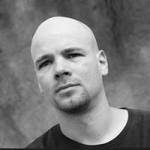
An audio file of the world premiere of NGC 4414 (which, for the uninitiated like me, is the name of a galaxy 60 million or so light years away) is available on Ryczek’s YouTube channel,<http://www.youtube.com/user/kompozer86>.  It was given at the Musica Polonica Nova festival in Wrocław in 2008 by Kwadrofonik.  Audio and video files may also be accessed on his websites.

Krzysztof Wołek (1976)

http://www.krzysztofwolek.com/
http://www.myspace.com/krzysztofwolek

Krzysztof Wołek’s interests embrace chamber, orchestral and electronic mediums; he also works in dance collaborations and with video.  He has the most artful and informative of all the websites, including plentiful samples from his wide range of compositions, although I could find only looped excerpts lasting about 2′ each rather than complete works.  This was a bit frustrating, as the excerpts whetted the appetite, from the early (A)Symmetrics for orchestra (1999) to Elements (2008), which was played during Muzyka Nowa (admittedly under the misapprehension that his surname was Wolef).  Wołek’s complete Mobile Variations for six-channel tape (2005) is, however, on his myspace site and is a fresh take on an electronic soundworld that dates back to the 1950s. Educated initially at the Music Academy in Katowice, Wołek subsequently studied at the University of Chicago and now teaches at the University of Louisville.

Agata Zubel (b.1978)

http://www.zubel.pl/

If the photo on the homepage of her website is anything to go by, Agata Zubel is the most exuberant of the five in this selection.  She studied both voice and composition at the Music Academy in Wrocław and she continues to combine both activities.  As a singer, she performs music from Augustyn to Zubel, taking in classics like Berio’s Sequenza III along the way.  As a composer, she works in a wide range of media, including music theatre, electronics and orchestral music (she already has three symphonies to her name).  She tends to set modern poetry in her vocal works, particularly Beckett, as in Cascando (2007) which was broadcast during Muzyka Nowa.  Her most recent piece What is the word, already dated 2012, is another Beckett setting.  Like Wołek, Zubel has put only extracts on her website (they’re even shorter than Wołek’s), but her music has been released on several CDs, including the monographic Cascando (2010), and on DVD.  Here she is in action as vocalist in her own Parlando for voice and computer (2000), recorded in Moscow last October.