• Lutosławski Centenary 2013: Philharmonia

We are still over two months from the actual centenary of the birth of Witold Lutosławski (25 January 2013), but things are already hotting up.  I, for one, am busy preparing copy for Belgium, Germany and the UK, and this morning I’m doing a telephone interview for the in-house magazine of the Witold Lutosławski PO in Wrocław.

But by far the most intensive preparations outside Poland – so far – have been taking place in London for the Philharmonia Orchestra’s three-concert series at the South Bank Centre in January and March next year.  The soloists are Krystian Zimerman, Truls Mørk, Jennifer Koh and Matthias Goerne.  There are also three associated chamber recitals and one orchestral concert performed by students from the Royal College of Music.  Most of the concerts place Lutosławski’s music alongside repertoire by other composers: Chopin, Szymanowski, Roussel, Ligeti and (principally) Ravel and Debussy.

And that’s not all: the Philharmonia is taking parts of its Lutosławski programme – called ‘Woven Words’ after his piece Paroles tissées (1965) – to nine other cities between February and September 2013: Tokyo, Warsaw, Modena, Oviedo, Madrid, Dresden, Vienna, Ljubljana and Berlin.  Full details of the programme and schedule may be found at http://woven-words.co.uk, but here’s a list of the pieces by Lutosławski that are being performed in London by the Philharmonia and the Royal College of Music.

Philharmonia  30 January: Musique funèbre and Piano Concerto.  7 March: Cello Concerto and Concerto for Orchestra.  21 March: Symphony no.4, Les Espaces du sommeil and Chain 2.
RCM  4 February: String Quartet.  6 February: Jeux vénitiens and Symphony no.3.  27 February: Two Studies and Bucolics.  6 March: Mini Overture, Fanfare for CUBE, Epitaph, Subito, Grave and Dance Preludes.

The Philharmonia doesn’t do things by halves.  There was a press launch in  London in late October (unfortunately while I was in Warsaw), fronted by the two men whose idea this celebration has been: the conductor Esa-Pekka Salonen, who knew Lutosławski well and has long championed his music,  and the composer Steven Stucky, the author of the eloquent Lutosławski and His Music (1981).  The Philharmonia’s website http://woven-words.co.uk is a substantial achievement in itself, with a gallery of archival photographs assembled, special films made and essays written for the occasion.

Films

Salonen and Stucky travelled to Poland in the summer of 2012.  The results may be seen in five contextually stimulating films in which they chart Lutosławski’s life and work, with archive stills and footage as well as a wealth of location shots (I liked the appearance of Blikle’s famous café in ‘World War II’!).  Some of Lutosławski’s rarely seen manuscripts are discussed (especially in ‘Stalinist Years’) and there are excerpts from the music (the main footage being of the Concerto for Orchestra).  Archive footage of the composer is also incorporated.  The widow of Władysław Szpilman (The Pianist) appears in the third film, while  Charles Bodman Rae (first two films) and Zbigniew Skowron (fourth film) also make telling contributions.

• Early Life
• World War II
• Stalinist Years
• Maturity
• In Conversation

Essays

The Philharmonia has commissioned five essays, which I understand will also appear in the programme book for the series (Steven Stucky’s insightful notes for the orchestral programmes are also presented in advance on the website).

Steven Stucky, ‘Remembering Lutosławski’
Charles Bodman Rae, ‘Lutosławski and the Scars of Wars’
Adrian Thomas, ‘Lutosławski- Parallel Lives of a Captive Muse’
Nicholas Reyland, ‘Essences and Essentials: Lutosławski’s Musical Stories’
Zbigniew Skowron, ‘Lutosławski’s Aesthetics and Their Sources’

My own essay is also available on this site here.

• Grave matters

I’m catching up on Polish arrears, having dallied since my visit to Warsaw last month by staying in London to see Covent Garden’s Ring cycle (frankly, I might just as well have listened to it on the radio, so inept and wilfully contrary was the set design and production; the final half hour in particular was a total travesty).  And then I succumbed to a week of ‘underweatherness’ here in Cornwall, and that has meant a backlog of deadlines.

Today – 12 November 2012 – is the second anniversary of the death of Henryk Mikołaj Górecki.  Two nights ago, Polish Television broadcast a new documentary about him (Please Find, directed by Violetta Rotter-Kozera), with contributors from Europe and America, including myself.  I should have been in Katowice last Friday to see a private screening with the family, but circumstances got in the way.  I’m looking forward to seeing it in due course.

This morning, BBC Radio 3 broadcast the second movement of his Third Symphony, choosing not Dawn Upshaw’s breakthrough recording (now 20 years old), but the first ever recording, by Stefania Woytowicz with the Polish Radio Symphony Orchestra, conducted by Jerzy Katlewicz.  Upshaw and Woytowicz are two quite different singers, and I admire them both, but for me that first recording captures the excitement and extraordinary atmosphere of the late 1970s and the powerful shock that the symphony made on me and on others who were lucky enough to come across it at the time.  It was this recording, for example, that captivated the conductor David Atherton, who played a huge role in promoting it during the 1980s.

This is all a bit by-the-by.  I had intended to visit Henryk’s grave on my visit to Katowice.  Niestety, nie zdążyłem.  I did, however, manage to visit Powązki Cemetery in Warsaw last month, mainly to pay homage to particular people, but also to sample again its special atmosphere.

…….

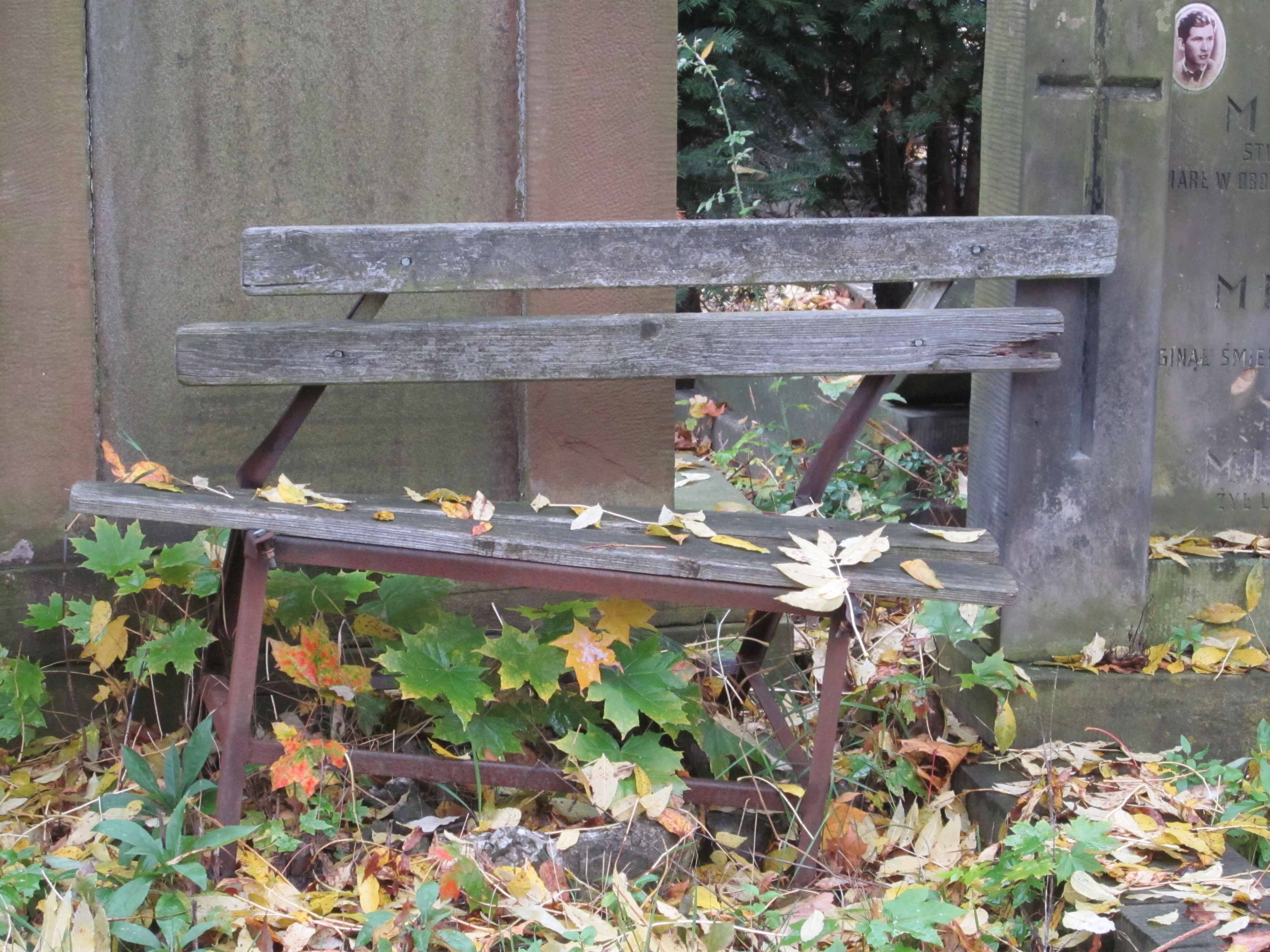
Finding it as it was.

…….

My first main port of call was the grave of my friend, the Polish musicologist and critic, Andrzej Chłopecki, who had died a month earlier.

…….

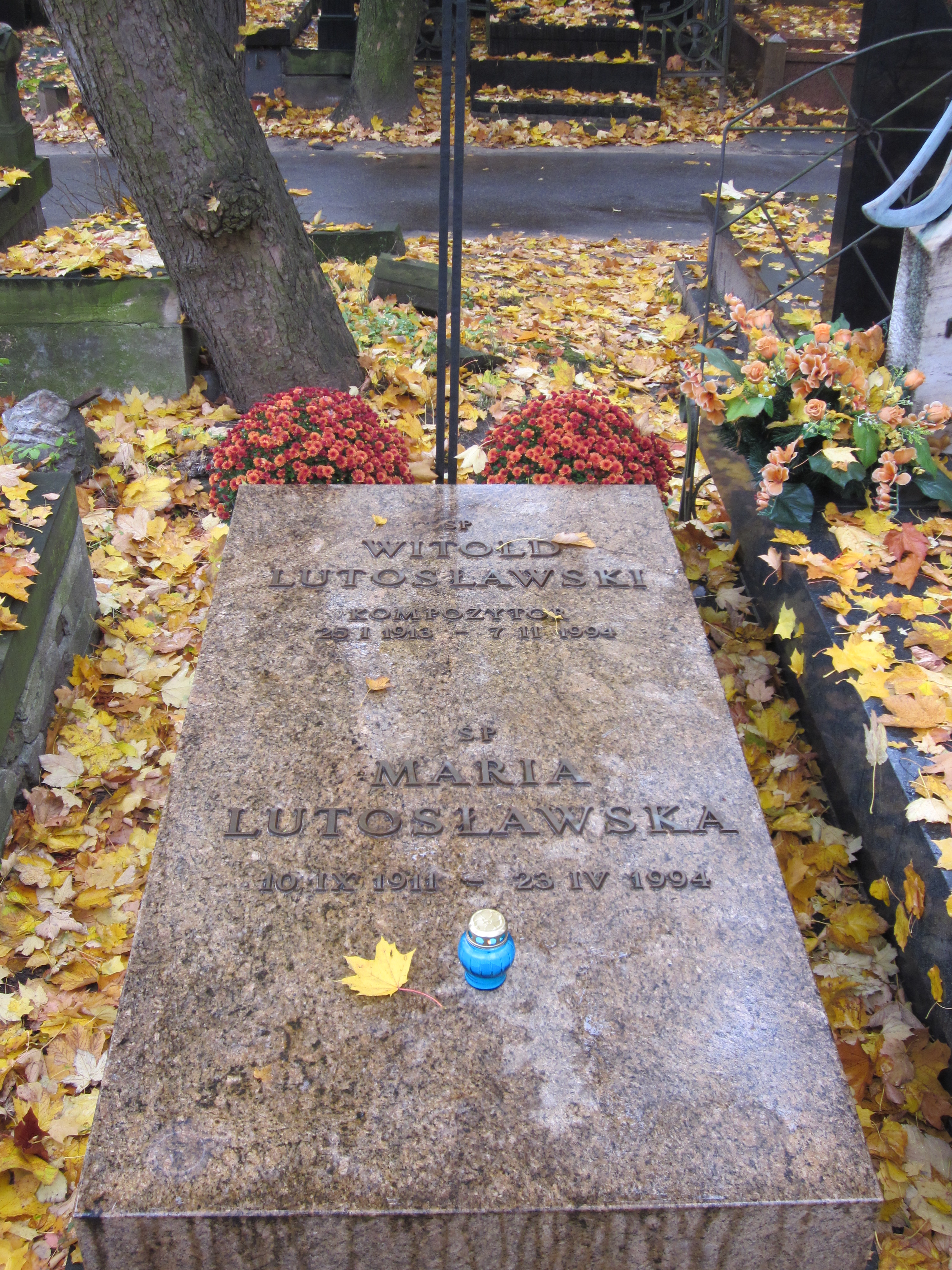
Some distance away, not far from the cemetery chapel, lie a number of composers and conductors who shaped Polish music in the second half of the twentieth century.  First and foremost, there’s the grave of Witold Lutosławski and his wife.

Here’s the grave from the rear.  I was present at his funeral and watched from this vantage point as his stepson climbed into the grave to place his urn on the floor of the chamber.  It now has a classically restrained gravestone and had evidently been attended to recently.

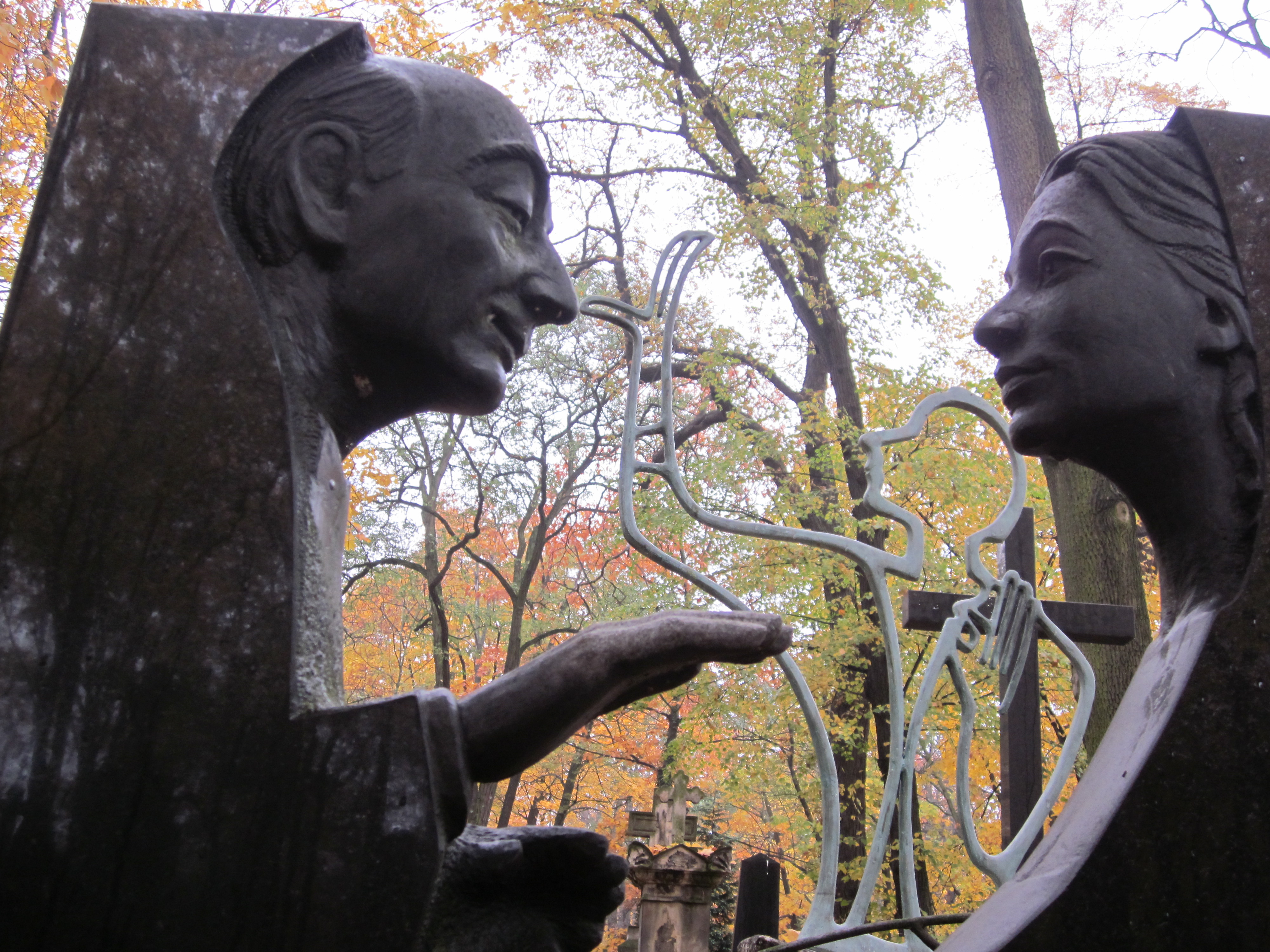
Next door lies that great champion of Polish music, the conductor Witold Rowicki. His grave is more demonstrative!

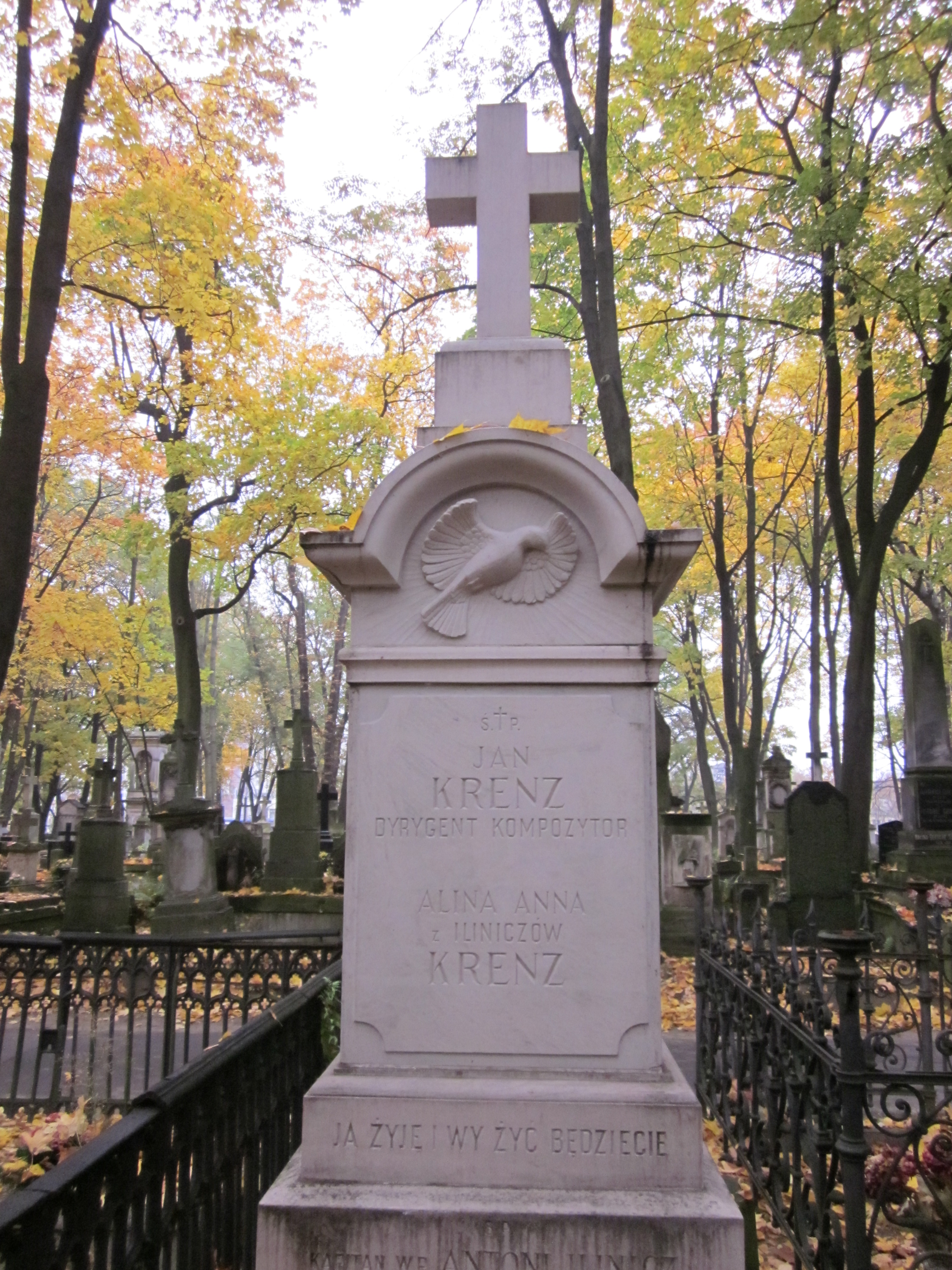
A little further to the right of Rowicki’s grave is one set aside for Jan Krenz, a champion of contemporary Polish music.  It seems strange to me (but it’s not unusual there) that such monuments are erected before death.

Behind Rowicki’s grave is that of Stefan Rachoń – a far less well-known conductor, at least outside Poland –  and his widow, the opera singer Barbara Nieman.

On the other side of the main path from these graves are several more.  Notable among them are those of Kazimierz Serocki and Tadeusz Baird, whose music deserves to be far more widely known and appreciated.  Baird, Krenz and Serocki formed ‘Grupa ’49’ as the youngest generation of composers during post-war socialist realism.

…….

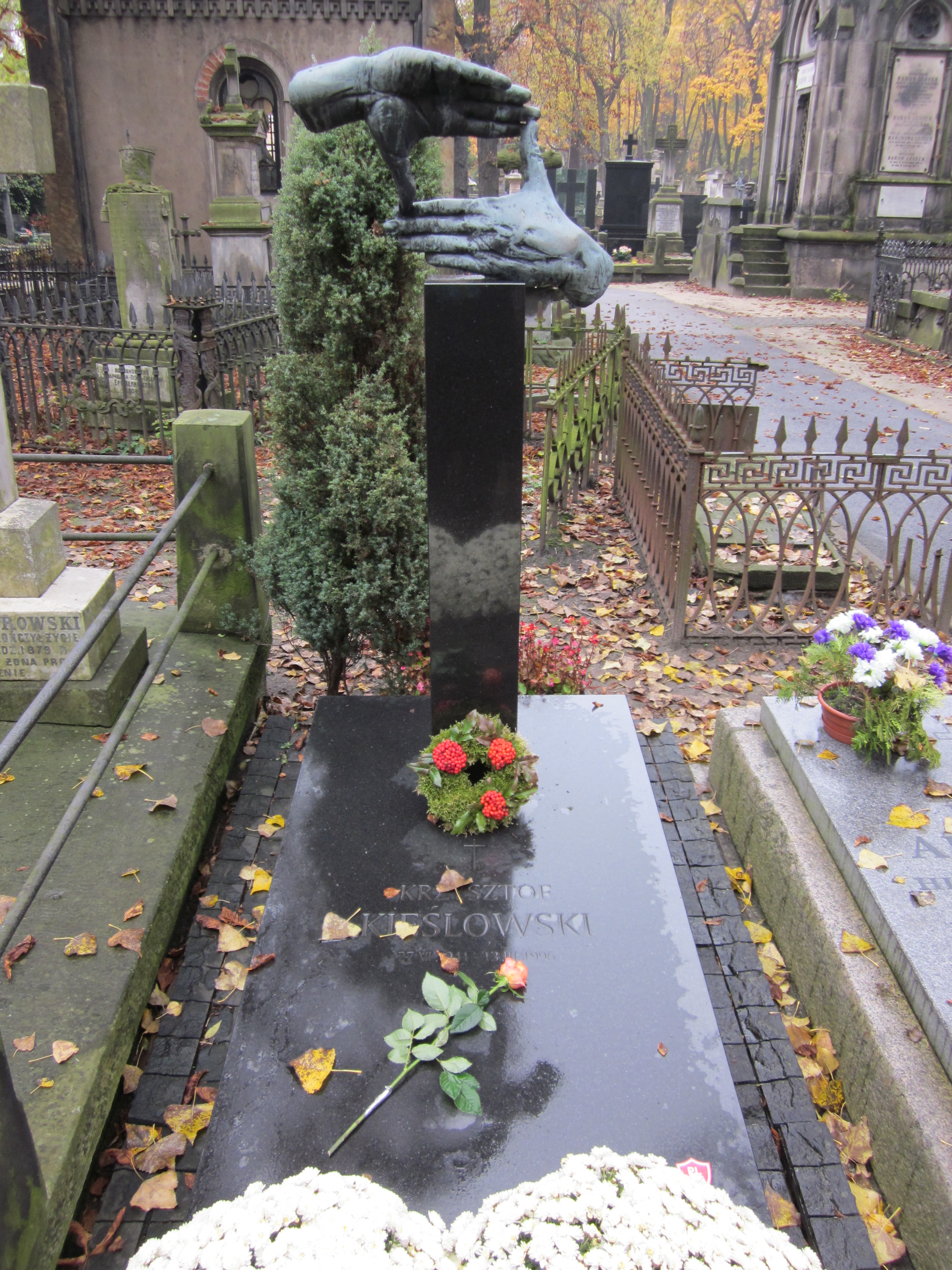
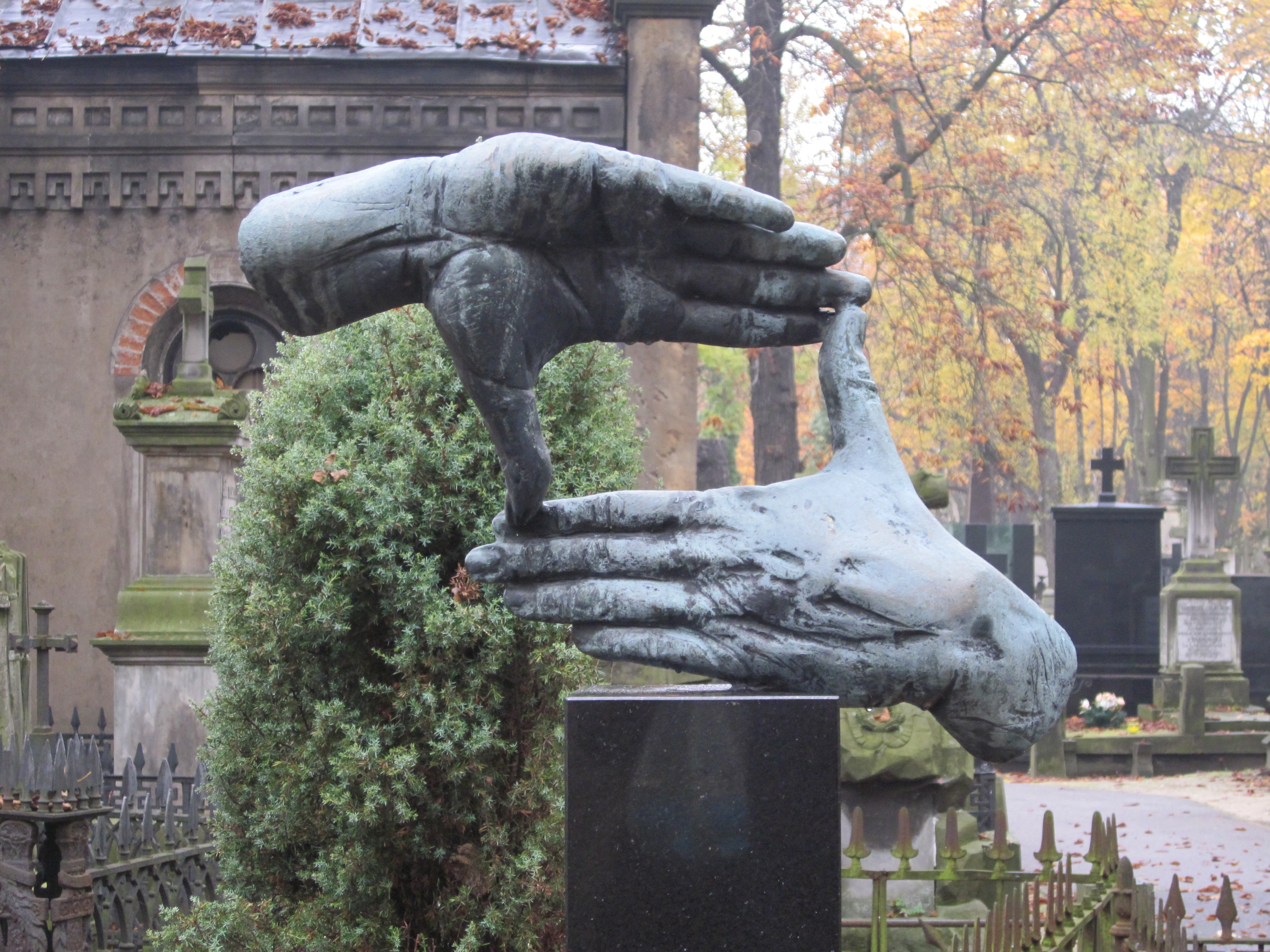
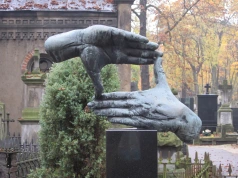
One of the most striking graves is that of the film-maker, Krzysztof Kieślowski.  If only I had his eye for framing.

• New CD Note (Lutosławski vol.4/Chandos)

It’s been ten months since the release of the third volume of Edward Gardner’s Lutosławski series with the BBC Symphony Orchestra.  Now volume four has appeared, and it’s a cracker (for the first time in the series, the cover illustration comes from outside Warsaw – it’s Wrocław).  The preceding CDs were:

Orchestral Works: Concerto for Orchestra, Symphony 3, Chain 3
Vocal Works: Lacrimosa, Silesian Triptych, Sleep, sleep, Paroles tissées, Les Espaces du sommeil, Chantefleurs et Chantefables
Orchestral Works II: Symphonic Variations, Paganini Variations, Piano Concerto, Symphony 4

Lutosławski: Orchestral Works III opens with Little Suite (1950), a work whose spirited nature masks the subtlety of its language when most other Polish composers were buckling under the weight of socialist-realist expectations.  A decade and a half later, Lutosławski was wrestling with large-scale form in his Second Symphony (1965-67), which is given an exceptionally persuasive reading here.  The soloist on this CD is Paul Watkins, who not only plays the Cello Concerto (1970) – which must have easily surpassed any other concerto written since then in its number of CD recordings – but also Lutosławski’s orchestration of Grave for cello and piano (1981/82).

Here’s the link to my booklet note for Lutosławski: Orchestral Works III, or you can scroll the CD NOTES tab above.

• Prix Europa for ‘Warsaw Variations’

Huge congratulations to Alan Hall of Fallingtree Productions on winning ‘Best European Radio Music Programme’ last week at the 2012 Prix Europa in Berlin. The award was given for his half-hour programme ‘Warsaw Variations’, first broadcast on BBC Radio 4 on 20 December 2011.

‘Warsaw Variations’ charts the musical friendship of Witold Lutosławski and Andrzej Panufnik during and after World War II.  Among its interviewees are Camilla Panufnik, my former PhD student Beata Bolesławska and myself. Alan was one of my colleagues at Radio 3 in the early 1990s.  He later went independent and is one of the most inventive and insightful producers around.  It was an absolute delight to work with him again.

You can hear the programme via the Fallingtree website:
• http://fallingtree.co.uk/listen/warsaw_variations

A few other links:
• http://www.thenews.pl/1/11/Artykul/116810,BBC-radio-feature-on-Polish-music-wins-Prix-Europa-
http://www.fallingtree.co.uk/news/2012/triple_awards_success_at_the_prix_europa!
• https://www.facebook.com/fallingtreeproductions

• New Website for Serocki

http://www.serocki.polmic.pl

The uploading of a website devoted to the life and music of Kazimierz Serocki is hugely to be welcomed.  Serocki was one of the giants of post-war Polish music – he stood alongside Bacewicz, Baird, Górecki, Lutosławski and Penderecki.  Yet his music has languished both at home and abroad since his death in 1981 at the age of 59.  This new venture will surely do much to bring his name and output to a wider audience.  It exists in parallel English and Polish versions.

It’s hosted by the Polish Music Information Centre in Warsaw and has been brought to fruition as a partnership between the Polish Composers’ Union (ZKP) and POLMIC, facilitated by the software company Noyamundi.  The content has been created by Dr Beata Bolesławska-Lewandowska and Dr. hab. Iwona Lindstedt.  The texts have been written by Dr Lindstedt, whose most recent publication is Sonorystyka w twórczości kompozytorów polskich XX wieku [Sonoristics in the Work of Twentieth-Century Polish Composers] (Warsaw: University Institute of Musicology, 2011).

The site is easy to navigate.  There are six main sections: Biography, Timeline, Creative Output, Symphonic Frescoes, Gallery and Bibliography.  As yet, there is no Discography nor a list of recordings made or held by Polish Radio or Polish Television.  In this absence, you can find some information in one of my earlier posts, Serocki: A Severe Case of Neglect (3 March 2012).

Biography

Serocki’s biography has been broken down into four sections: Childhood and youth, In the new reality, Between Poland and the world and The composer’s personality. These are fluently written and are full of contextualised detail. There are plentiful quotations, especially in the final section’s recollections by his friends and colleagues.  It turns out the Serocki was much more of a recluse, unwilling to talk about his music, than his now more famous and younger compatriot, Górecki.

Timeline

The Timeline is divided into decades: 1922-29, 1930s, 1940s, 1950s, 1960s, 1970s and 1980-81.  While some of its material is also to be found in the Biography, there are new details, illustrations and quotes.

Creative Output

Your instincts may draw you first to the Chronological list of works. The full details of dates of composition, premiere and publication, however, and of the location of the manuscript if unpublished, are to be found under Works by genre.  The entries under Works in detail are effectively mini programme notes, but can also be unexpectedly illuminating, such as that for Swinging Music, which draws on a lecture that Serocki gave in Basel in 1976.

The main weight of this section of the website is given over to four essays: Early works (1946-56, in three parts), Intermedium: dodecaphony and pointillism (1956-60), Mature works (1961-81, in three parts) and On Kazimierz Serocki’s film music.  Those looking for analytical insight into Serocki’s music will find an entrée here.

These essays take the reader smoothly through Serocki’s career, pointing out key aspects and complementing the details held for specific pieces in Works in detail.  They provide a good foundation for anyone minded, and able, to get hold of the scores and recordings for further study (outside Poland, unfortunately, it is no easy matter to gain access to such materials).  In the essay on the early works, it is good to see that Serocki’s contribution to the genre of the mass song is addressed (this aspect of life in the early 1950s is often glossed over).  The decision to group the mature works from 1960 into ‘Notation and sound space’, ‘Poetics of sounds’ and ‘Open form’ acknowledges the three main threads in Serocki’s creative thinking.  The essay on the film music is especially welcome.

Symphonic Frescoes

This section seems incomplete at present.  The first and second movements are represented by a recording of the work’s Polish premiere (at the 1964 Warsaw Autumn) with an accompanying scrolling score.   It is a great idea that brings one of Serocki’s most brilliant works to life.  Let’s hope not only that the rest of Symphonic Frescoes will be uploaded at a future date but also that other works will be similarly treated.  This would get round the perpetual bind that is the lack of scores and recordings outside Poland.

Gallery

This has four subsections: Music, Voices, Video, Pictures.  Many of the items here appear in the earlier sections of the website.

Music: here you can listen to fragments of over 30 compositions from across Serocki’s career.  These soundbites last between one and six minutes, so you can get a good idea of not only each work but also each movement.  At some point it would be wonderful if complete pieces and movements were available.
Voices: at present, there are five friends and colleagues of Serocki whose spoken reminiscences of the composer (in Polish) have been gathered together from the archives.  The speakers are the composer Augustyn Bloch (seven extracts), the singer and author Hanna Wąsalanka, aka Sister Blanka (six), the Hungarian pianist and composer Szábolcs Esztényi (six), the composer Włodzimierz Kotoński (five) and the clarinettist Czesław Pałkowski, best known perhaps for being a member of the Music Workshop ensemble (four).  These reminiscences cover a wide range of topics, from Serocki’s famous sense of humour to recollections of Darmstadt.  There are no transcriptions or translations here, but transcriptions of excerpts from this archival sound material do appear earlier in the site, especially in Creative Output.
• Video: these are mostly short excerpts from performances at ‘Warsaw Autumn’ festivals of Episodes (1958-59), Niobe (1966), Poezje (1968-69), Fantasia elegiaca (1971-72, Ad Libitum (1973-77) and Pianophonie(1976-78).  There is also a complete performance of Continuum (1965-66), a voice-over introduction to an excerpt from Swinging Music (1970) played by Zygmunt Krauze’s Music Workshop, and a short animated filmWspaniały marsz (Splendid March, 1970) for which Serocki wrote the music.

If you want to hear complete performances of works by Serocki, several are currently on YouTube (some added quite recently), including the pieces for trombone from the early 1950s, Sinfonietta (1956), Episodes, Segmenti (1961), A piacere (1963), Symphonic Frescoes (1964), Continuum, Swinging Music, Fantasmagoria (1971) and Pianophonie.
A video of Fantasmagoria has recently been uploaded at http://www.youtube.com/watch?v=JUzWEotLN0Q, as has one of Fantasia elegiaca at http://www.youtube.com/watch?v=g4NuCcpakbU.

Pictures: these are grouped in six categories – Documents and correspondence (58), Photos (34), Printed scores (110), Music manuscripts (27), Texts (32) and Press clippings (32).  Although none of the texted items is translated here (some appear elsewhere on the site), the caption beneath each image is usefully in English. These are fascinating documents to explore, giving new insights into all periods of his public and personal life.

Bibliography

The Bibliography is almost exclusively of Polish sources, including items by the main authors on Serocki’s music, such as Tadeusz Zieliński and Tomasz Kienik, who have each published several articles.  Zieliński’s study O twórczości Kazimierza Serockiego [On Kazimierz Serocki’s Oeuvre] (Kraków: PWM, 1985) remains the only monograph on Serocki’s music.  There is also a short list of primary sources (lecture typescripts, manuscript notes) held in the Warsaw University Library (BUW).

• BBC R3 NGAs 2012: A Third Polish Quartet

A third Polish string quartet has become a member of BBC Radio 3’s New Generation Artist scheme.  The appointment of the Apollon Musagète Quartett (2012-14) follows on from the successes of the Karol Szymanowski Quartet (2001-03) and the Royal Quartet (2004-06).  Both the Szymanowski and Royal quartets have since made distinguished careers, although of the three only the Royal Quartet still seems to be based in Poland.

All three quartets are active in the recording studio.  The Royal Quartet’s CD of the three Górecki quartets (2011) has been critically acclaimed, and its follow-up CD of the quartets by Lutosławski and Penderecki is due for release early next year.  Even more imminent is the Szymanowski Quartet’s recording with Jonathan Plowright of Zarębski’s Piano Quintet and Żeleński’s Piano Quartet.  All of these recordings are on Hyperion.

I’ve not been able to find out anything about the Apollon Musagète Quartett prior to its founding in Vienna in 2006, so I don’t know what the players’ Polish roots are.  Its Polish repertoire includes works by core composers – the two Szymanowski quartets, Bacewicz’s First Piano Quintet, Lutosławski’s Quartet, Górecki’s First, Penderecki’s Der unterbrochene Gedanke and Third Quartet – and also a few surprises: Żeleński’s Variations on an Original Theme, and arrangements of a cappella choral pieces by the Renaissance composer Wacław z Szamotuł and of two piano études by Chopin.  The Apollon Musagète Quartett is due to release a CD on the Oehms Classics label next year of quartets by Lutosławski, Górecki and Penderecki.

It would be good to learn of plans by any of these quartets to take up the music of Polish composers of their own generation.  There have already been some interesting collaborations outside the standard chamber-music repertoire.  Perhaps the most intriguing venture by the Apollon Musagète Quartett has been with Tori Amos, touring with her and contributing to the Night of Hunters CD (2011).

Cue not-too-wobbly video of ‘Shattering Sea’ from a tour date at the Manchester Apollo.


• History of Music in Poland: Romanticism

[Book Review]

I hope to review the occasional book, recording and musical event in these posts.  These reviews are intended to be indicative rather than comprehensive.  To date, I’ve turned my attention to two topics: Lutosławski’s Cello Concerto on YouTube (4 December 2011) and Polish Music ‘Muzyka Nowa’, WQXR (25 January 2012).  I’ve now got round to looking at a two-volume study of Polish music and musical life during the second half of the nineteenth century:

• Irena Poniatowska, Romanticism Part 2A, 1850-1900: Musical Output (Warsaw: Sutkowski Edition, 2011), 424pp. ISBN 978-83-917035-7-1
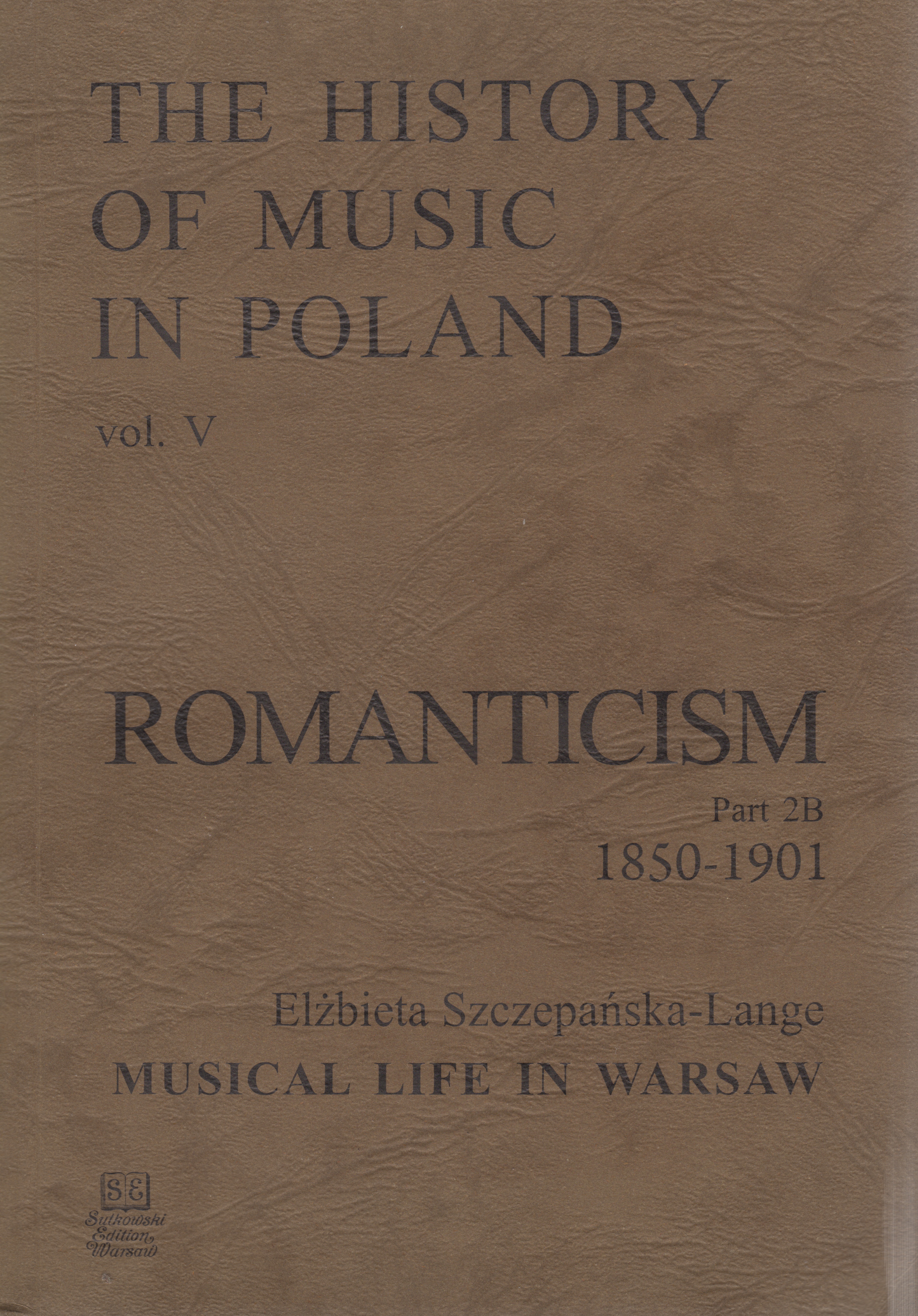
• Elżbieta Szczepańska-Lange, Romanticism Part 2B, 1850-1901: Musical Life in Warsaw (Warsaw: Sutkowski Edition, 2011), 481pp. ISBN 978-83-917035-7-1

These two complementary volumes constitute vol.5  from the series ‘The History of Music in Poland’.  They were first published in Polish in 2010 and have been ably translated into English by John Comber (who has worked on all the volumes in the series).  They effectively cover the history of Polish music from the death of Chopin (1849) to the establishment of the first properly professional symphony orchestra, the Warsaw Philharmonic (1901).

The series is the brainchild of Stefan Sutkowski, who turned 80 in March this year.  His musical career has been extraordinarily varied.  In 1954-1974 he was an oboist with the National Philharmonic and therefore played a role in the premieres of a host of new Polish compositions.  From 1957, he also took the initiative in developing the performance of early music in Poland (Musicae Antiquae Collegium Varsoviense).  This strand in his activities led eventually to the establishment of the Warsaw Chamber Opera and a series of special festivals devoted to Mozart (1991), Baroque Opera (1993), Rossini (1999) and Handel (2000).  He also founded Pro Musica Camerata in order to disseminate Polish music through new printed editions of early music and on CD.

‘The History of Music in Poland’ has done something never before attempted: a history from medieval times to the present, in Polish and, more importantly, in English.  For the first time, non-Polish readers are able to obtain both an overview and more detailed insights into the many riches of Polish musical culture.  I should add that there is also one specific volume that, unfortunately, has yet to be translated.  This is not on an historical period, as elsewhere in the series, but on a single composer.  Tadeusz Kaczyński’s chronicled reminiscences in Lutosławski. Zycie i muzyka (Lutosławski. Life and Music), published in 1994 but apparently no longer available, is a mine of information, so I hope that plans are afoot for it to appear in English.

Musical Output

Poniatowska’s volume on musical output is organised by genre, ten in all: opera, ballet, song, cantata, choral music, sacred music (oratorio, mass, organ music), symphonic music, the instrumental concerto, chamber music and piano music.  These chapters are further divided.  The last, for example, consists of an informative introduction and subsections on the etude, sonata, variations, suites and collections of works, romantic salon-style lyrical miniatures (with further headlines for characteristic Polish dances), profiles of three individual composers (Stolpe, Zarębski and Paderewski), and an account of the reception and resonance of Chopin’s music.

The volume begins with an invaluable synoptic table covering over 40pp, tabulating side-by-side the four chronologies of world history and culture, Polish history and culture, European music and Polish music.  Her first chapter succinctly sketches in the historical, cultural and educational contexts within which Polish music of this period existed.

The ten subsequent chapters on genre are designed as a ‘handbook’, synthesising and building upon existing scholarship.  The overview that emerges will be new to many Polish and non-Polish readers.  Despite the obstacles put in the way of cultural activity – in admittedly different degrees – by the three partitioning powers of Russia, Prussia and Austria, there is far more to be discovered in these fifty years than has previously been recognised.  Music history has focused on Moniuszko (opera, vocal music), Wieniawski (music for violin), Paderewski (music for piano), with further reference to Zarębski, Żeleński and Noskowski.  The reputation of Polish music of the period has therefore rested on the shoulders of six or so composers, mainly because their music found its way into print during their lifetimes or, in the case of Zarębski’s Piano Quintet (1885), almost fifty years after his death.  There is still a backlog of manuscripts and performing materials in Polish archives.  There would have been even more had a huge amount not been destroyed during World War II.

What Poniatowska has achieved here is to place a newly widened range of Polish composers and their music in the public eye.  In the chapter on opera, there are outline analyses of plots, numbers and music styles, creating, by the variety and extent of observation, a compelling narrative of the range of output of several dozen composers (I lost count).  The same is true of the other chapters.  While opera was evidently the genre that thrived best in these turbulent decades, symphonic music was ‘most modest’.  That’s putting it kindly.  With no dedicated symphony orchestras, where were the opportunities?  It was a desert for new Polish symphonic music (with a few exceptions) until the turn of the century, so it is understandable that Poniatowska should extend her chronological envelope to 1910 in this chapter to include the symphonies by Paderewski and Karłowicz, though interestingly there is no mention of Szymanowski’s First Symphony (1907).  Yet, in the light of Szczepańska-Lange’s account, it is sad to realise that the moderately active concert life of the period did not extend as fully as it might to the support and development of homegrown compositional talent.

I can testify to the value and usefulness of this book.  I’m currently writing a CD note on three works for piano and orchestra by Żeleński and Zarzycki, a composer who until now has just been a name to me.  I know that I shall be indebted to the information on these composers and their pieces, as there is nowhere else to access it in such a comprehensive and readable compendium.

Musical Life in Warsaw

Szczepańska-Lange’s chronicle of Warsaw in the second half of the nineteenth century is a different kind of book, focused on one city and divided into just two very substantial sections: opera and concert life. These are each subdivided into an introduction and mainly a chronological sequence of smaller periods.  The chapter on concert life also has subdivisions concerned with individual features such as charity concerts and the move towards the founding of the Warsaw Philharmonic.

Szczepańska-Lange marshalls her materials deftly, with plentiful excerpts from newspaper reports bringing the narrative to life.  She has sifted through a wealth of sources (she gratefully acknowledges the friendly atmosphere of the microform reading room of the National Library where she spent ‘hundreds of hours’), and her diligence, perceptiveness and enthusiasm show through.  In particular, she has detailed the vagaries of political pressures from Russia and their impact on cultural organisations.

A measure of how Warsaw more or less managed to keep up with opera houses to the West (Wagner excepted) may be gleaned from the dates of key premieres: Don Carlos (1873), Aida (1875), Lohengrin (1879), Mefistofele (1880), Carmen (1882), Tannhäuser (1883), La Gioconda (1885), Manon (1888) and Otello (1893).  Language for performance became problematic: the Warsaw premieres of Eugene Onegin (1899) and The Queen of Spades (1900) were both given in Italian, symptomatic of the times.  Warsaw Opera was no different from its counterparts in its intrigues, but its repertoire during this period of occupation was surprisingly wide and varied.

Although Wagner’s operas from The Ring onwards were not performed in Warsaw until well into the twentieth century, preludes and excerpts did occasionally appear on concert programmes (the Prelude to Parsifal in 1883). Concert music was a very poor cousin to opera, with no adequate venues, infrequent visits by virtuosi like Wieniawski, and concert-going habits quite different to those which developed later.  The distinguished Polish author Stefan Żeromski wrote in his diary about a concert that Anton Rubinstein gave in 1880:

The hall was overcome by the most remarkable silence in concert history; it was something truly incredible, almost no one was late; and what is even more unlikely, no one ran out for their garments to the cloakroom during the last number; the ladies refrained from conversing aloud; and the gentlemen did not go out after every number for a cigarette!  Verily, one has to be such an Orpheus as Rubinstein to perform such miracles.

Szczepańska-Lange’s overview of the period in her Introduction is a model of its kind, giving accounts of different types of events and their appearance within the chronology.  In the subsequent chronicle, the artistic and organisational comings and goings are effectively woven in with details of repertoire.  The move towards a permanent symphony orchestra began long before 1901.  In 1881, the composer Noskowski created his own orchestra with the specific intention of promoting new works by himself and others, both Polish and foreign, such as Smetana, Dvóřak and Saint-Saëns.  But little concrete happened until the very end of the century, when the conductor and composer Młynarski spearheaded the final drive to establishing not only the orchestra but also the Philharmonic Hall, which remains the home of the Warsaw Philharmonic to this day.

Polish composers had to fend for themselves, usually through teaching or administration.  The few composer-virtuosi – Wieniawski, Zarębski and Paderewski – based themselves abroad.  Zarębski is an interesting case.  He studied with Liszt, toured across Europe and lived and taught in Brussels, died in 1885 in his 30s, and left a modest body of music for solo piano and the marvellous Piano Quintet.  Ponietowska discusses his music in her volume, but Zarębski’s appearances in Szczepańska-Lange’s companion volume are few, indicating how rarely he visited Warsaw (it appears he played there only twice).  There are, however, wonderfully intemperate and sarcastic responses to his appearance in 1879 playing the Mangeot double-keyboard piano.  The interlinking of compositions and performances across these two volumes does not require the mental and physical gymnastics mastered by Zarębski on the Mangeot piano, but it does lead to a hugely enriched and enriching double account of this largely forgotten period of Polish musical history.  I for one am immensely grateful to have this new interlinked resource on my bookshelves as I prepare my CD note on Żeleński and Zarzycki.

What neither of these books does is to engage with aesthetic and philosophical approaches to Romanticism.  This is not for want of knowledge or understanding.  It is simply that these books have a different and more basic goal: to put into print the essential facts about the largely hidden composers and music of this period in Polish culture.  They offer opportunities for the rest of us to explore further, but that exploration will not come to much unless scholars edit and publish the scores so that performers, broadcasters and recording labels can enable us to hear the music.  What has until recently been dismissed as a dank backwater of European music may then be seen and heard to have had a much more intriguing and lively character, if these two volumes are anything to go by.  At that point, issues concerning the term ‘Romanticism’ within the Polish context will come into focus.

• Stokowski on Chopin

This extraordinary track popped up this morning as one of Simon Callow’s choices on R3’s ‘Essential Classics’ (how I still loathe this programme title, one year on). Callow is culturally literate but even he underplayed the mind-blowing chutzpah of this arrangement.  Even harder to understand today is the milieu in which a transcription such as this was both artistically acceptable and regarded as worthy of audio recording by the LSO in the early 1970s.  But I’m glad it survives, even if only as a curiosity, one whose un-mazurka-like tempo is a rival to Bernstein’s ‘Nimrod’…


It’s almost tempting (but not quite!) to see connections in the light of today’s revelation that the ‘signer’ on Rothko’s painting at Tate Modern at the weekend is also of Polish origin.

http://www.thenews.pl/1/11/Artykul/114815,Polish-artist-charged-with-damaging-Rothko-mural-at-Tate-Modern

• BBC Scottish SO’s ‘Muzyka Polska’

Later this week I’m paying a flying visit to Glasgow to give a pre-concert talk as part of the first night of the BBC Scottish SO’s Muzyka Polska series during its 2012-13 season.  This has been built around next year’s centenary of the birth of Witold Lutosławski and I’m very happy to have been able to play a small part in advising on the choice of repertoire.  With its concentration on Lutosławski and on Szymanowski, the 75th anniversary of whose death falls this year, there was limited room for other major figures (no Baird, Górecki or Serocki, for example).  I’m particularly delighted to see Mieczysław Karłowicz’s Eternal Songs (1906) in the mix and pleased to see that there is music by at least one composer born after World War II, Paweł Szymański’s A Study of Shade (1989).  The ‘big’ night is on 17 January 2013, when six Polish works will be performed.

• Chopin  Piano Concerto no.2 (1829-30)   14 March 2013
• Chopin  Piano Concerto no.1 (1830)   11 October 2012
• Szymanowski  Concert Overture (1905)   11 October 2012
• Karłowicz  Eternal Songs (1906)   15 November 2012
• Szymanowski  Songs of a Fairytale Princess (1915, orch. 1933)   17 January 2013
• Szymanowski  Violin Concerto no.1 (1916)   15 November 2012
• Szymanowski  Songs of an Infatuated Muezzin (1918, orch. 1934)   17 January 2013
• Bacewicz  Concerto for String Orchestra (1948)   25 October 2012
• Lutosławski  Concerto for Orchestra (1954)   17 January 2013
• Penderecki  Polymorphia (1961)   17 January 2013 (Post-Concert Coda)
• Lutosławski  Cello Concerto (1970)   28 February 2013
• Szymański  A Study of Shade (1989)   17 January 2013 (Post-Concert Coda)
• Lutosławski  Symphony no.4 (1992)   17 January 2013

There are two supplementary chamber recitals as Post-Concert Codas: Johannes Moser will play Polish music for cello on 28 February after his performance of Lutosławski’s Cello Concerto, and Garrick Ohlsson will play solo piano pieces by Chopin on 14 March after his performance of Chopin’s Second Piano Concerto.  Ohlsson rocketed to fame after winning the Chopin Competition in Warsaw in 1970.  Moser is becoming one of the foremost performers of the Lutosławski.  His Glasgow appearance follows on from a performance in Poole in January with the Bournemouth SO (which premiered the work with Rostropovich in 1970), three performances in Stuttgart the week before he comes to Glasgow, and he then plays it twice in Bilbao in April.

The full schedule for the BBC SSO Muzyka Polska series may be accessed here or by navigating from its home website.

• New Web Page for Marek Stachowski

A new web page for Marek Stachowski (1936-2004) has just appeared.  It’s partly in English – Biography, Works (an essay by Maciej Jabłoński), Compositions, Prizes and Awards – and partly in Polish – Kalendarium and Wspomnienie (Recollection, by Mariusz Dubaj).  Thanks to the composer and cellist Jacek Ajdinović for drawing this to my attention (his website is in Polish, but there’s an English bio at http://www.myspace.com/jacekwiktorajdinovic).

http://www.marekstachowski.pl

I have exceptionally happy memories of my meetings with Marek: at his home and at numerous concerts and festivals.  His music may have been eclipsed, like that of his fellow Cracovian Zbigniew Bujarski (b.1933), by his better-known contemporaries.  These include not only another Kraków-based composer, a certain Krzysztof Penderecki (b.1933), but also two composers from nearby Katowice, Wojciech Kilar (b.1932) and Henryk Mikołaj Górecki (1933-2010).  But Stachowski’s music is distinctive in its own right and is well worth exploring, not least for its often delicate and lyrical qualities.

This new website doesn’t (yet) have a Discography.  There is at present only one (CD-ripped) recording on YouTube, called ‘One Rose’.  It’s the concluding section from one of his first works, Pięć zmysłów i róża (The Five Senses and a Rose, 1964) for mezzo soprano, flute, xylorimba, trombone and harp, to a text by Tadeusz Kubiak.  It makes for an interesting comparison with contemporary pieces by his more famous colleagues.